Sources & method
Source basis: Each hosted writing names its date, translator, source link, and manuscript survival notes where available. Sources
Browse this section
Ignatius’ road
Around AD 107 the bishop of Antioch was marched under Roman guard to die in the arena. From the stops along the way he wrote seven letters that still exist. Touch a letter to see it fly.
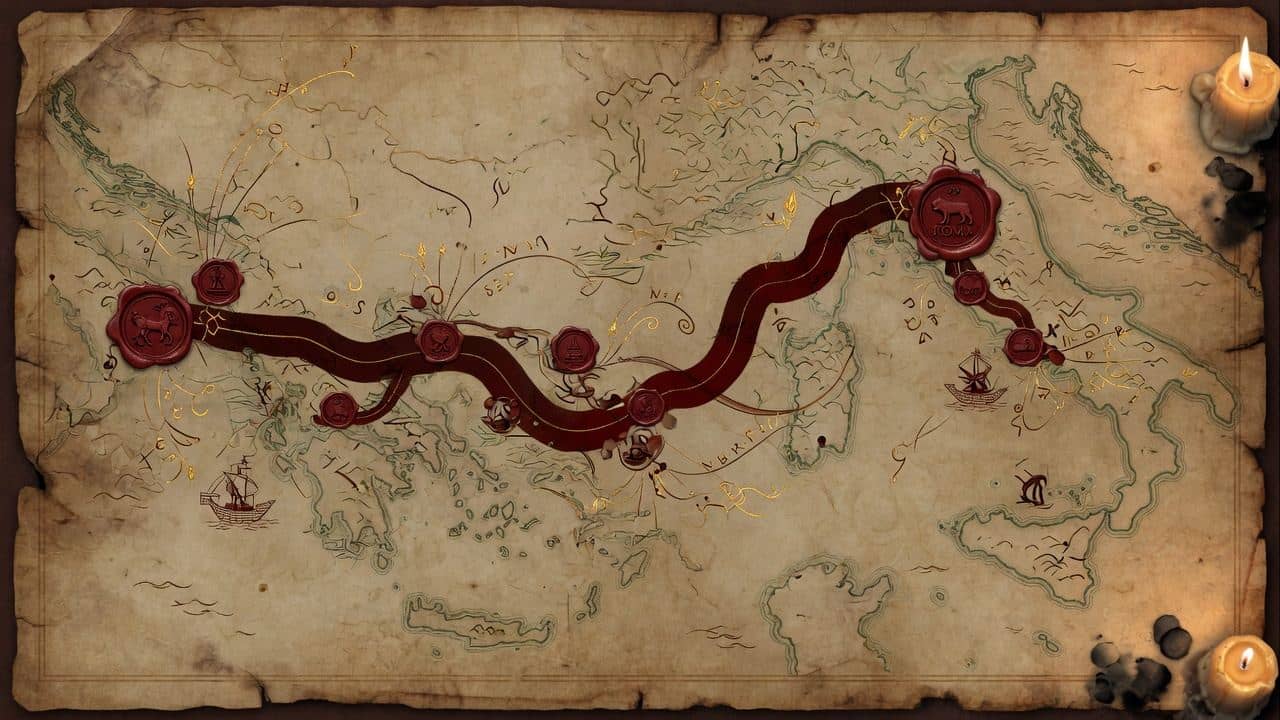
Follow a letterChoose a letter to connect its writing place with its recipient and open its passage below.
Road overview · choose one of the 7 letters to follow its connection.
The stops
Antioch. Ignatius, bishop of Antioch in Syria, was arrested during the reign of Trajan (c. 107–110) and condemned to the beasts at Rome. He set out under a guard of ten soldiers, whom he later called “ten leopards” in his letter to the Romans.
Philadelphia. On the scholarly-accepted northern land route across Asia Minor, Ignatius passed through Philadelphia and met its church; his letter back to it recalls speaking among them. The record of the road between Antioch and Philadelphia is thin — the itinerary is reconstructed from the letters themselves.
Smyrna. At Smyrna he was received by bishop Polycarp, and delegations from the churches of Ephesus, Magnesia, and Tralles came to meet him. From here he wrote four letters: three to those visiting churches and one ahead to Rome, asking the Christians there not to interfere with his death.
Troas. At the port of Troas he learned that peace had been restored to the church at Antioch, and he wrote three more letters — to Philadelphia, to Smyrna, and to Polycarp personally. He was hurried aboard ship before he could write to the other churches, as the letter to Polycarp notes.
Neapolis. He sailed from Troas to Neapolis, the Macedonian port — the same crossing Paul made in Acts 16, here in reverse. The stop is known only from a single line in the letter to Polycarp; nothing else of it is recorded.
Philippi. The church at Philippi received Ignatius and escorted him on his way, then wrote to Polycarp asking for copies of his letters. Polycarp's reply to the Philippians is the source for this stop; beyond Philippi the route to Rome is undocumented.
Rome. According to early tradition Ignatius was killed by wild beasts in the Roman amphitheater, as he had anticipated in his letter to the Romans. No contemporary account of the death itself survives; the details come from later martyrdom narratives.