The Abgar Correspondence
Reading appearance
Accessibility options
Saved in this browser and shared between texts. Labels and line patterns remain in every theme.
About this reading layout
Source wording, punctuation, paragraph boundaries and supplied line breaks are retained. Long prose also has editorial reading breaks at sentence boundaries. Substantial passages already enclosed in double quotation marks are set apart; this does not identify their source or establish a connection.
These added breaks are reading aids, not claims about the original manuscript’s layout. Poetry is lineated only where the downloaded text supplies line breaks. References and edition notes remain with their text.
About this writing, artwork and sources
The letters exchanged, according to tradition, between King of and Jesus, preserved by of Caesarea in his Church History (I.13), who says he translated them from Syriac records in the archives of Edessa. Scholars regard the correspondence as a later legend, but it shaped Christian tradition about Edessa for centuries.
c. AD 300–325 (as recorded by Eusebius) · translation: Arthur Cushman McGiffert, Nicene and Post-Nicene Fathers Series II Vol. I (1890) · source
Dotted terms open a short explanation right here — tap to read, tap again to close.
Arthur Cushman McGiffert, Nicene and Post-Nicene Fathers Series II Vol. I (1890) · Source edition
Chapter XIII.—Narrative concerning the Prince of the Edessenes.
1. The divinity of our Lord and Saviour Jesus Christ being noised abroad among all men on account of his wonder-working power, he attracted countless numbers from foreign countries lying far away from Judea, who had the hope of being cured of their diseases and of all kinds of sufferings.
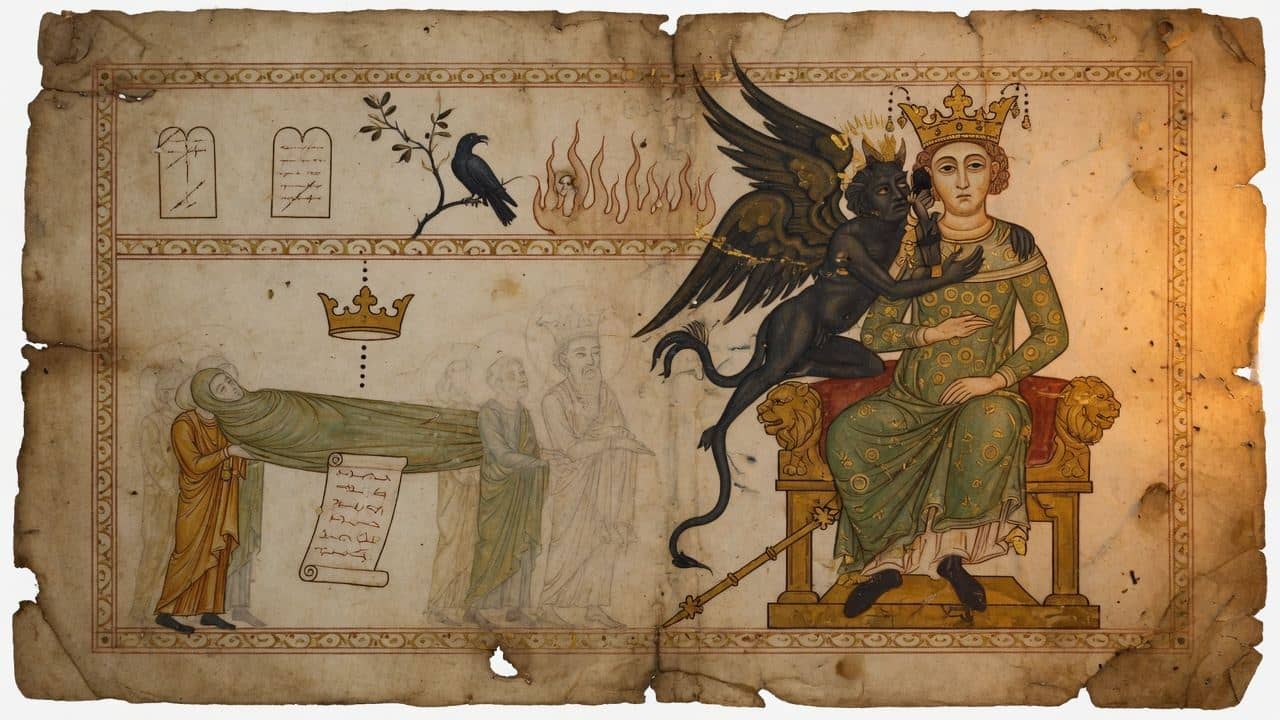
2. For instance the King Abgarus, who ruled with great glory the nations beyond the Euphrates, being afflicted with a terrible disease which it was beyond the power of human skill to cure, when he heard of the name of Jesus, and of his miracles, which were attested by all with one accord sent a message to him by a courier and begged him to heal his disease.
3. But he did not at that time comply with his request; yet he deemed him worthy of a personal letter in which he said that he would send one of his disciples to cure his disease, and at the same time promised salvation to himself and all his house.
4. Not long afterward his promise was fulfilled. For after his resurrection from the dead and his ascent into heaven, Thomas, one of the twelve apostles, under divine impulse sent Thaddeus, who was also numbered among the seventy disciples of Christ, to , as a preacher and evangelist of the teaching of Christ.
5. And all that our Saviour had promised received through him its fulfillment. You have written evidence of these things taken from the archives of Edessa, which was at that time a royal city. For in the public registers there, which contain accounts of ancient times and the acts of Abgarus, these things have been found preserved down to the present time. But there is no better way than to hear the epistles themselves which we have taken from the archives and have literally translated from the Syriac language in the following manner.
Copy of an epistle written by Abgarus the ruler to Jesus, and sent to him at Jerusalem by Ananias the swift courier.
6. “Abgarus, ruler of , to Jesus the excellent Saviour who has appeared in the country of Jerusalem, greeting. I have heard the reports of thee and of thy cures as performed by thee without medicines or herbs. For it is said that thou makest the blind to see and the lame to walk, that thou cleansest lepers and castest out impure spirits and demons, and that thou healest those afflicted with lingering disease, and raisest the dead.
7. And having heard all these things concerning thee, I have concluded that one of two things must be true: either thou art God, and having come down from heaven thou doest these things, or else thou, who doest these things, art the Son of God.
8. I have therefore written to thee to ask thee that thou wouldest take the trouble to come to me and heal the disease which I have. For I have heard that the Jews are murmuring against thee and are plotting to injure thee. But I have a very small yet noble city which is great enough for us both.”
The answer of Jesus to the ruler Abgarus by the courier Ananias.
9.
“Blessed art thou who hast believed in me without having seen me. For it is written concerning me, that they who have seen me will not believe in me, and that they who have not seen me will believe and be saved. But in regard to what thou hast written me, that I should come to thee, it is necessary for me to fulfill all things here for which I have been sent, and after I have fulfilled them thus to be taken up again to him that sent me. But after I have been taken up I will send to thee one of my disciples, that he may heal thy disease and give life to thee and thine.”
…