Before the crowds reach a verdict, hostile spirits name Jesus as the Holy One, the Christ, and the Son of the Most High God.
The Capernaum synagogueThe sunset crowdsThe Gerasene LegionSources & method
Source basis: Ranks, names, enemy titles, and encounters link back to scripture references; later tradition is not blended into the order. Sources
The encounters.
The unseen doesn’t stay unseen. One lane for the appearances — messengers stepping into tents, prisons, and tombs. One lane for the confrontations — every exorcism on record, with what the demons actually said.
The record by function
What are the angels doing?
The chronology remains below. This index reveals the repeated offices inside it—without forcing every encounter into a speculative rank.
Announce & directBirths are announced, callings are given, and people are sent toward the next act in the story.12
- Hagar in the wildernessYahweh's angel
- Fire from the rock for GideonYahweh's angel
- Samson's parents ask his nameYahweh's angel
- Gabriel in swift flightGabriel
- Gabriel at the altar of incenseGabriel
- The AnnunciationGabriel
- Joseph told not to be afraidAn angel of the Lord, in a dream
- The flight into EgyptAn angel of the Lord, in a dream
- Called home from EgyptAn angel of the Lord, in a dream
- The stone rolled backAn angel of the Lord
- Philip sent to the desert roadAn angel of the Lord
- Cornelius told his prayers were heardAn angel of God, in a vision
Guard & deliverThe vulnerable are pulled from danger, a sacrifice is stayed, and prisons or death traps lose their hold.5
Judge & wage warDrawn swords, fiery armies, halted plagues, and judgment scenes show that messenger is not the only angelic office.5
Reveal & interpretThe boundary opens through dreams, visions, sacred fire, and figures whose identity the text sometimes leaves unresolved.5
Worship & strengthenThe host praises, serves, feeds, heals, guides, and strengthens without becoming the center of the scene.5
They appeared
Hagar in the wilderness · Yahweh's angel
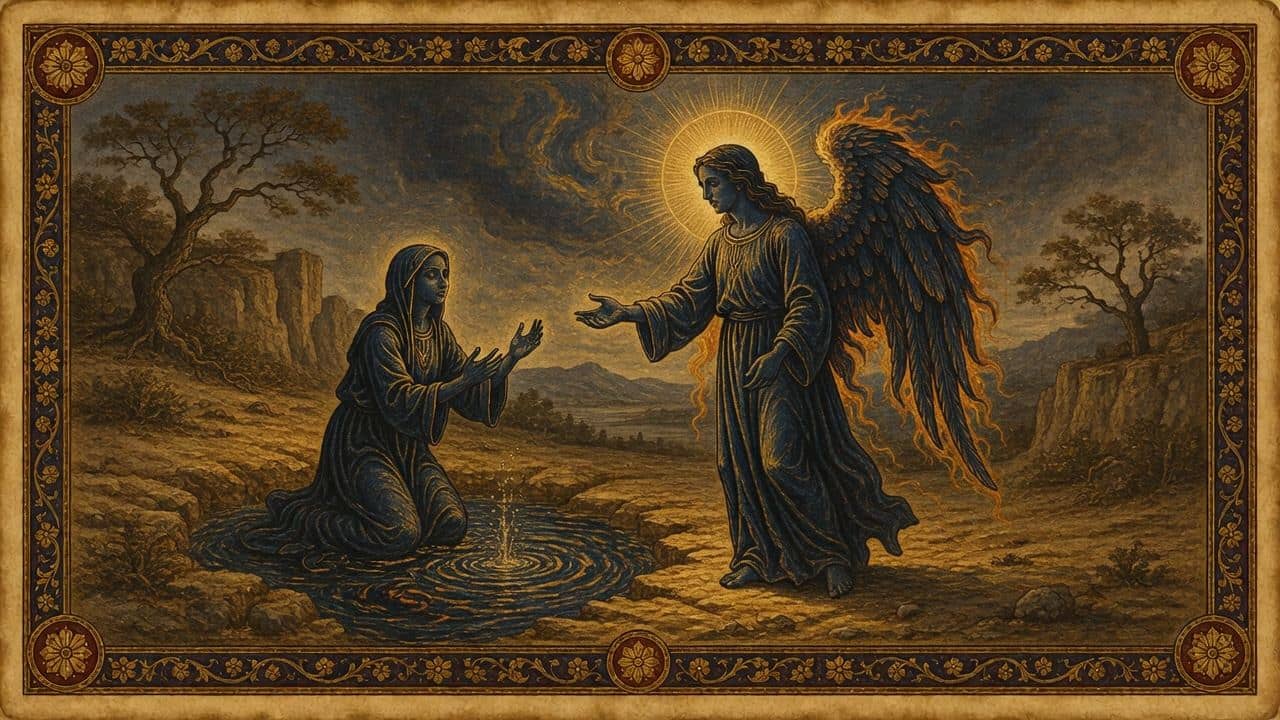
The first appearance of "'s angel" in scripture: he finds a runaway servant by a spring, and she in turn gives God a name.
“You are a God who sees”
Genesis 16:7–13Three visitors at the oaks of Mamre · Three men — Yahweh and two angels (GEN 18:22; 19:1)
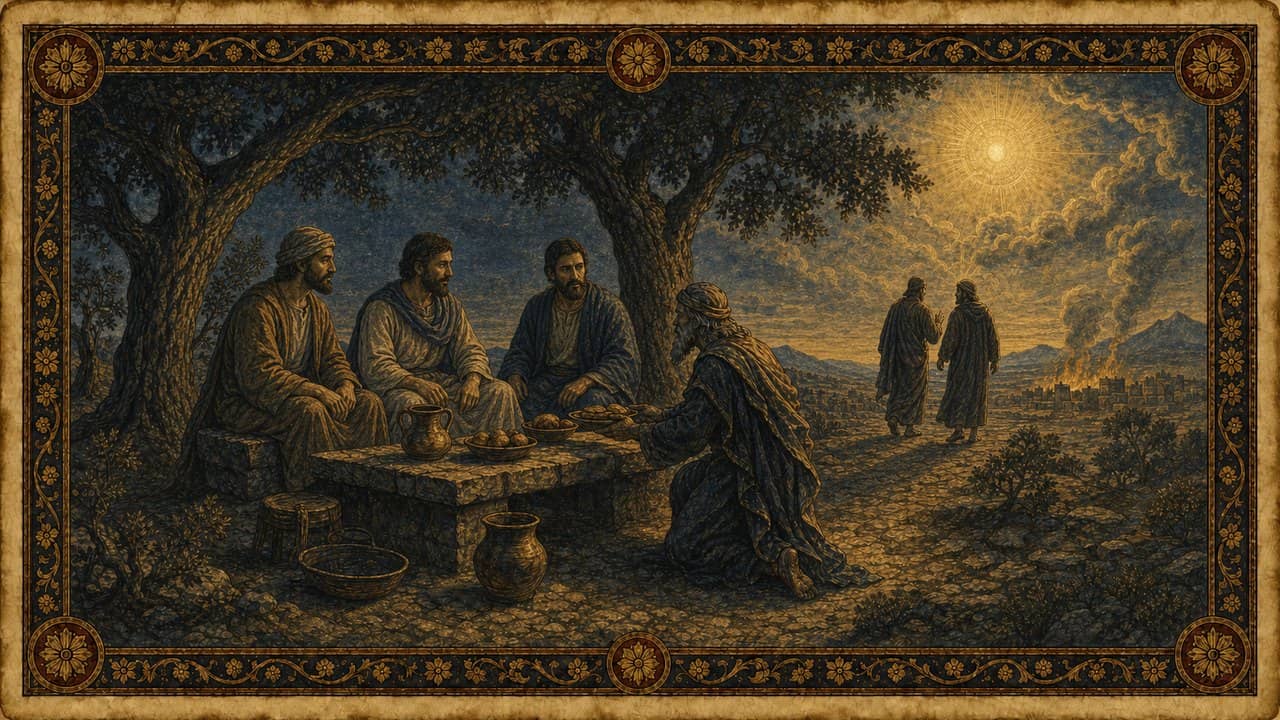
Yahweh appears to Abraham in the heat of the day as three men; Abraham runs to feed them, and from the meal comes the promise that Sarah will have a son — then two of the three turn and go on toward Sodom.
“He lifted up his eyes and looked, and saw that three men stood near him. When he saw them, he ran to meet them from the tent door, and bowed himself to the earth.”
Genesis 18:1–8The mob blinded at Lot's door · Two angels
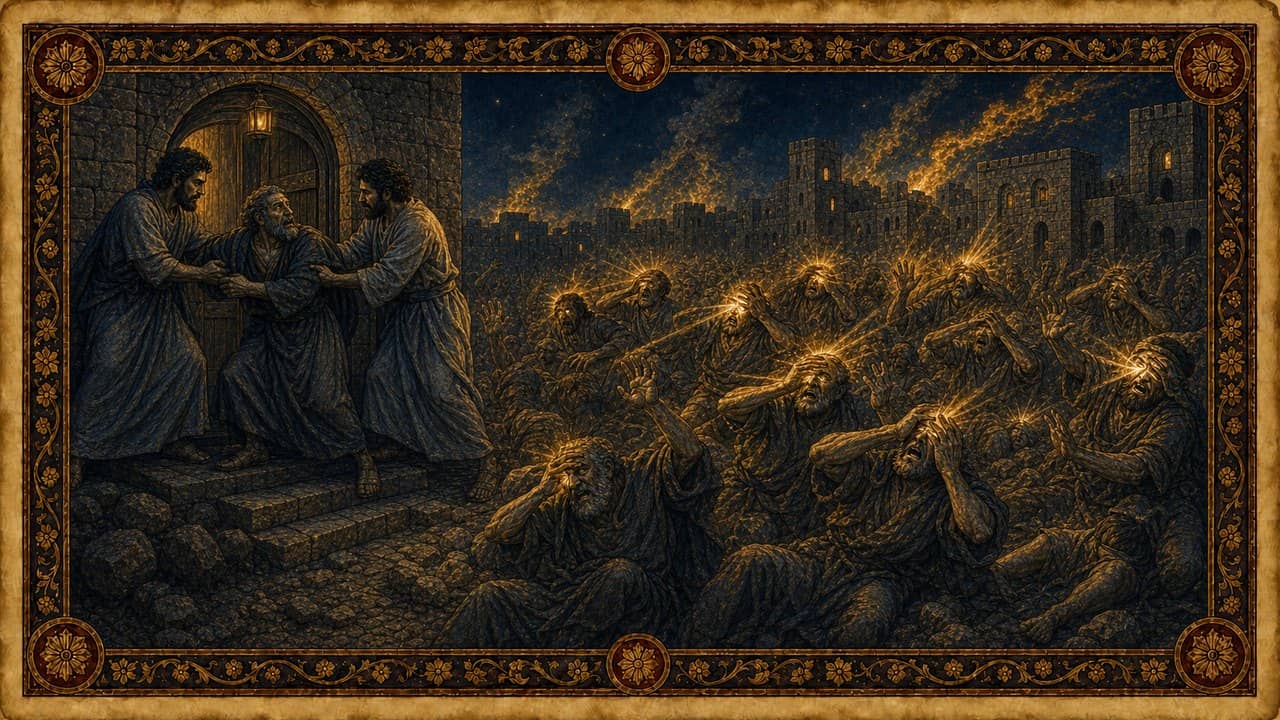
The two who left Abraham reach Sodom at evening; Lot presses them into his house, the men of the city surround it, and the angels pull Lot inside and strike the crowd blind — small and great alike.
“They struck the men who were at the door of the house with blindness, both small and great, so that they wearied themselves to find the door.”
Genesis 19:1–11The knife stayed on Moriah · Yahweh's angel
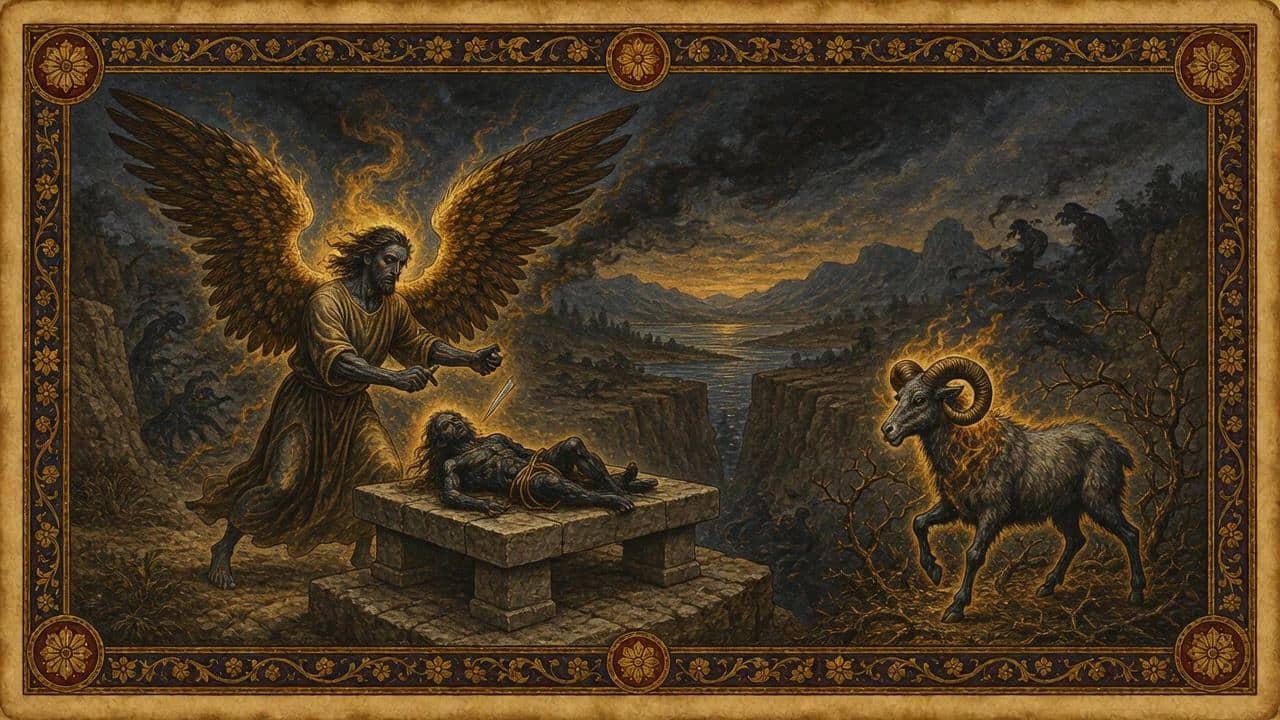
At the moment Abraham raises the knife over Isaac, the angel calls his name twice from the sky and stops him.
“Don’t lay your hand on the boy or do anything to him. For now I know that you fear God, since you have not withheld your son, your only son, from me.”
Genesis 22:11–12Jacob's stairway at Bethel · The angels of God
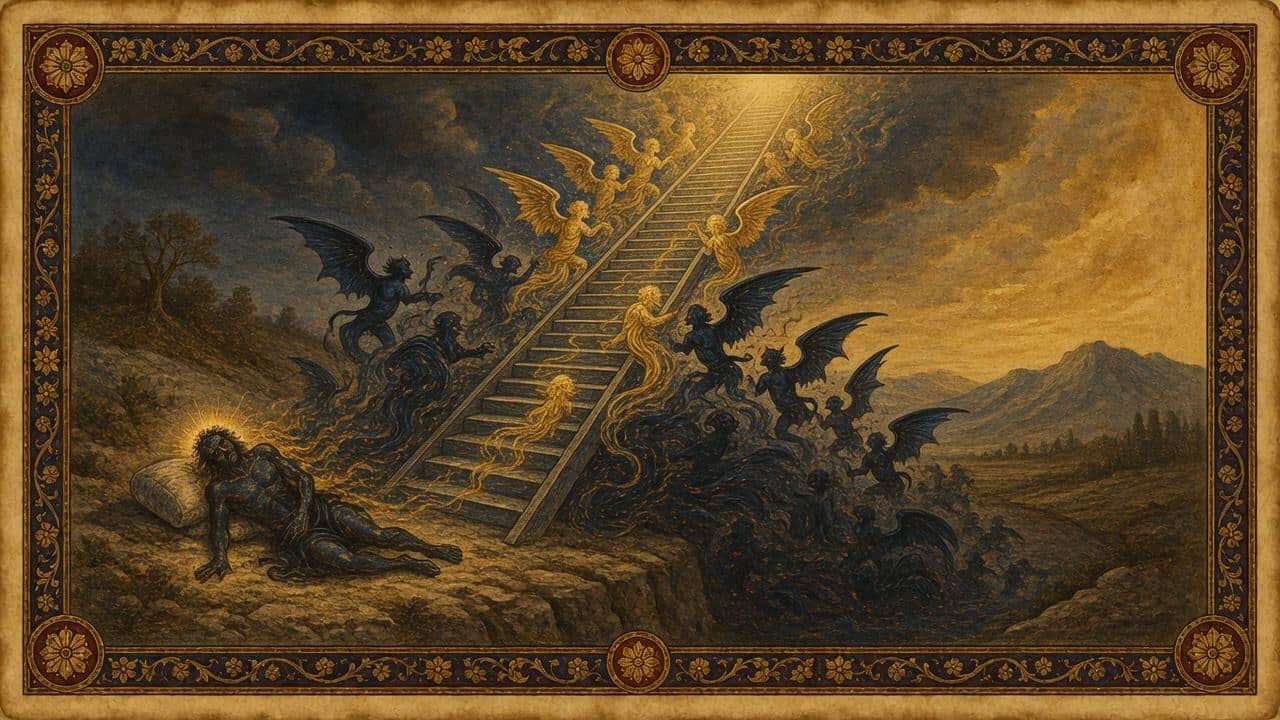
In a dream Jacob sees a stairway joining earth to heaven, with angels in constant traffic on it.
“Behold, the angels of God were ascending and descending on it.”
Genesis 28:12The wrestling at Peniel · "A man" (HOS 12:4 calls him the angel)
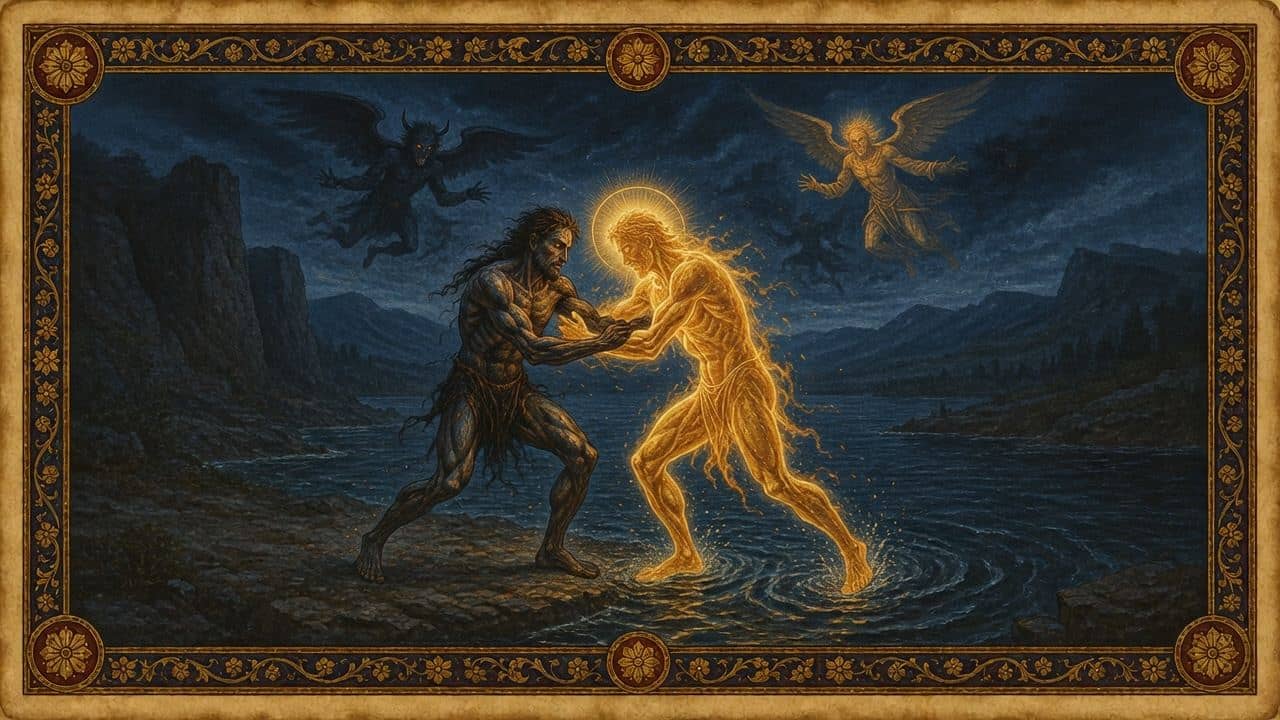
Jacob wrestles until daybreak with one the text simply calls "a man"; Hosea 12:4 says he struggled with the angel, and Jacob himself concludes he has seen God face to face.
“I have seen God face to face, and my life is preserved.”
Genesis 32:24–30The flame in the bush · Yahweh's angel
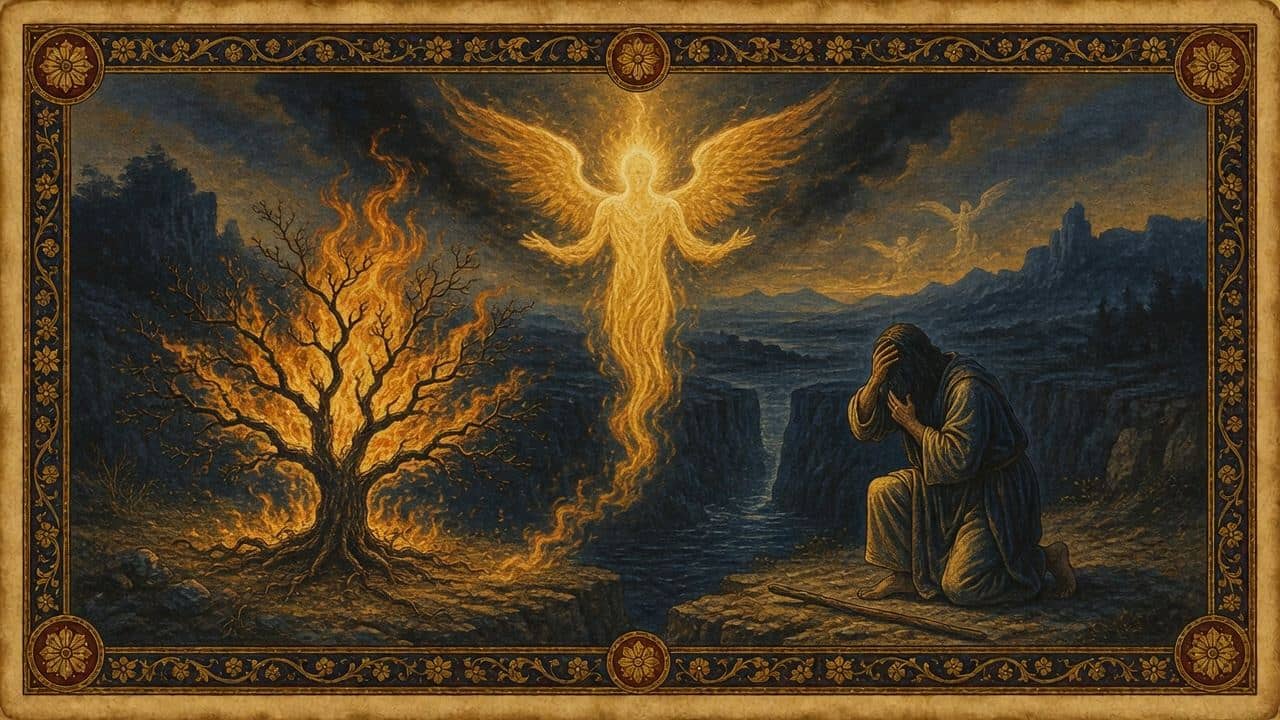
The angel appears to Moses in a flame of fire in a bush that burns without being consumed; from verse 4 it is Yahweh himself who speaks.
“the bush burned with fire, and the bush was not consumed”
Exodus 3:2Balaam's donkey sees first · Yahweh's angel
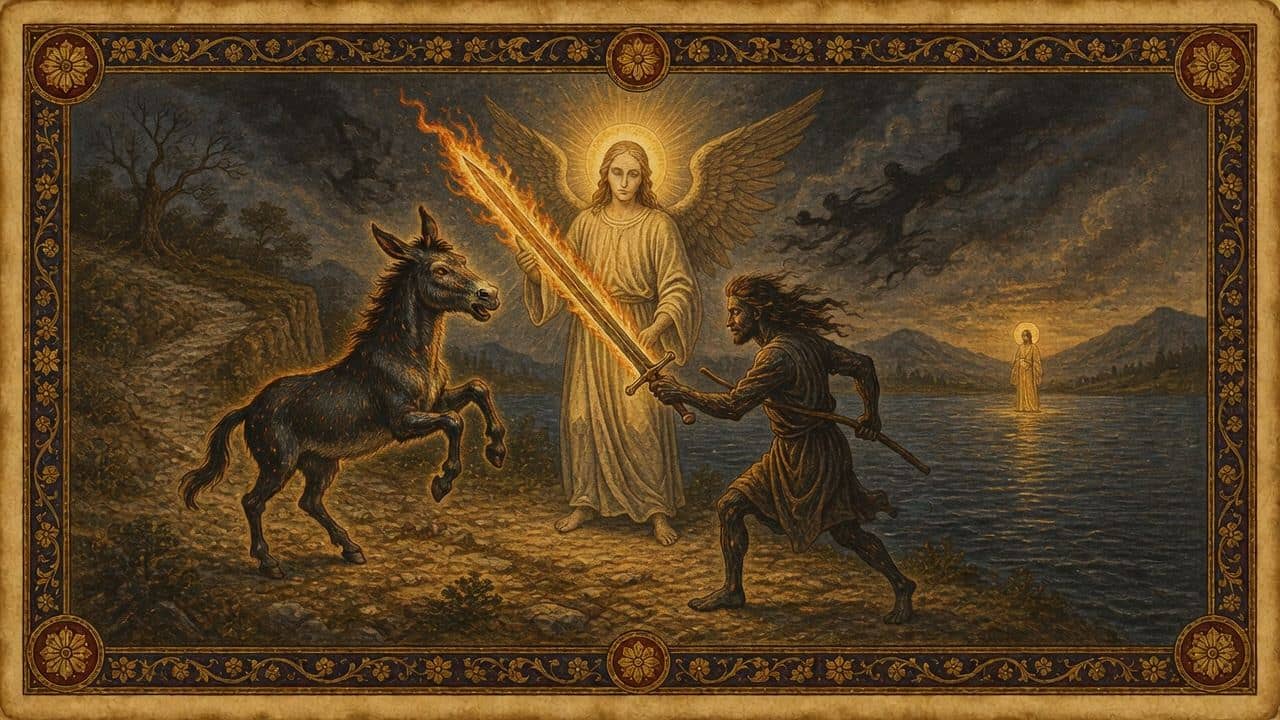
The angel stands in the road with a drawn sword; the donkey sees him three times before God opens the prophet's own eyes.
“The donkey saw Yahweh’s angel standing in the way, with his sword drawn in his hand”
Numbers 22:22–31The commander before Jericho · The commander of Yahweh's army
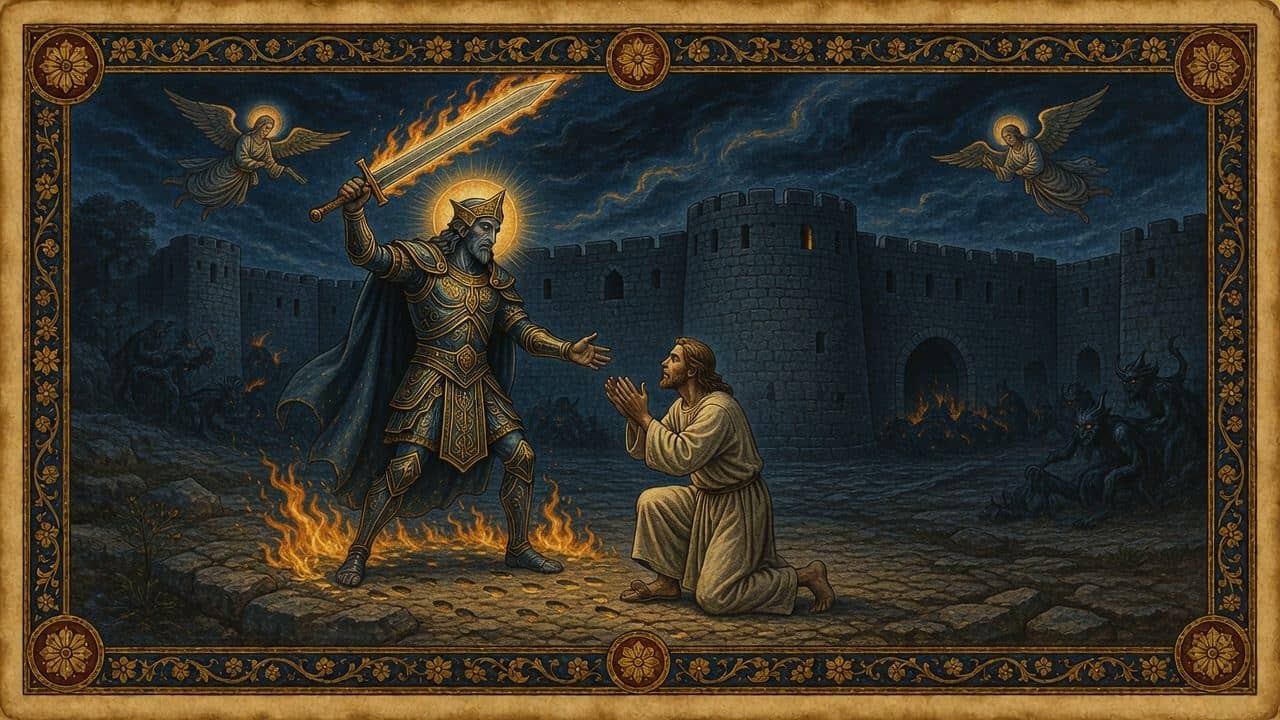
Asked "Are you for us, or for our enemies?", the armed figure refuses both sides and tells Joshua to remove his sandals on holy ground.
“No; but I have come now as commander of Yahweh’s army.”
Joshua 5:13–15Fire from the rock for Gideon · Yahweh's angel
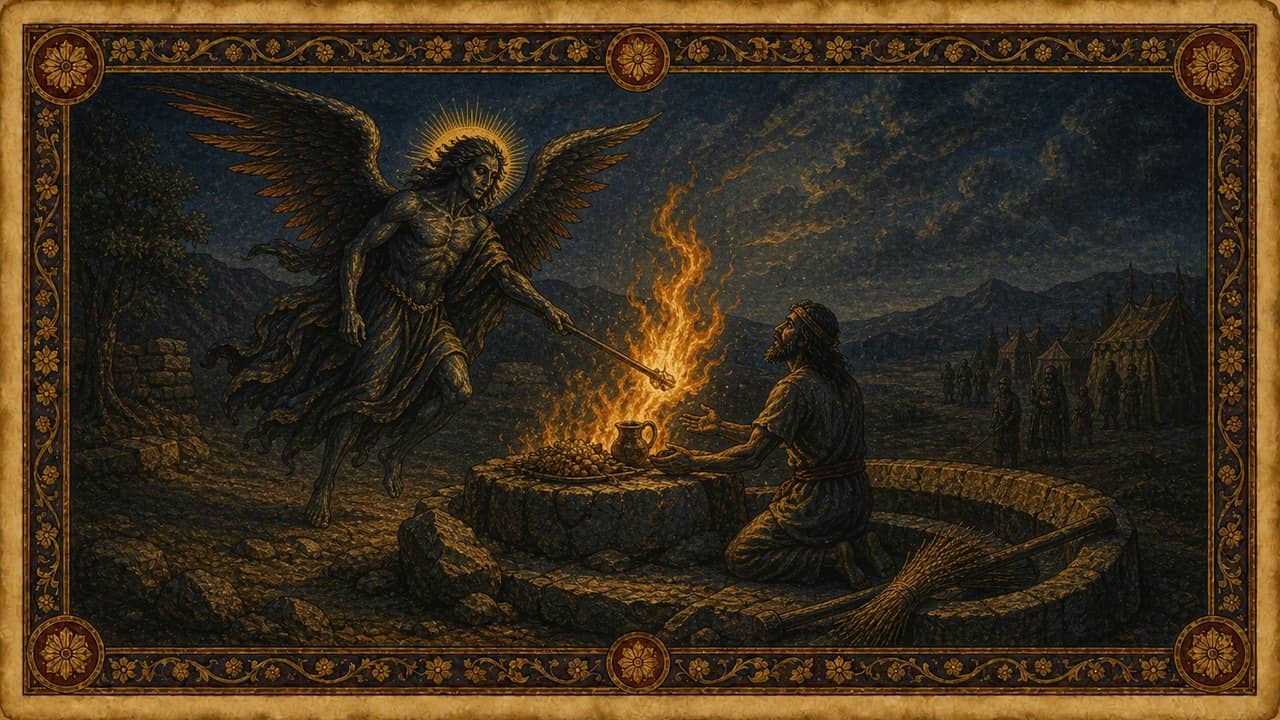
The angel finds Gideon beating out wheat in a wine press, hiding it from the Midianites, and greets him as “mighty man of valor”; when Gideon brings an offering, the angel touches it with the end of his staff, fire rises out of the rock and consumes it, and he departs out of his sight.
“Then Yahweh’s angel stretched out the end of the staff that was in his hand, and touched the meat and the cakes; and fire went up out of the rock and consumed the meat and the unleavened cakes.”
Judges 6:11–22The Angel of the LORD, among the named ones →Samson's parents ask his name · Yahweh's angel
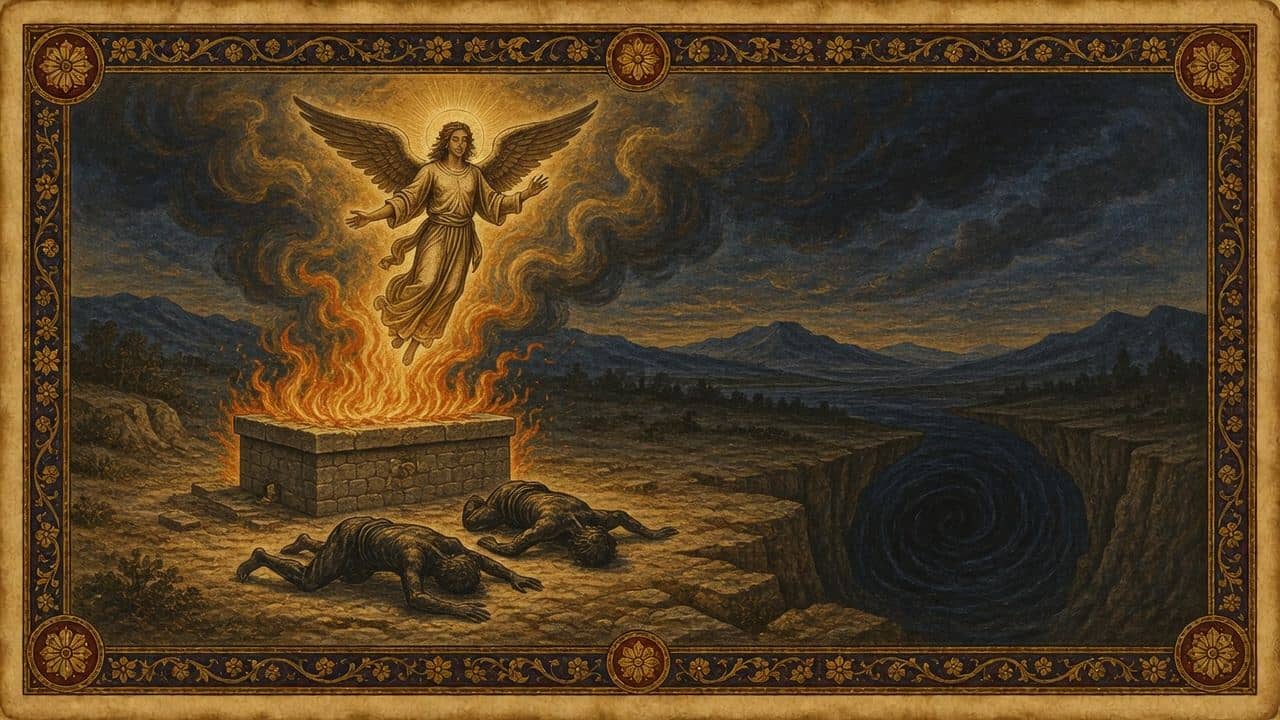
The angel who announces Samson's birth refuses to give his name, then ascends in the flame of the altar while Manoah and his wife watch.
“Why do you ask about my name, since it is incomprehensible?”
Judges 13:17–20The plague stayed at the threshing floor · The destroying angel
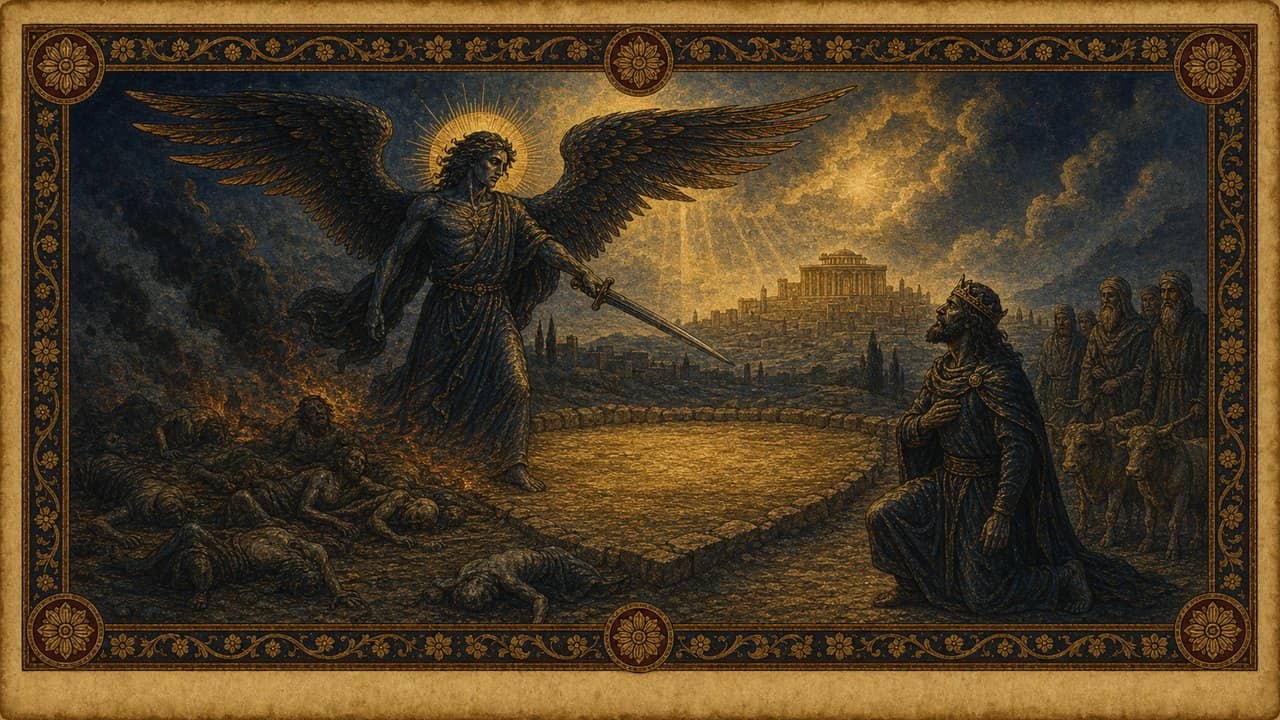
The angel sent over Jerusalem in the census plague is stopped at Araunah’s threshing floor — David sees the one who struck the people, and buys that floor; it becomes the temple mount (2CH 3:1). Chronicles sees him standing between earth and sky, drawn sword in hand (1CH 21:16).
“It is enough. Now withdraw your hand.”
2 Samuel 24:16–17The same census, two tellings, in the fall →Elijah fed in the desert · Yahweh's angel
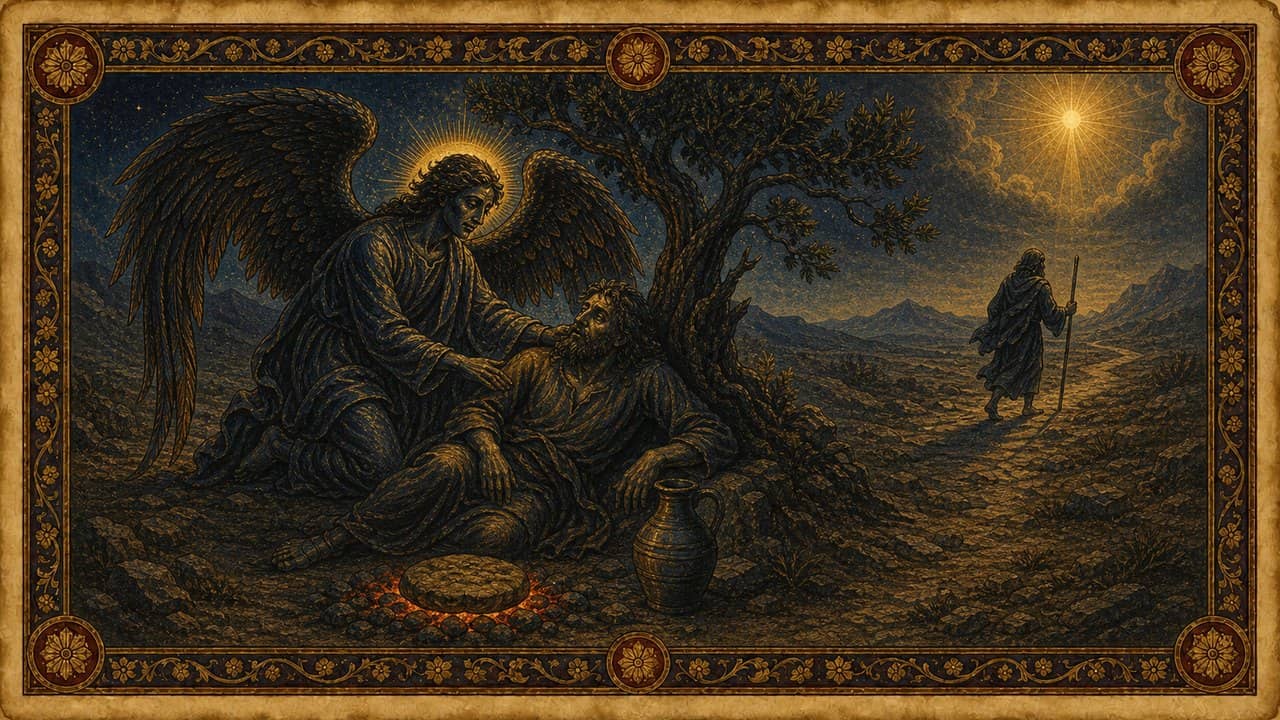
Fleeing for his life and asking to die, Elijah is woken under a juniper tree by an angel’s touch — a cake baked on coals and a jar of water, twice given — and on the strength of that food he walks forty days and forty nights to Horeb.
“Arise and eat, because the journey is too great for you.”
1 Kings 19:5–8The mountain full of fire at Dothan · Horses and chariots of fire
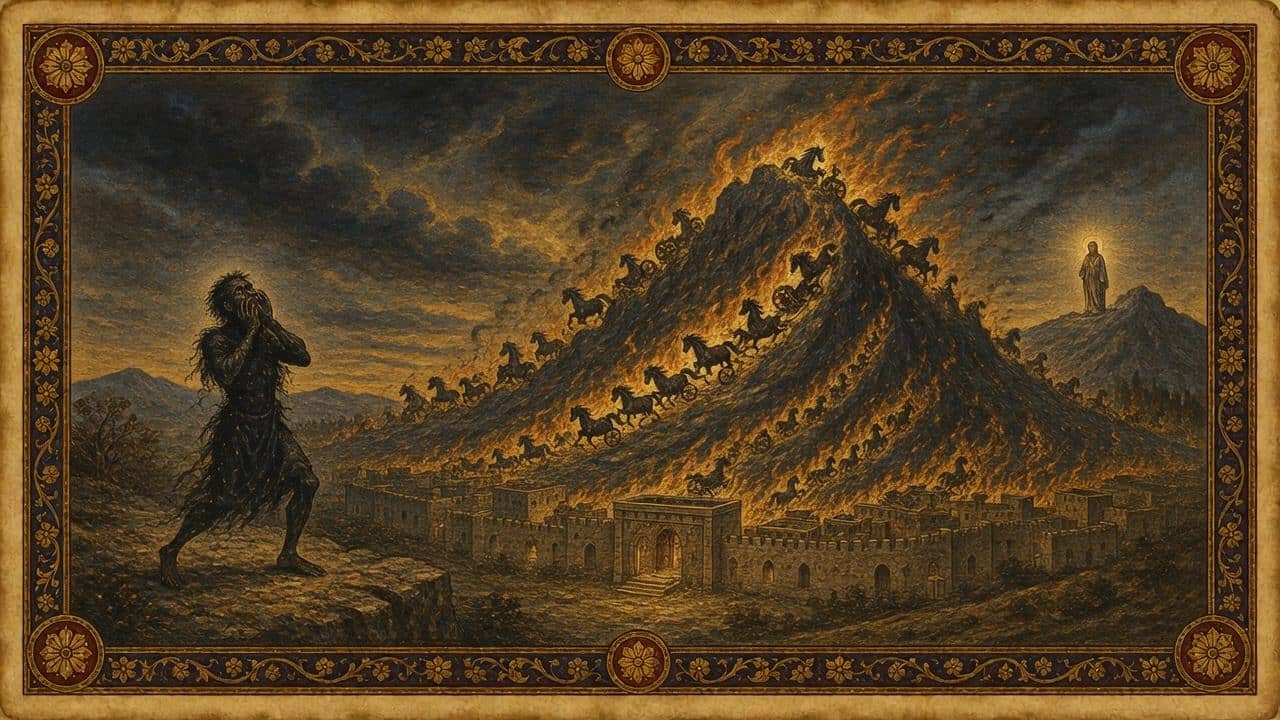
Elisha prays for his terrified servant's eyes to be opened, and the young man sees the unseen army that was there all along.
“behold, the mountain was full of horses and chariots of fire around Elisha”
2 Kings 6:17The night the Assyrian army died · Yahweh's angel
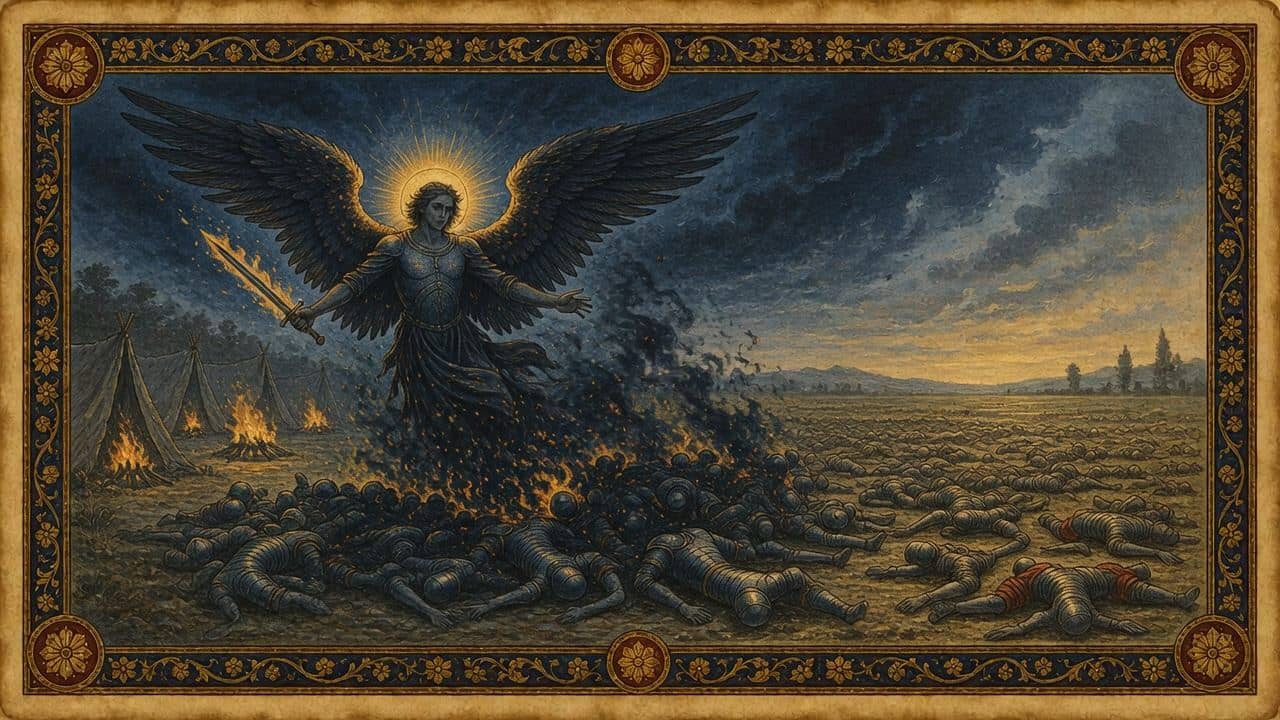
In one night the angel strikes 185,000 in Sennacherib's camp, and the siege of Jerusalem ends without a battle.
“That night, Yahweh’s angel went out and struck one hundred eighty-five thousand in the camp of the Assyrians.”
2 Kings 19:35The seraphim and the coal · The seraphim
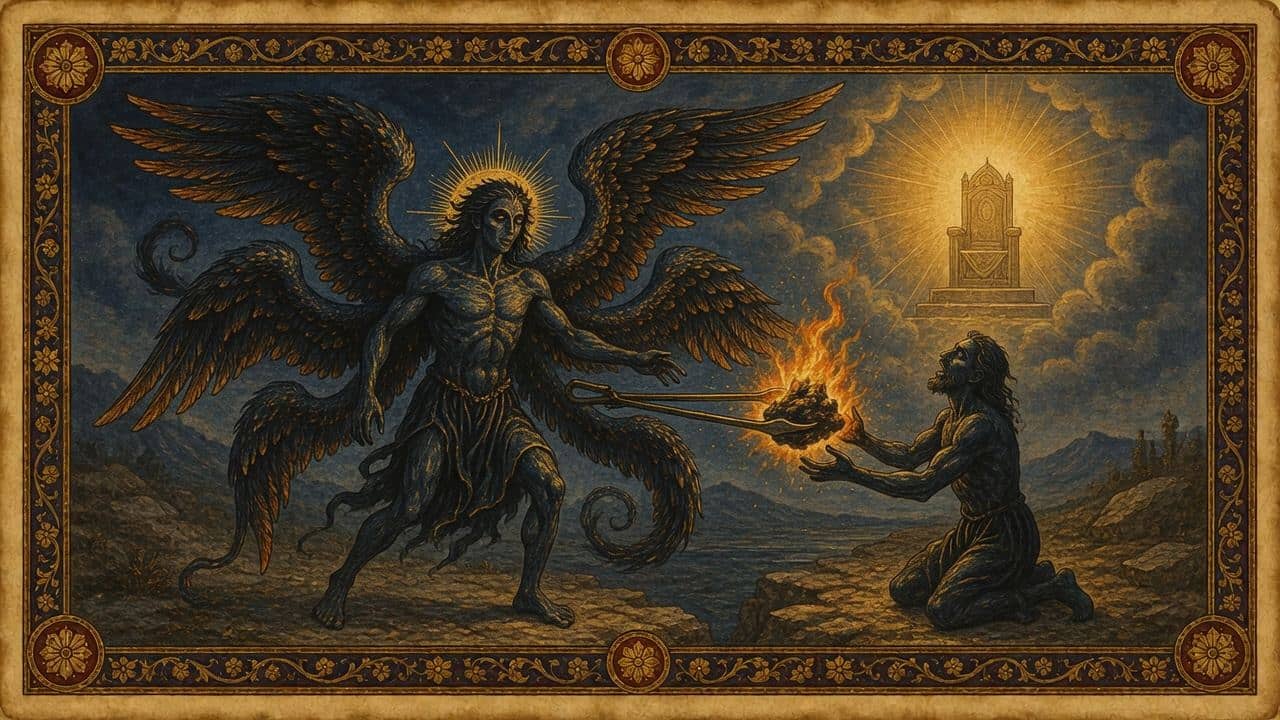
Six-winged cry "Holy" above the throne, and one touches Isaiah's lips with a live coal from the altar to take his guilt away.
“Holy, holy, holy, is Yahweh of Armies! The whole earth is full of his glory!”
Isaiah 6:1–7The fourth in the furnace · A fourth figure in the fire
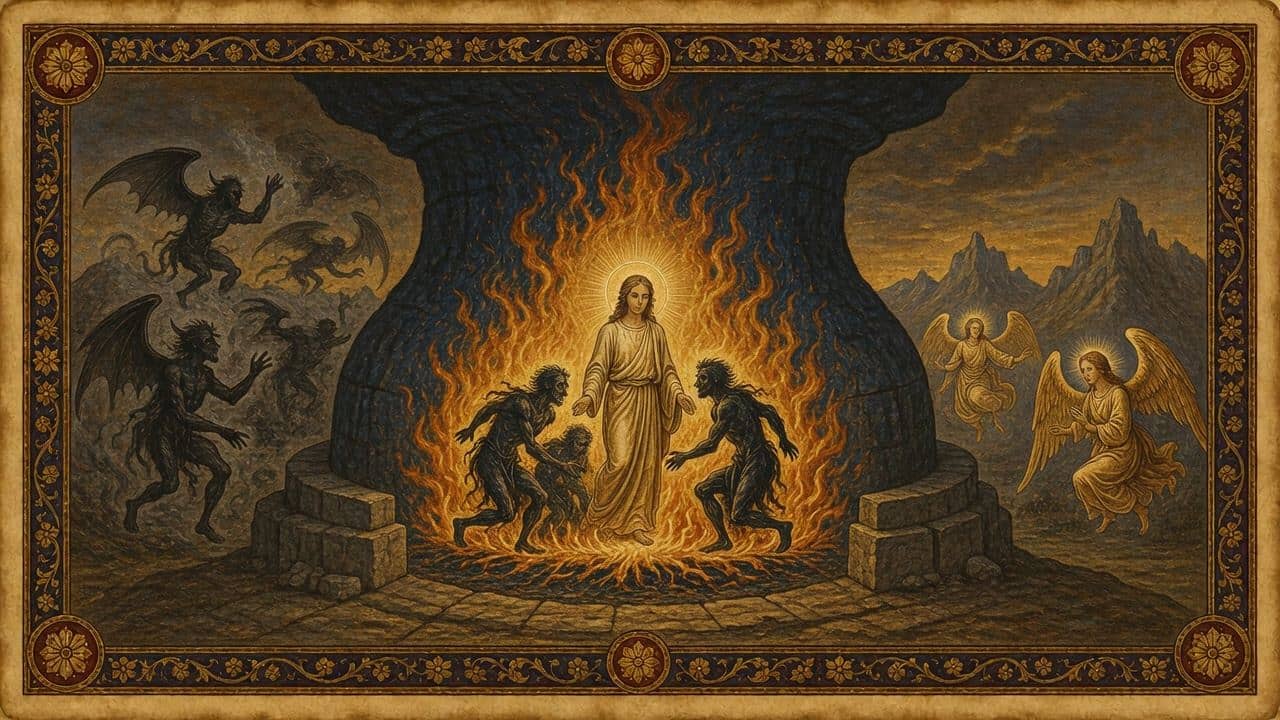
Nebuchadnezzar sees four men walking unharmed in the fire; he calls the fourth "like a son of the gods," and in verse 28 credits God with sending his angel — who the fourth is remains the king's description, not the narrator's.
“Look, I see four men loose, walking in the middle of the fire, and they are unharmed. The appearance of the fourth is like a son of the gods.”
Daniel 3:24–25The lions' mouths shut · God's angel, unseen
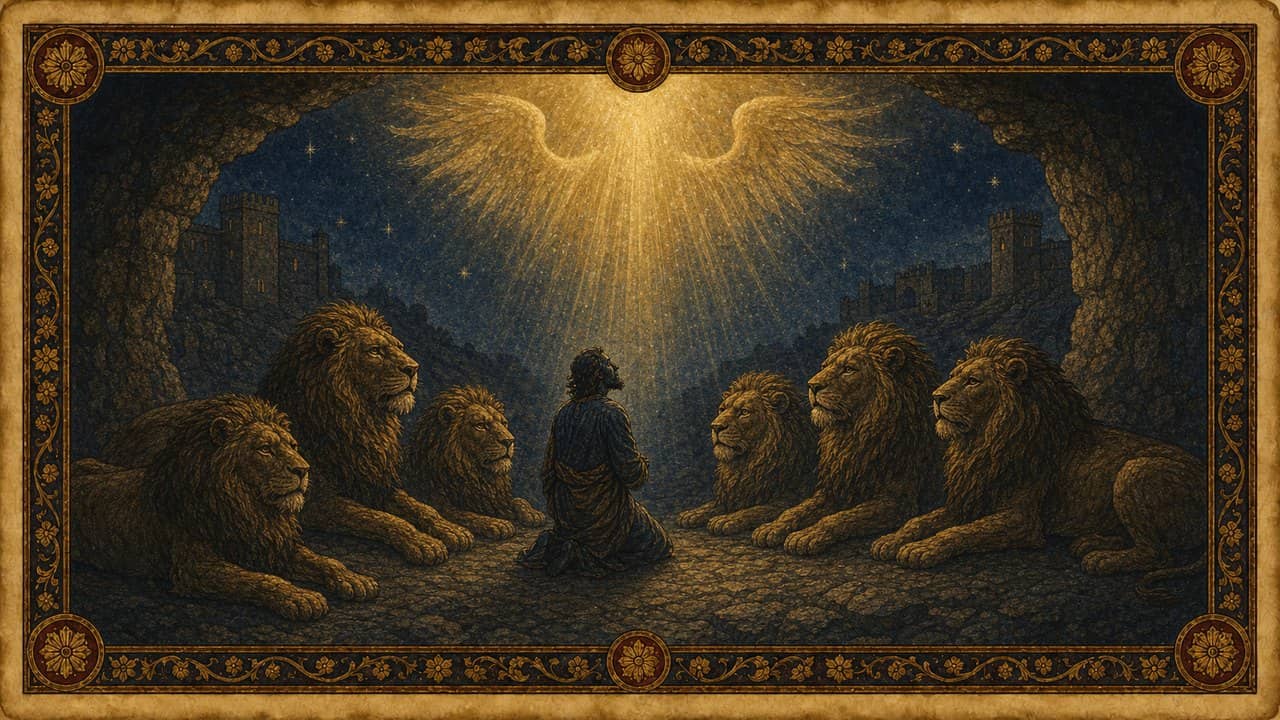
No one sees this one: after the night in the den, Daniel’s own testimony is that God sent his angel and shut the lions’ mouths — an appearance known only by its result.
“My God has sent his angel, and has shut the lions’ mouths, and they have not hurt me.”
Daniel 6:22Gabriel in swift flight · Gabriel
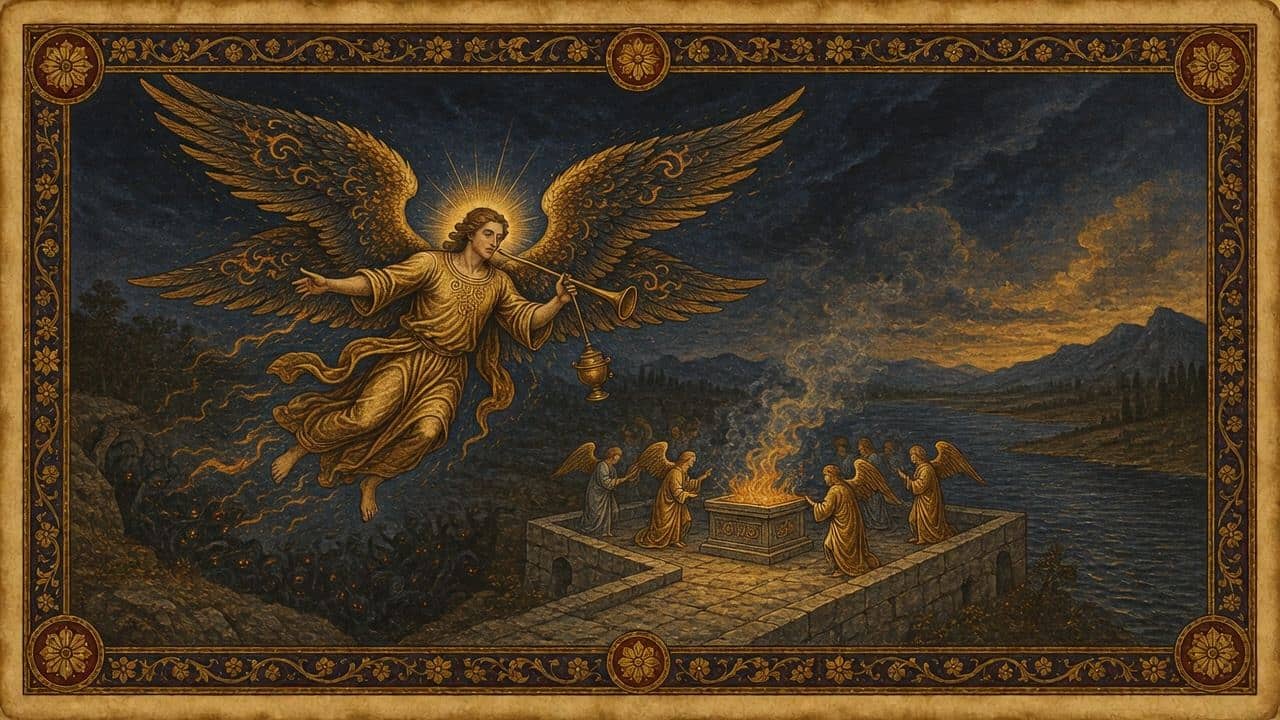
While Daniel is still praying, Gabriel — one of only two angels the Hebrew Bible names — arrives at the time of the evening offering.
“the man Gabriel, whom I had seen in the vision at the beginning, being caused to fly swiftly, touched me about the time of the evening offering”
Daniel 9:21Gabriel, among the named ones →Raphael revealed · Raphael
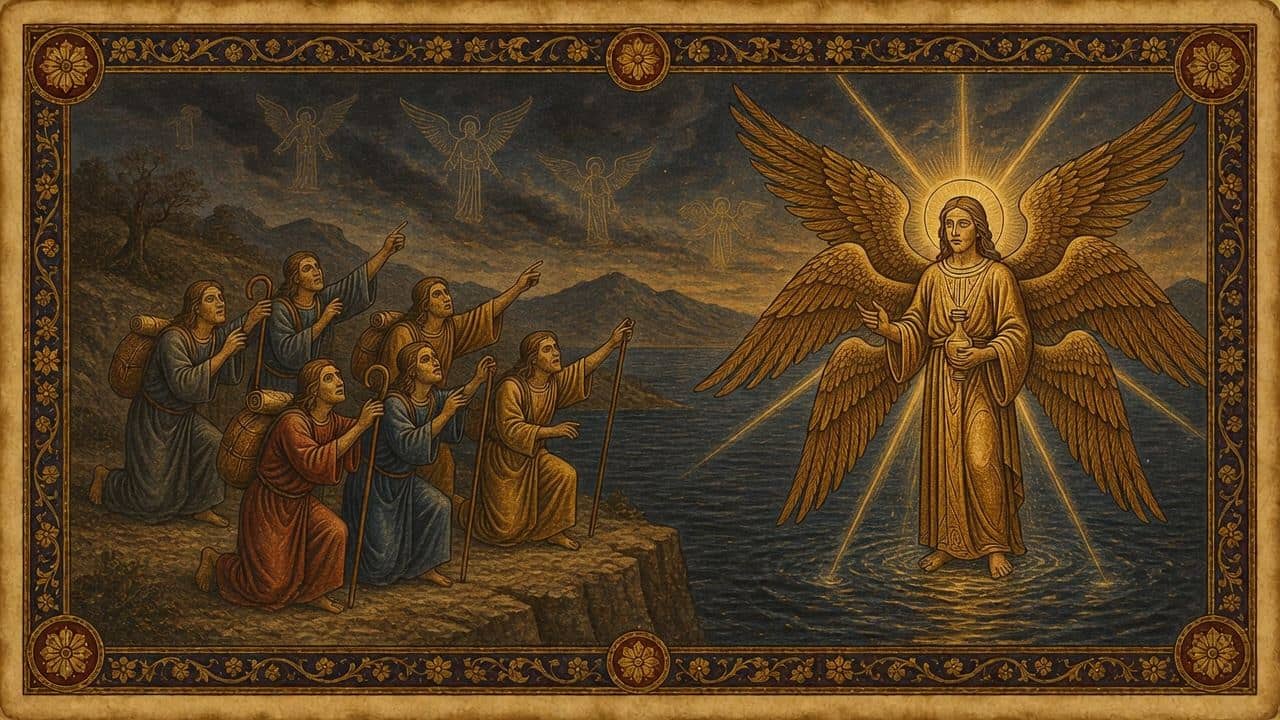
The traveling companion who has guided Tobias the whole journey finally identifies himself; Tobit and Tobias fall on their faces (this book stands in the , not the Hebrew ).
“I am , one of the seven holy angels which present the prayers of the saints and go in before the glory of the Holy One.”
Tobit 12:15Raphael, among the named ones →Gabriel at the altar of incense · Gabriel
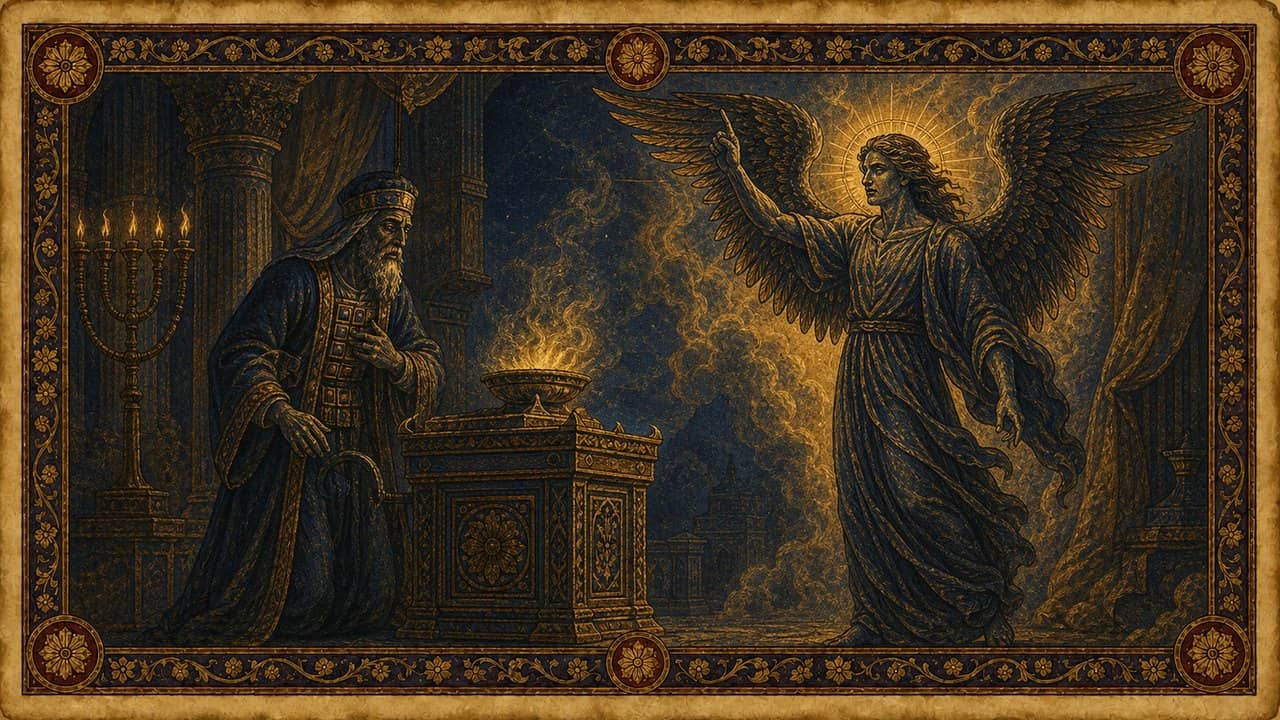
Gabriel’s first recorded sending: he stands at the right side of the altar of incense and announces John’s birth to a troubled old priest — and when Zechariah asks how he can be sure, Gabriel names himself and strikes him silent until the day.
“I am Gabriel, who stands in the presence of God. I was sent to speak to you and to bring you this good news.”
Luke 1:11–20Gabriel, among the named ones →The Annunciation · Gabriel
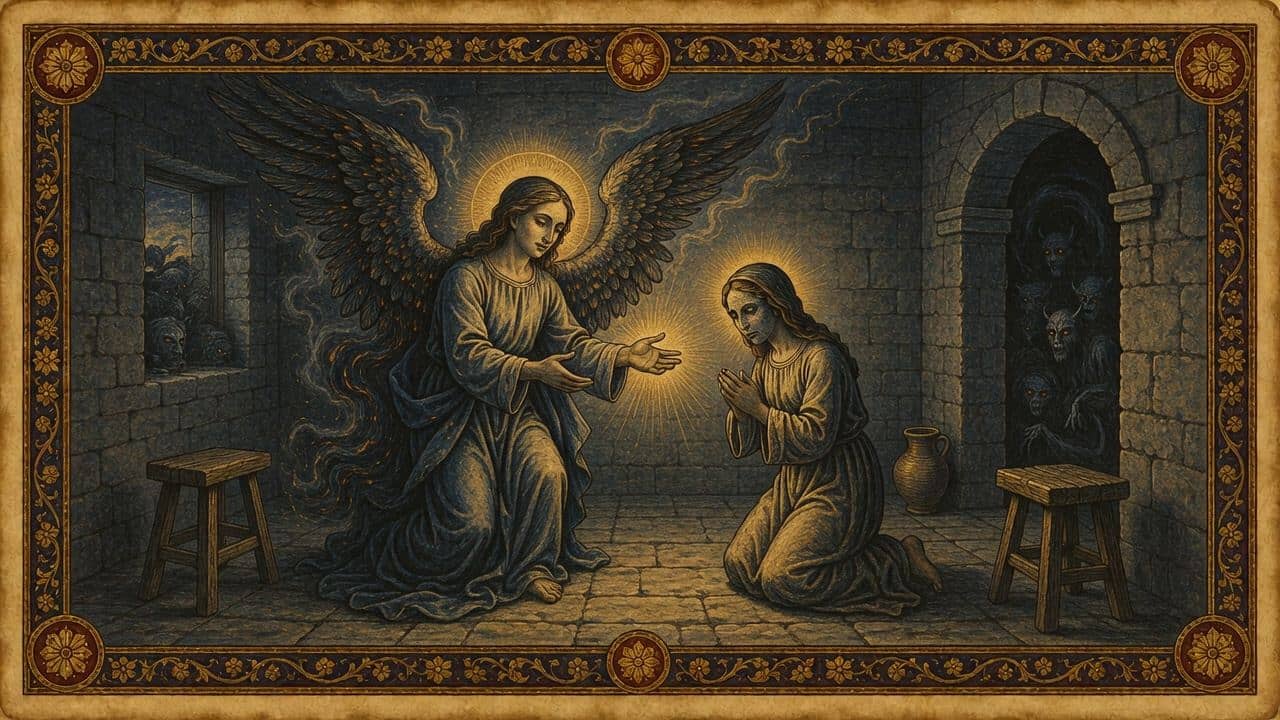
Gabriel is sent to a virgin in Nazareth to announce the birth of Jesus; Mary answers, "Behold, the servant of the Lord; let it be done to me according to your word."
“Rejoice, you highly favored one! The Lord is with you. Blessed are you among women!”
Luke 1:26–38Gabriel, among the named ones →Joseph told not to be afraid · An angel of the Lord, in a dream
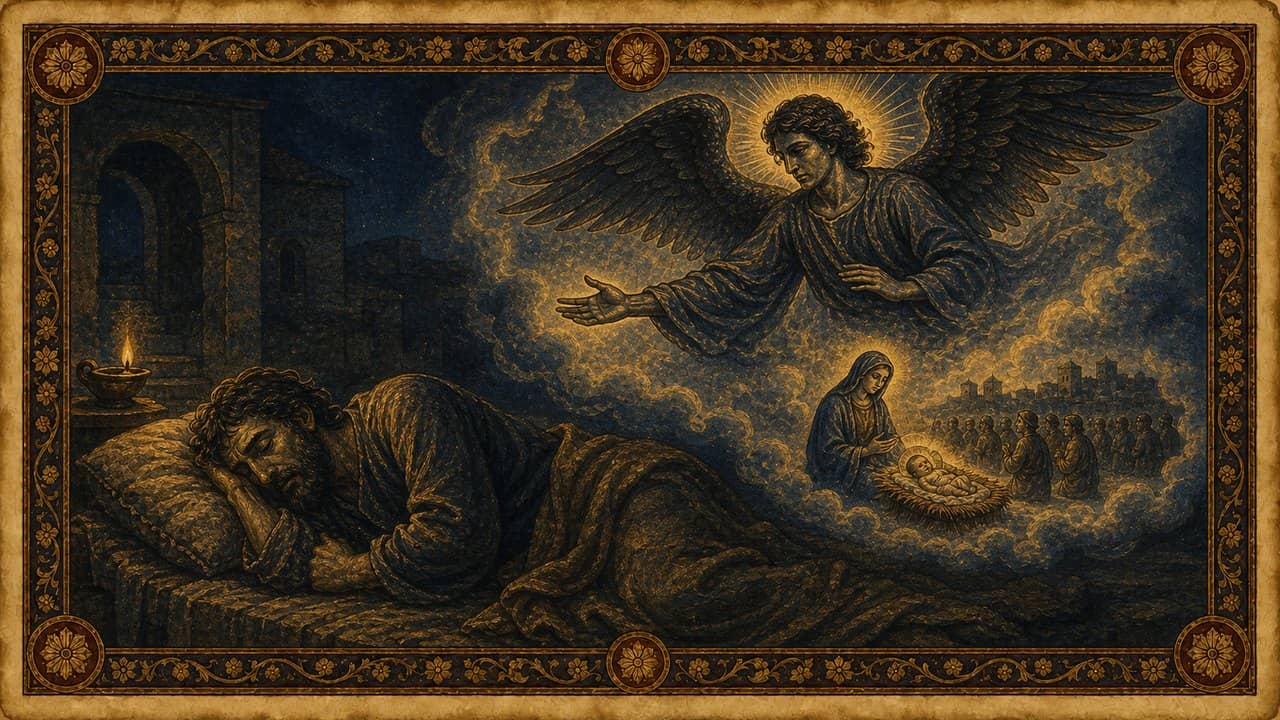
The first of three dreams: Joseph, planning to divorce Mary quietly, is stopped in his sleep — the child is of the Holy Spirit, and his name will be Jesus, “for it is he who shall save his people from their sins.”
“Joseph, son of David, don’t be afraid to take to yourself Mary as your wife, for that which is conceived in her is of the Holy Spirit.”
Matthew 1:20–21The shepherds and the multitude · An angel of the Lord, then a multitude of the heavenly army
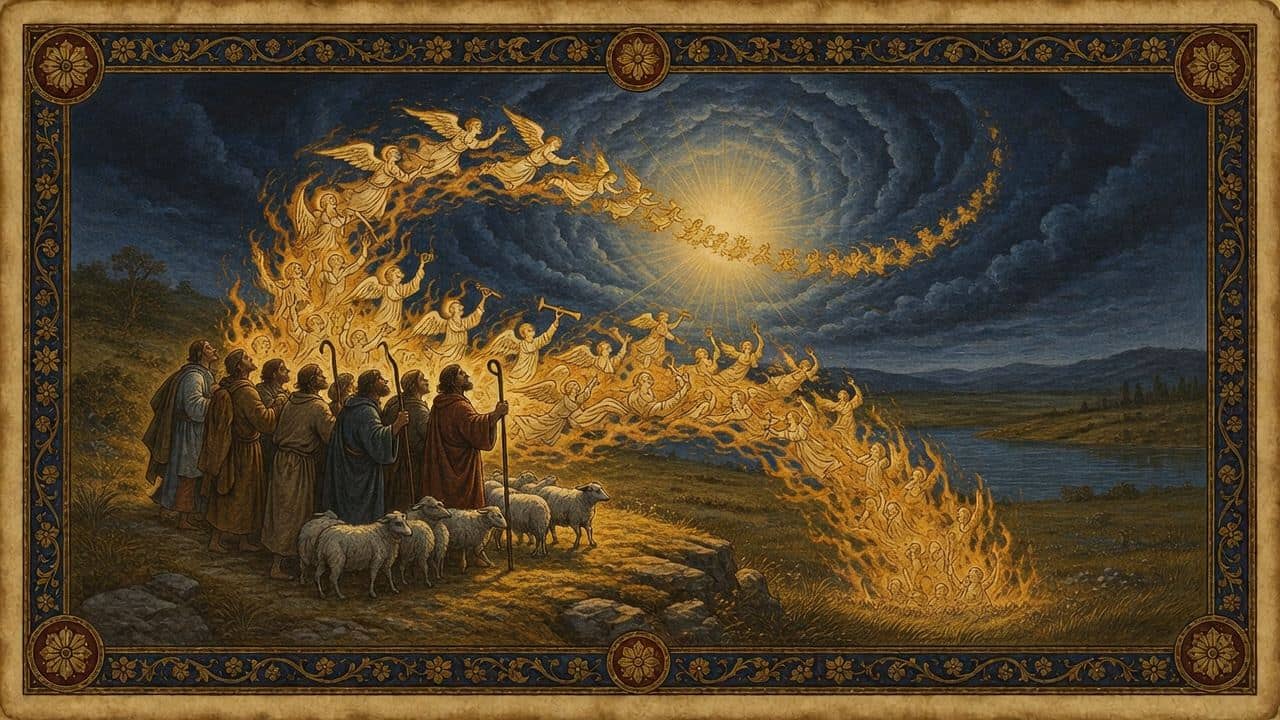
One angel announces the birth of a Savior to night-shift shepherds, and suddenly the whole heavenly army is praising God over a field.
“Glory to God in the highest, on earth peace, good will toward men.”
Luke 2:8–14The flight into Egypt · An angel of the Lord, in a dream
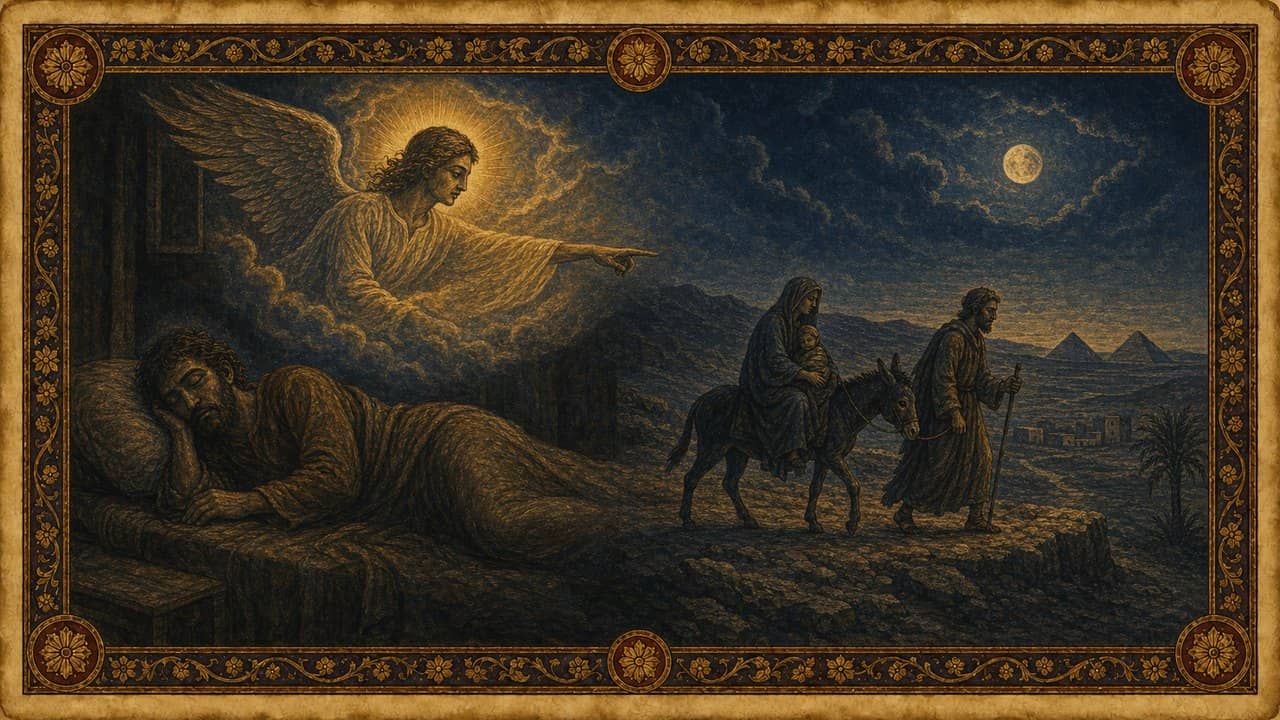
The moment the magi depart, the angel comes to Joseph in sleep with a direction and a reason — Herod will seek the child to destroy him — and the family is gone to Egypt before morning.
“Arise and take the young child and his mother, and flee into Egypt, and stay there until I tell you, for Herod will seek the young child to destroy him.”
Matthew 2:13The flight to Egypt, in the Jesus room →Called home from Egypt · An angel of the Lord, in a dream
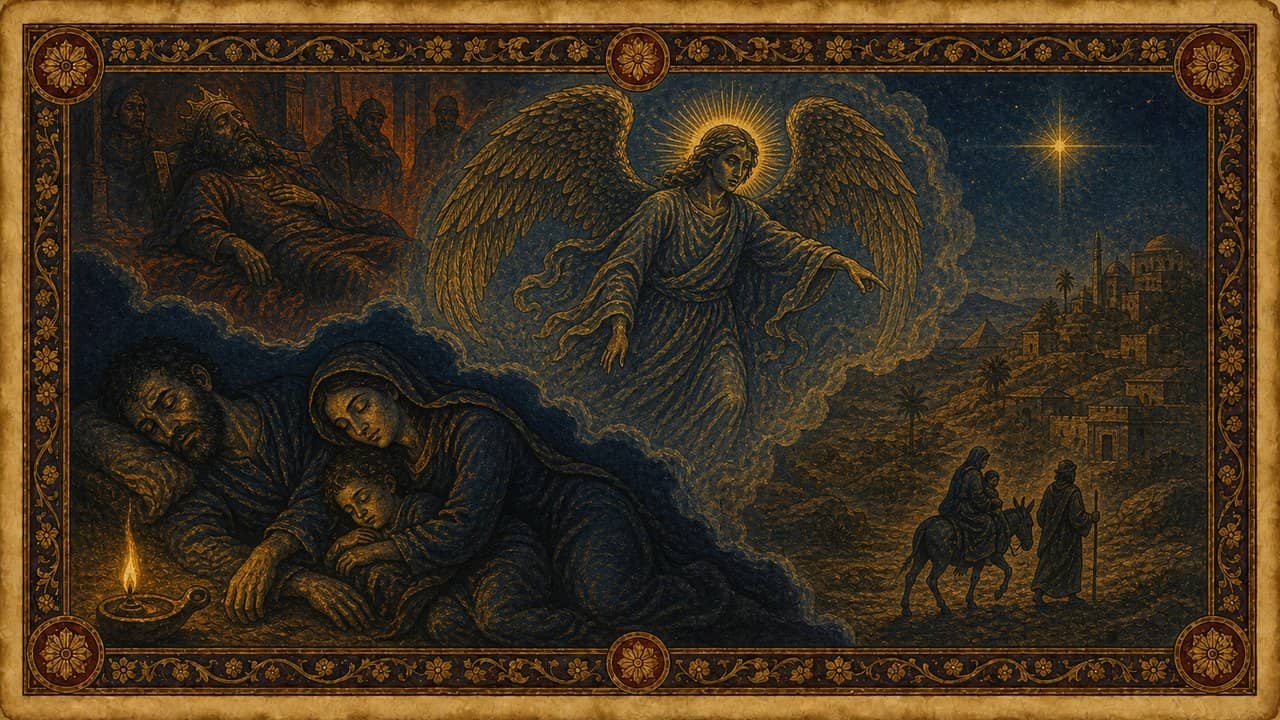
Herod dies, and the angel comes a third time with the same opening words and a new direction — the third dream sends the family back to Israel.
“Arise and take the young child and his mother, and go into the land of Israel, for those who sought the young child’s life are dead.”
Matthew 2:19–20Served after the temptation · Angels
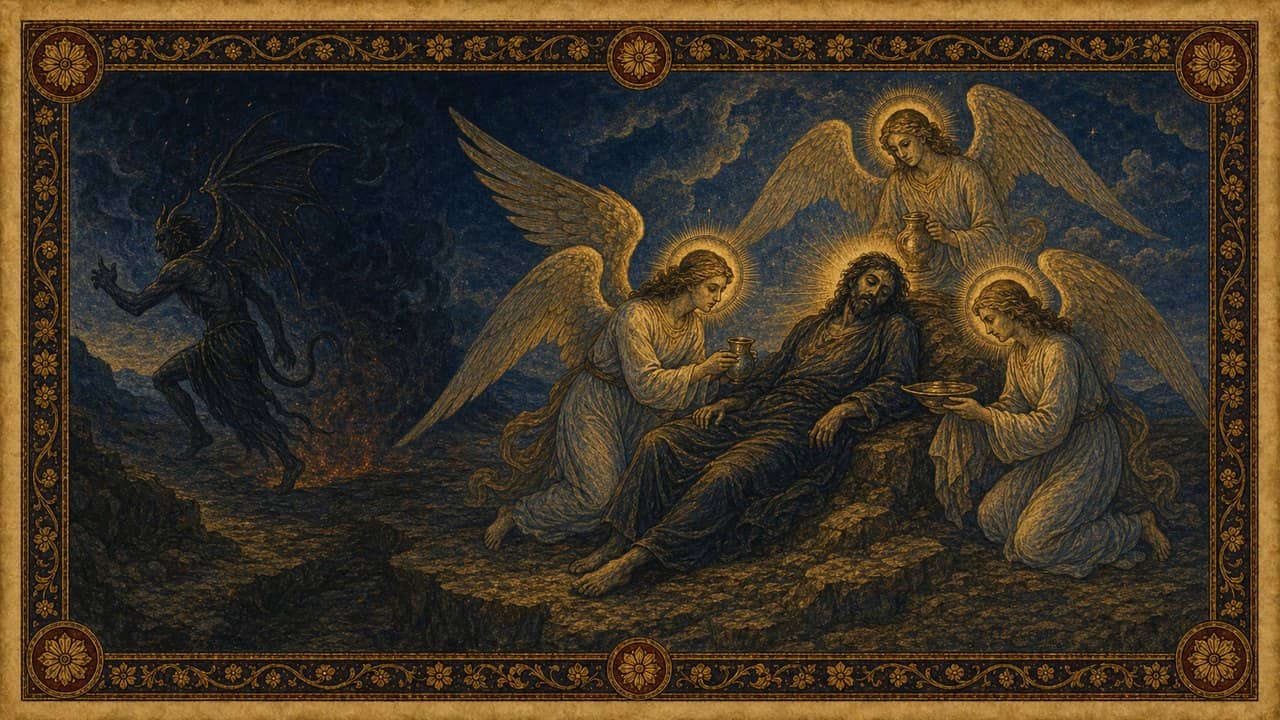
When the devil leaves him, angels come and serve Jesus — Mark records the same ministering (MRK 1:13): the host attends the one the demons elsewhere name and flee.
“Then the devil left him, and behold, angels came and served him.”
Matthew 4:11The temptation, in the Jesus room →The strengthening angel in Gethsemane · An angel from heaven
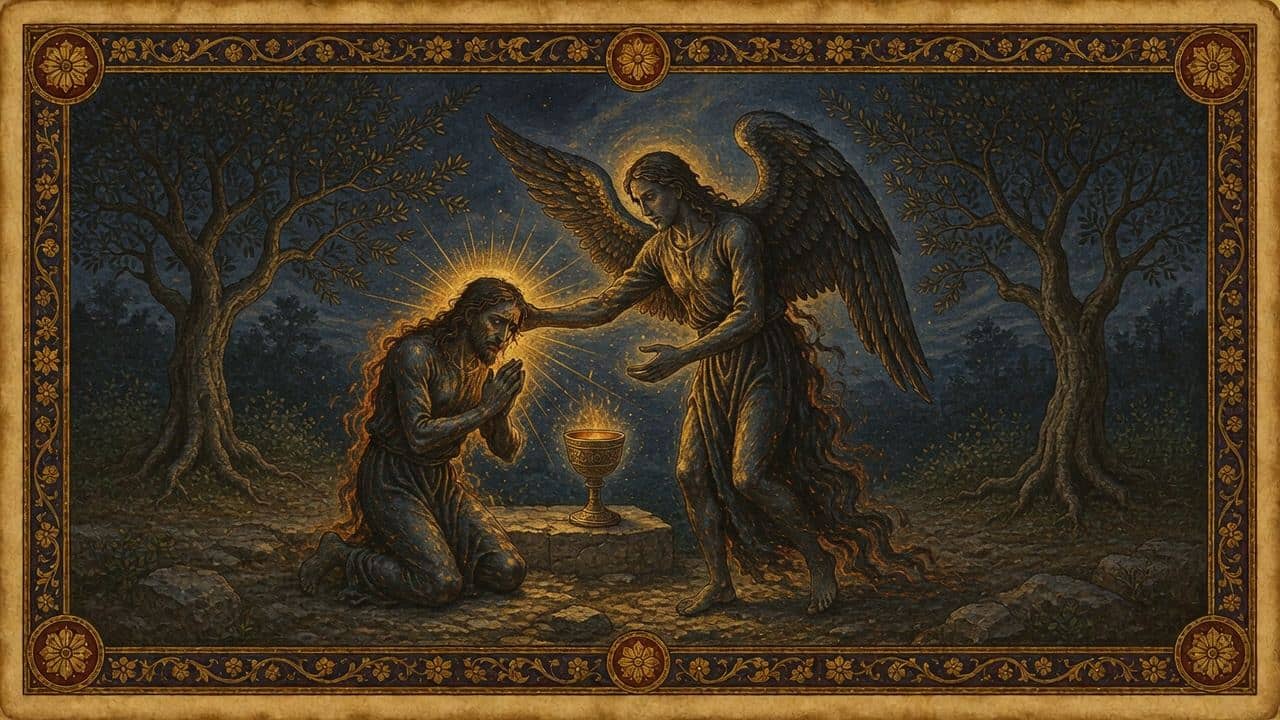
In his agony before the cross, Jesus — whom angels worship — is himself strengthened by one.
“An angel from heaven appeared to him, strengthening him.”
Luke 22:43The stone rolled back · An angel of the Lord
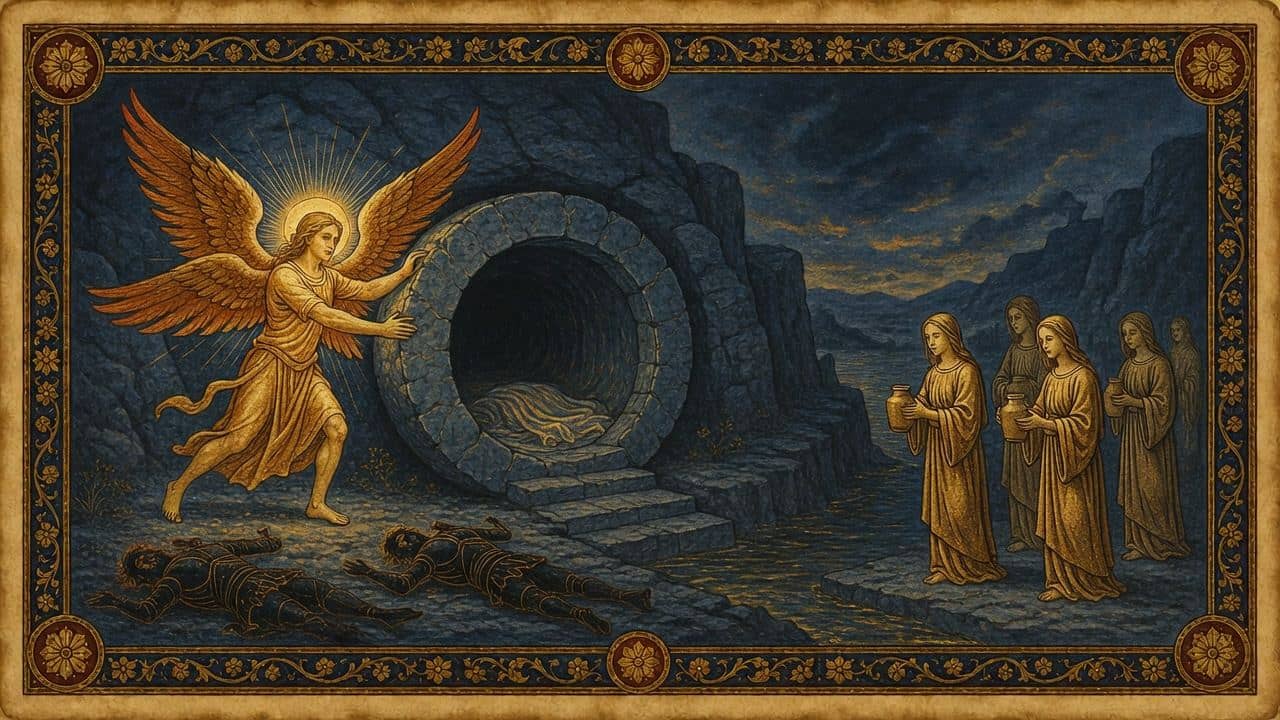
An angel with an appearance like lightning rolls the stone from the empty tomb, sits on it, and gives the women the first Easter announcement.
“He is not here, for he has risen, just like he said.”
Matthew 28:2–7Philip sent to the desert road · An angel of the Lord
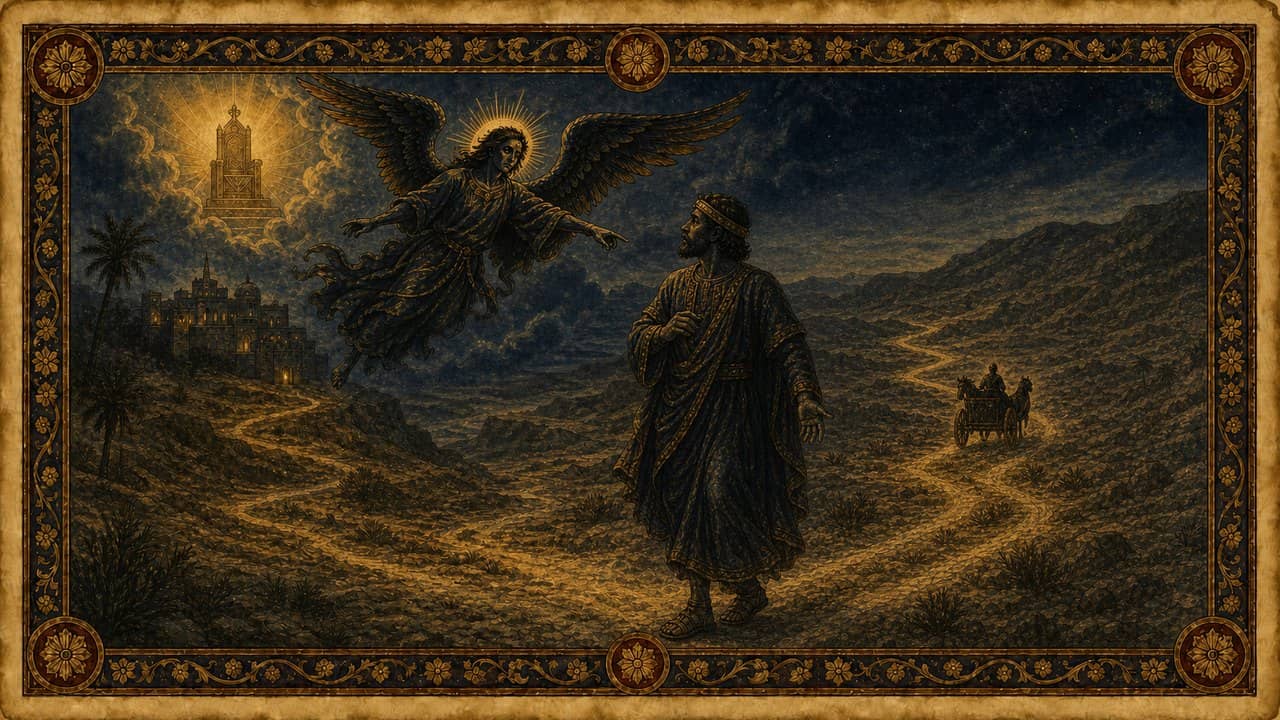
An angel reroutes Philip’s ministry with a road name — south, to the desert way down from Jerusalem to Gaza — where an Ethiopian official is already in his chariot, reading Isaiah.
“Arise, and go toward the south to the way that goes down from Jerusalem to Gaza. This is a desert.”
Acts 8:26Cornelius told his prayers were heard · An angel of God, in a vision
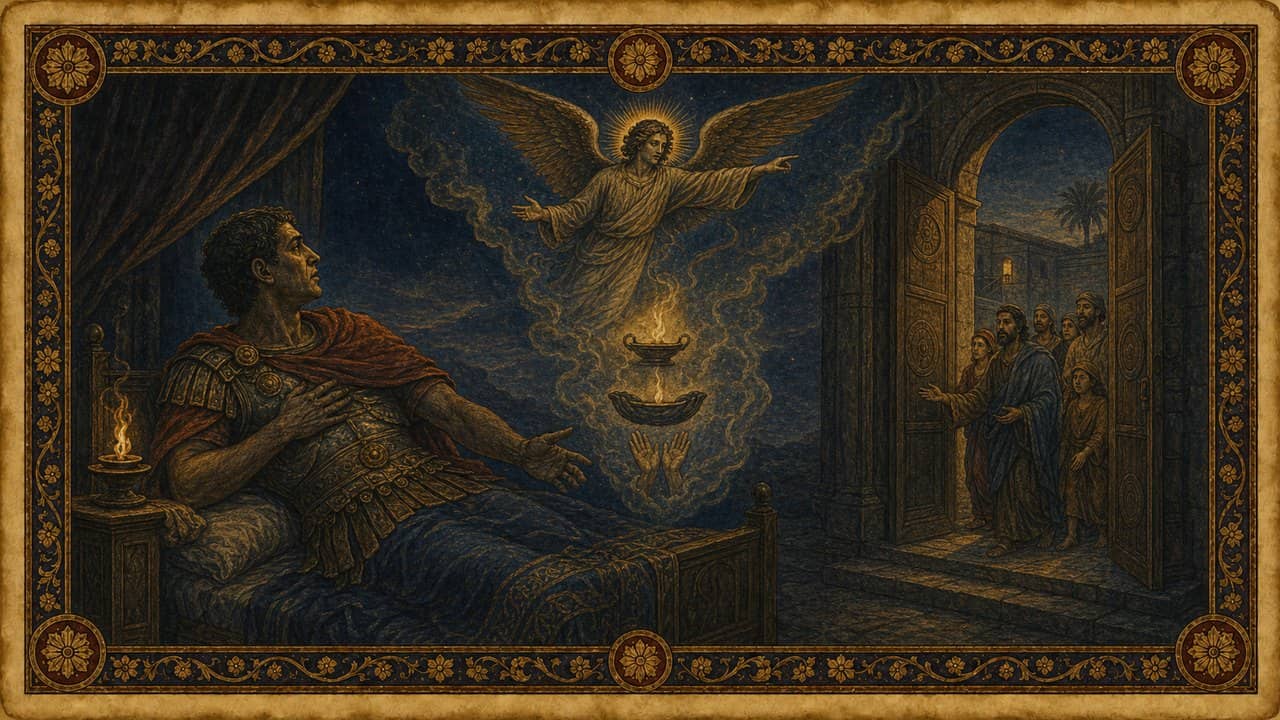
A Roman sees an angel clearly at the ninth hour; the message says his prayers and have gone up as a memorial before God, and sends him to fetch Peter — the door to the opens.
“Your prayers and your gifts to the needy have gone up for a memorial before God.”
Acts 10:3–7Peter's chains fall off · An angel of the Lord
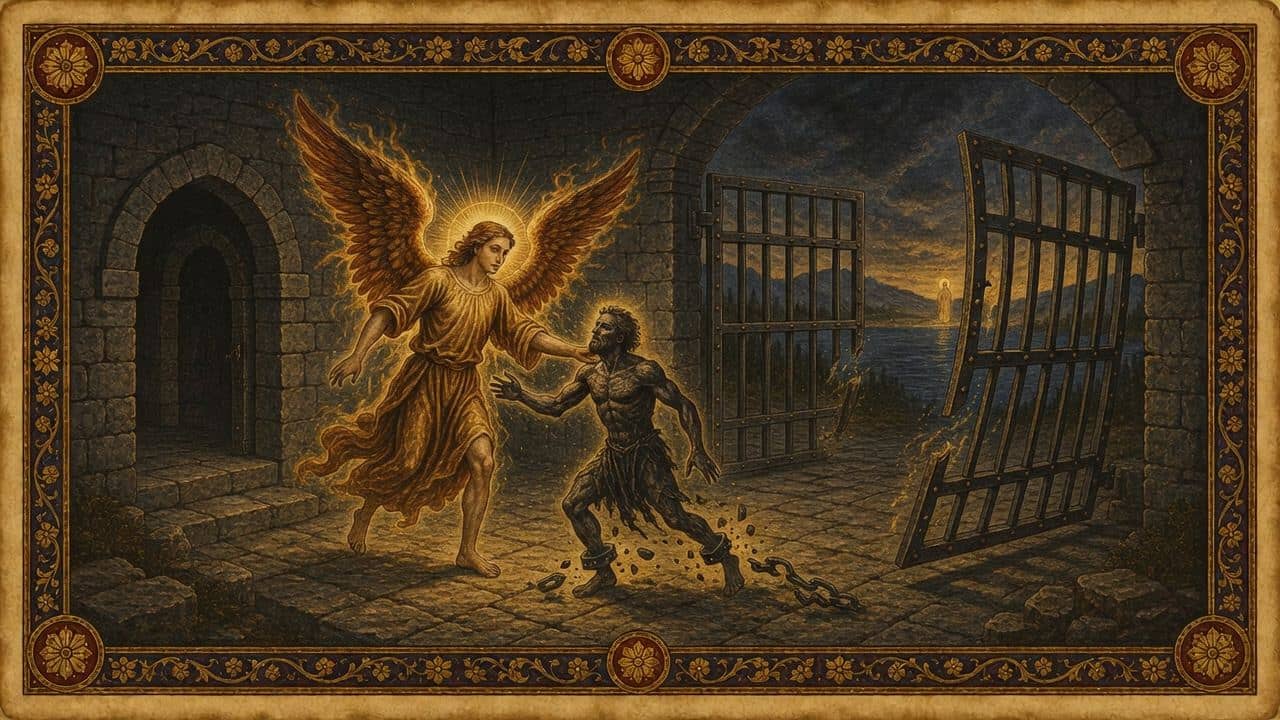
The night before his execution, an angel wakes Peter in Herod's prison, his chains fall off, and the iron gate opens by itself.
“He struck Peter on the side and woke him up, saying, “Stand up quickly!” His chains fell off his hands.”
Acts 12:7–10He cast them out
The hostile witness
What the spirits recognize.
Their words are not treated as doctrine. But the recurring shape of the confrontations is difficult to miss.
Their questions are about destruction, torment, timing, and where they may be sent—not whether Jesus can command them.
The Capernaum synagogueThe Gerasene LegionThe Twelve, the seventy, Philip, and Paul act under a received authority; the record never treats power as their possession.
The Twelve commissionedThe seventy sent outPhilip in SamariaThe girl with a spirit of divinationPaul's handkerchiefs and apronsThe sons of Sceva repeat the right name without the right authority, and the spirit exposes the difference.
The sons of ScevaThe sunset crowds · Capernaum, at sunset
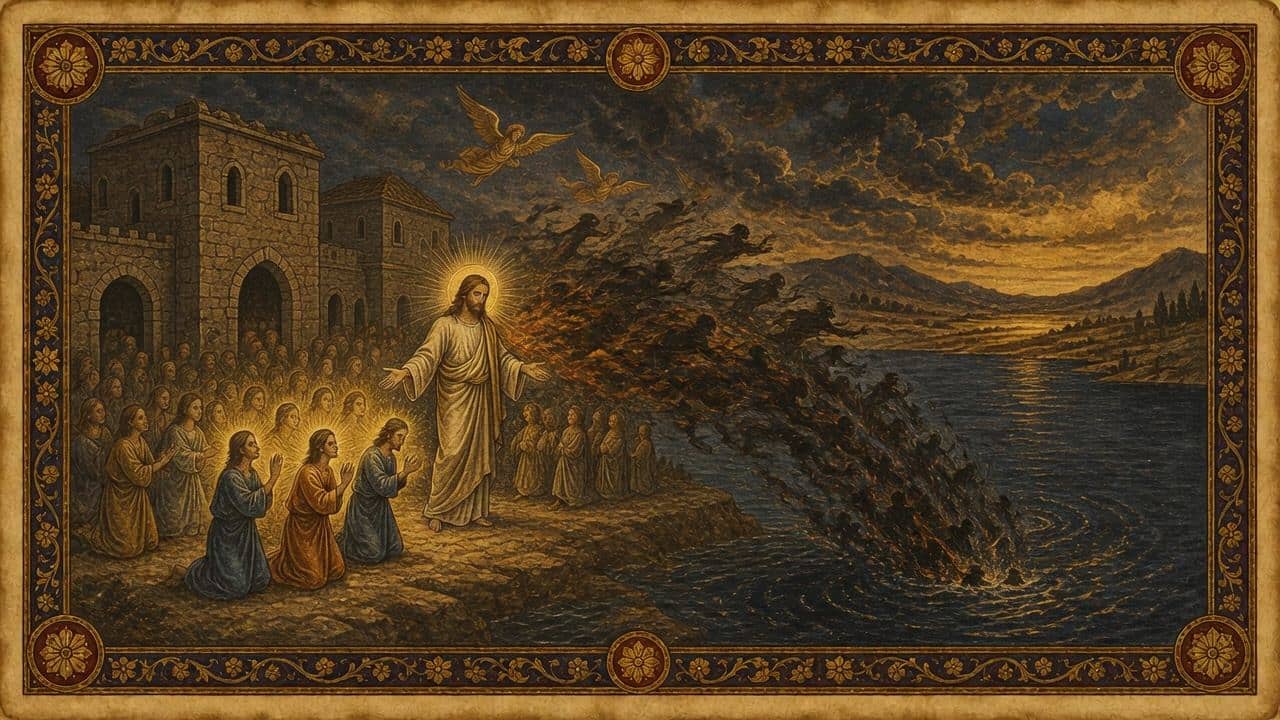
At sunset the whole city gathers; demons come out of many, naming him — and in both Luke and Mark he silences them, “because they knew that he was the Christ.”
“You are the Christ, the Son of God!”— the spirits themselvesLuke 4:40–41 ∥ Mark 1:32–34 · Matthew 8:16–17
The Gerasene Legion · The country of the Gadarenes, across the sea from Galilee, among the tombs
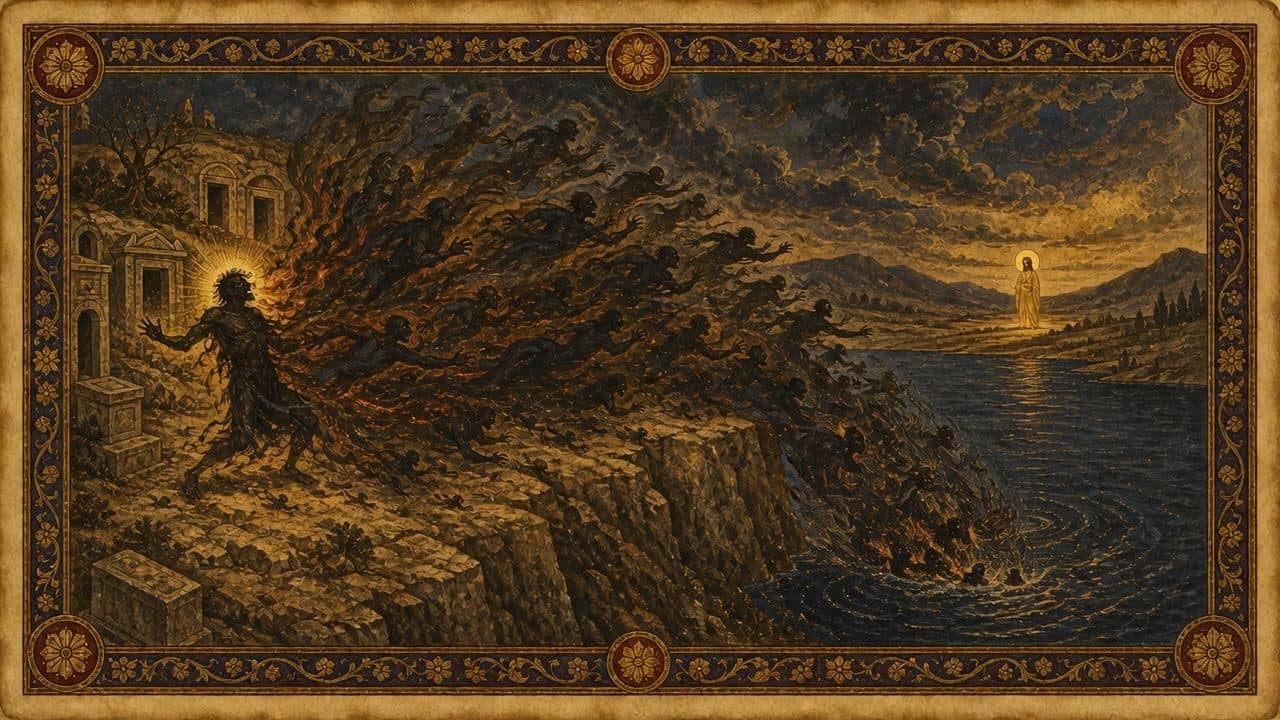
A man no chains could hold runs to Jesus and the demons beg; permitted into a herd of about two thousand pigs, they drown it in the sea — in Matthew's account (MAT 8:29) they ask, "Have you come here to torment us before the time?"
“What have I to do with you, Jesus, you Son of the Most High God? I adjure you by God, don’t torment me. … My name is , for we are many.”— the spirits themselvesMark 5:1–20 ∥ Matthew 8:28–34 · Luke 8:26–39Legion, among the demons →
The mute man · Capernaum ("his own city", MAT 9:1)
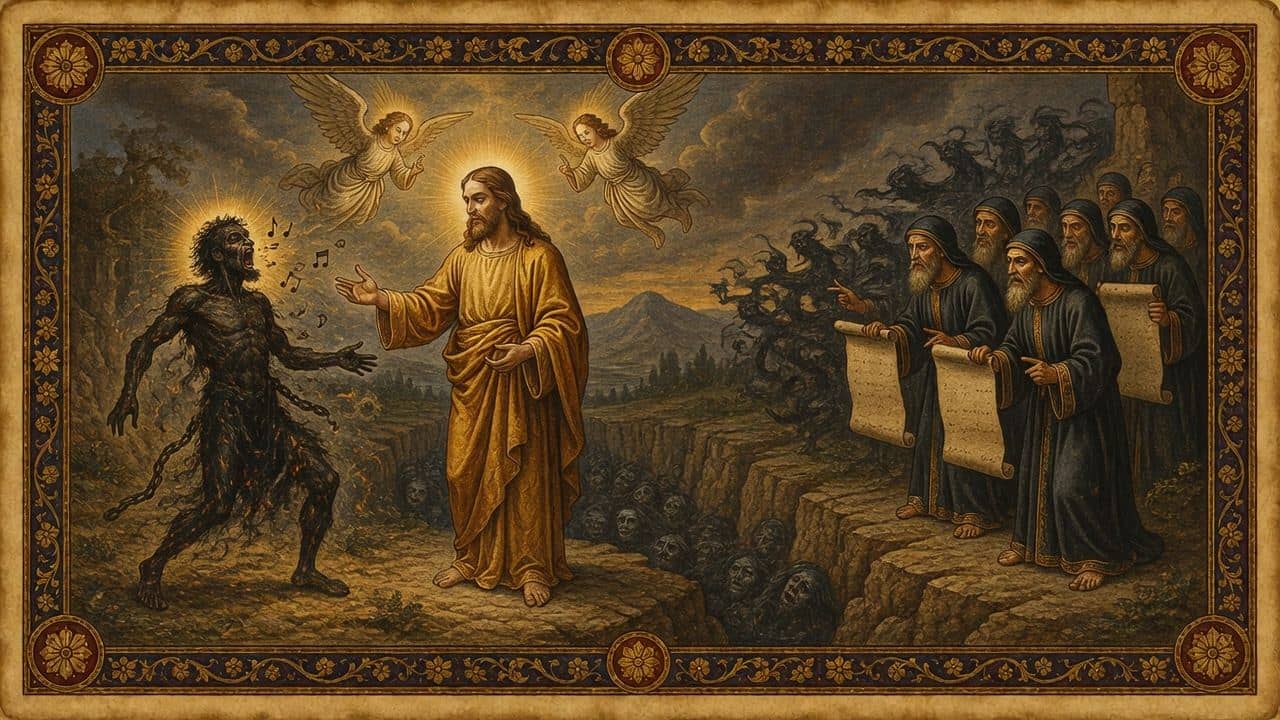
When the demon is cast out the mute man speaks; the crowds say nothing like it has been seen in Israel, and the first credit "the prince of the demons."
Matthew 9:32–34The blind and mute man, and the Beelzebul charge · Galilee (location unspecified)
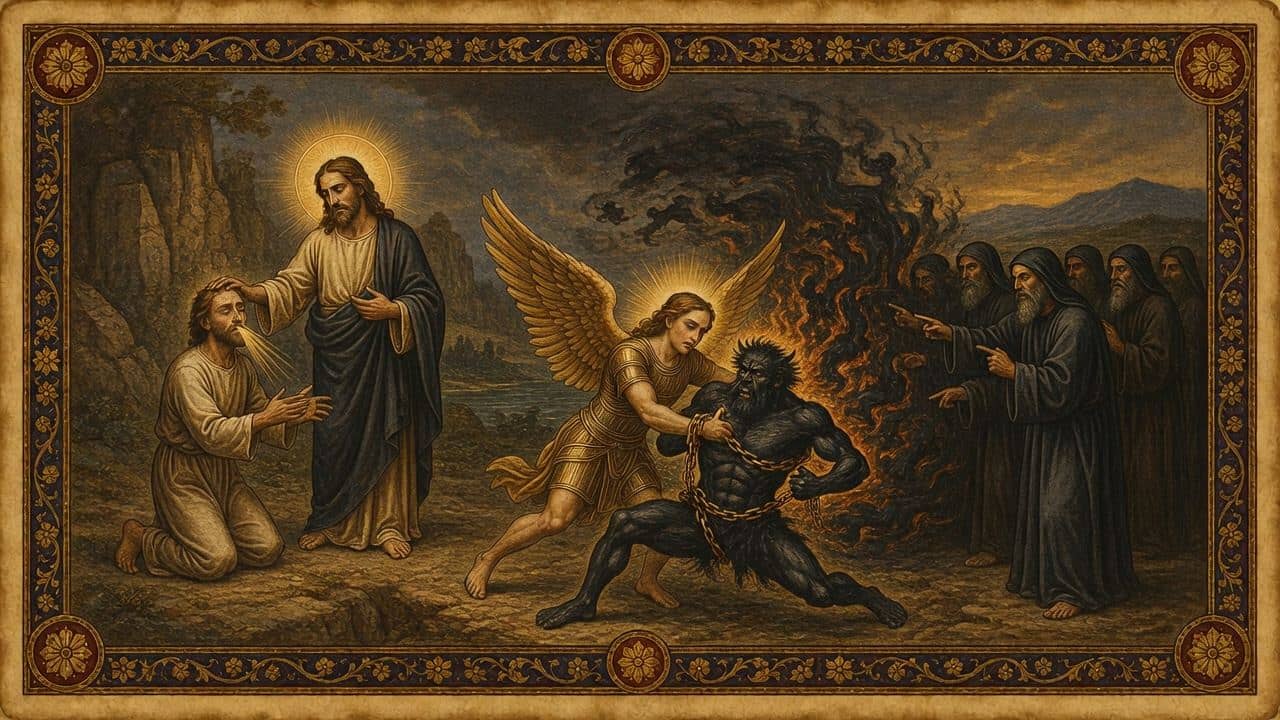
Accused of casting out demons by Beelzebul, Jesus answers: "But if I by the Spirit of God cast out demons, then God’s Kingdom has come upon you" (MAT 12:28; Luke's parallel says "by God’s finger"), and speaks of binding the strong man.
Matthew 12:22–29 ∥ Mark 3:22–27 · Luke 11:14–22Beelzebul, among the demons →The Syrophoenician woman's daughter · The borders of Tyre and Sidon
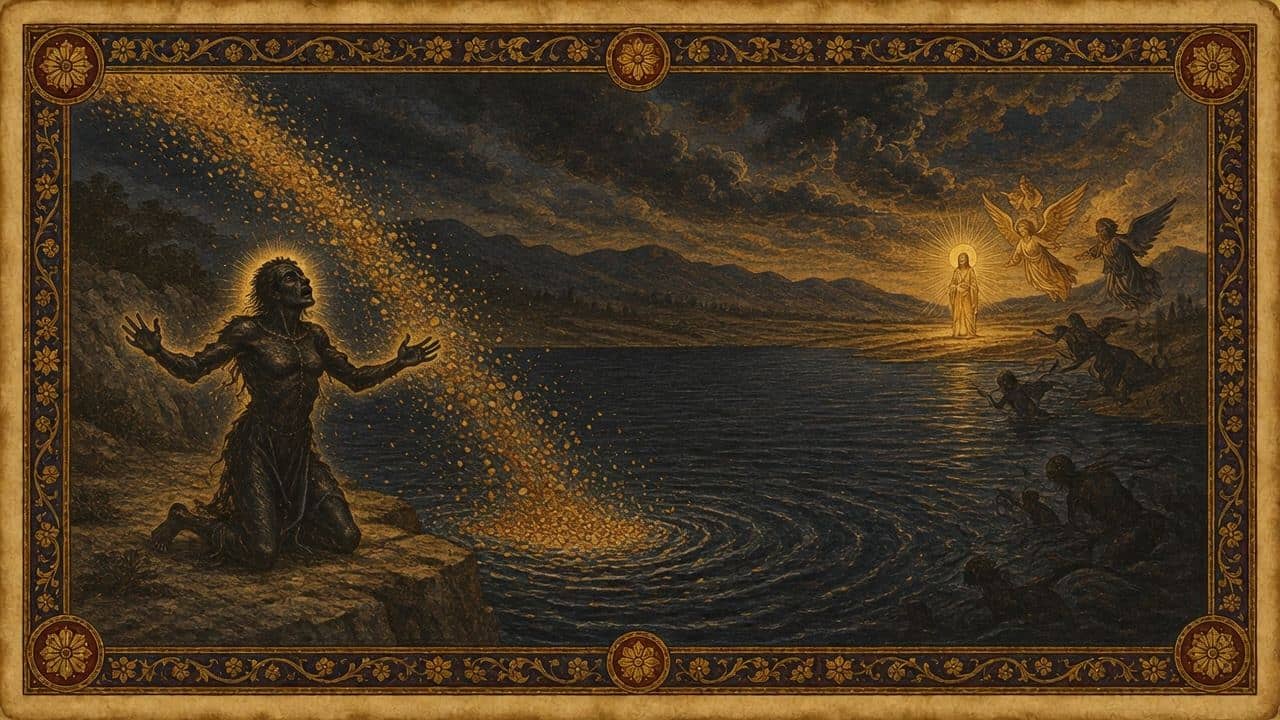
A Gentile mother's persistence wins the only exorcism done entirely at a distance — "For this saying, go your way. The demon has gone out of your daughter"; Matthew adds, "Woman, great is your faith!"
Mark 7:24–30 ∥ Matthew 15:21–28The boy the disciples could not deliver · Below the mountain of the transfiguration
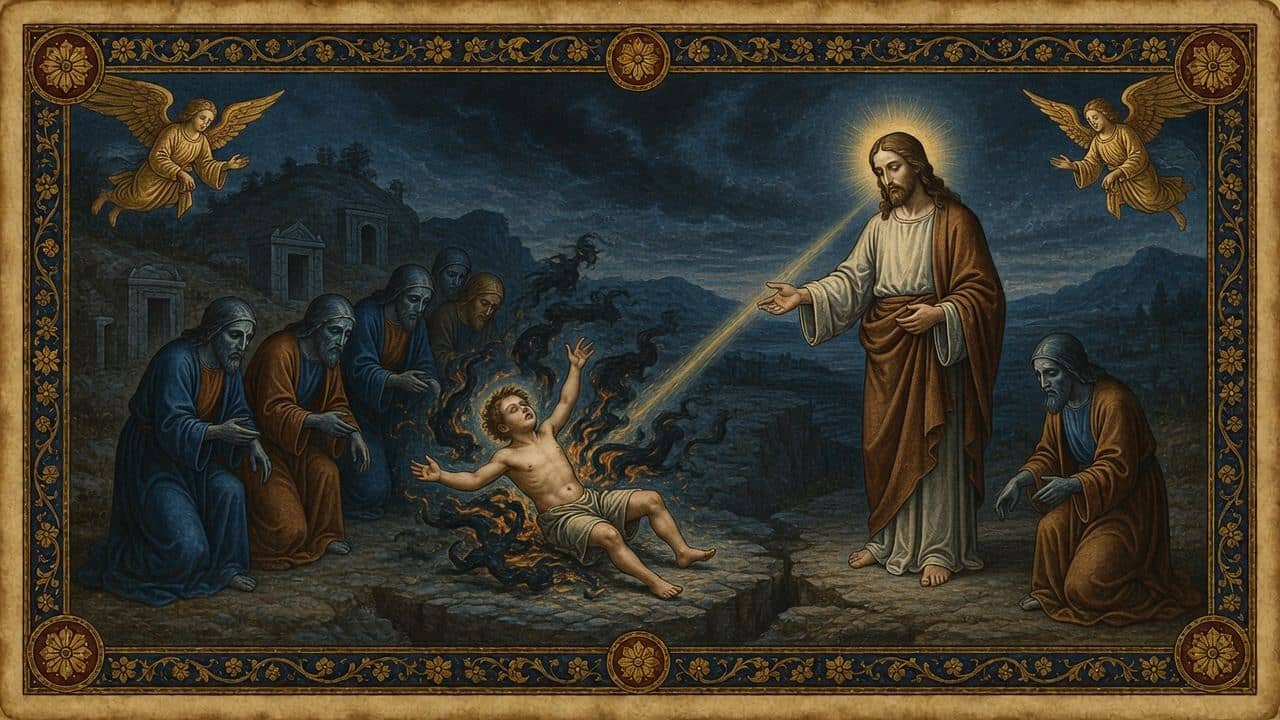
A mute and deaf spirit that has thrown a boy into fire and water since childhood defeats the disciples; the father cries "I believe. Help my unbelief!" and Jesus commands it out — "This kind can come out by nothing but by prayer and fasting."
Mark 9:14–29 ∥ Matthew 17:14–21 · Luke 9:37–43The Capernaum synagogue · The synagogue at Capernaum, on the Sabbath
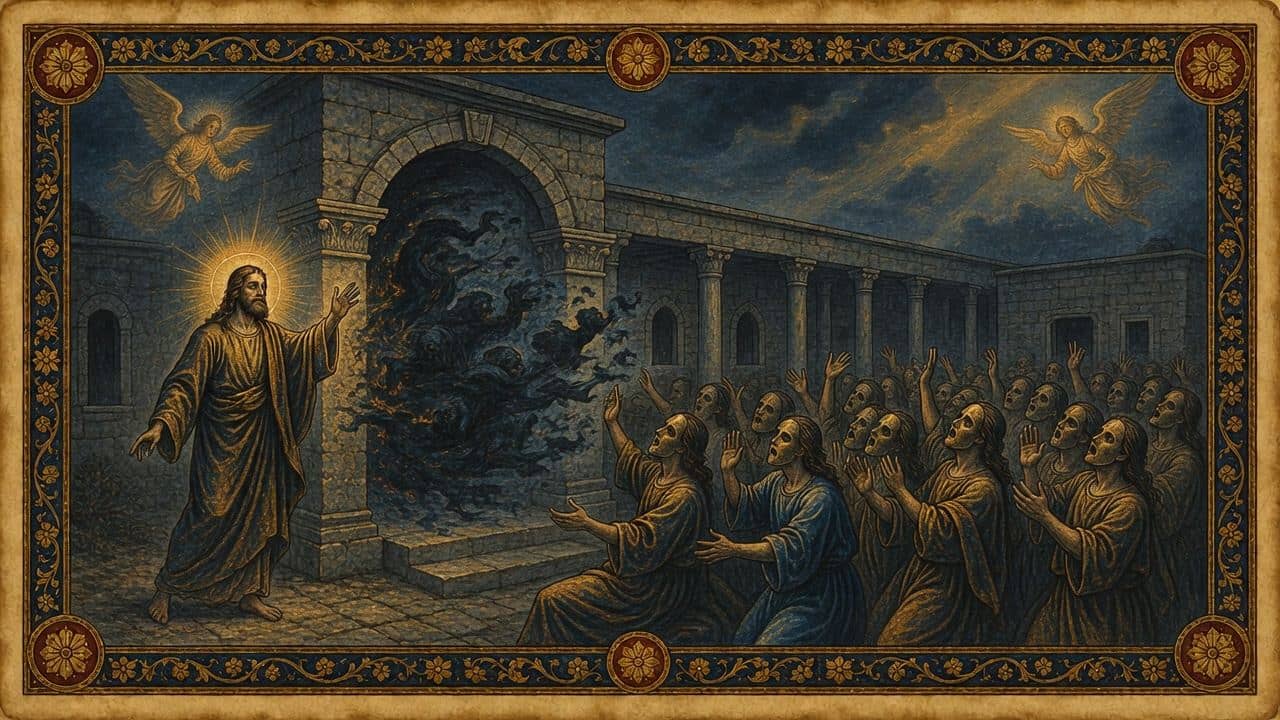
The first exorcism in Mark: mid-sermon, an unclean spirit names Jesus before any disciple has, and is silenced and expelled with a word.
“Ha! What do we have to do with you, Jesus, you Nazarene? Have you come to destroy us? I know who you are: the Holy One of God!”— the spirits themselvesMark 1:23–27 ∥ Luke 4:33–36
Mary Magdalene's seven · Galilee (summary notice)
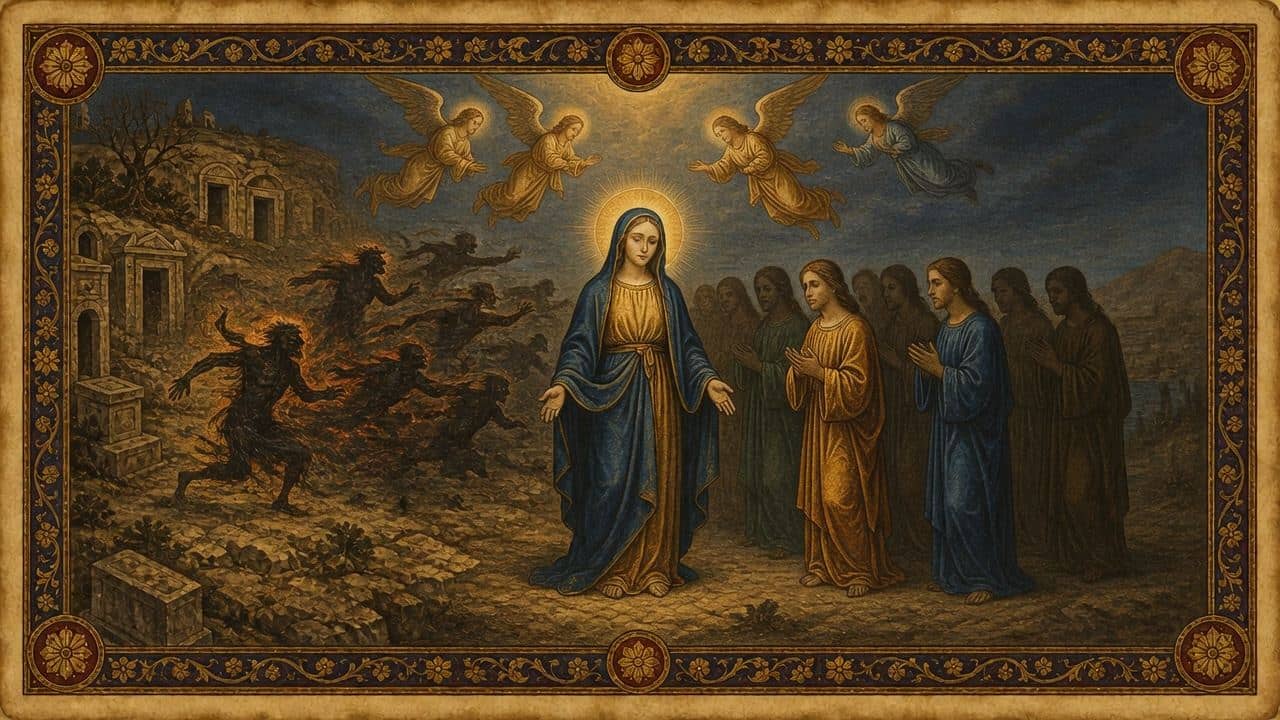
Luke records in passing that seven demons had gone out of Mary called Magdalene, who then traveled with Jesus and supported the work.
Luke 8:2The seventy sent out · On the return of the seventy from their mission
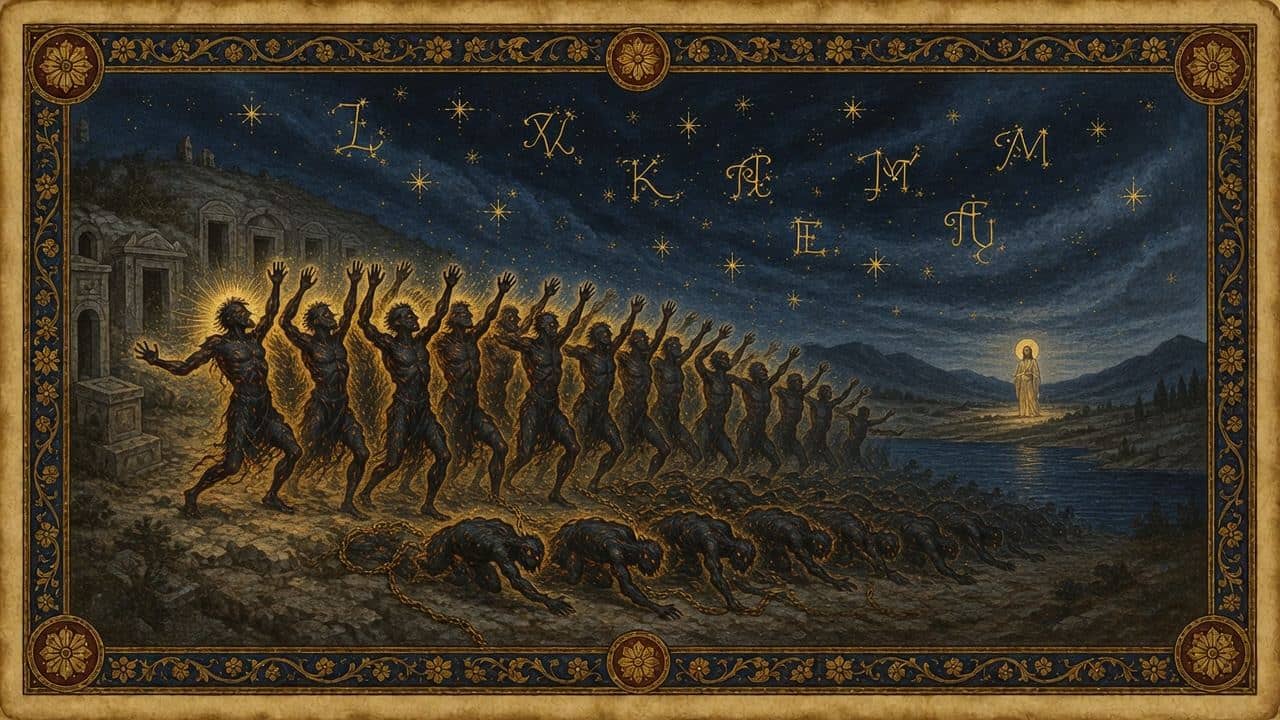
The seventy return rejoicing that "even the demons are subject to us in your name"; Jesus answers, "Nevertheless, don’t rejoice in this, that the spirits are subject to you, but rejoice that your names are written in heaven."
Luke 10:17–20The woman bent for eighteen years · A synagogue, on the Sabbath
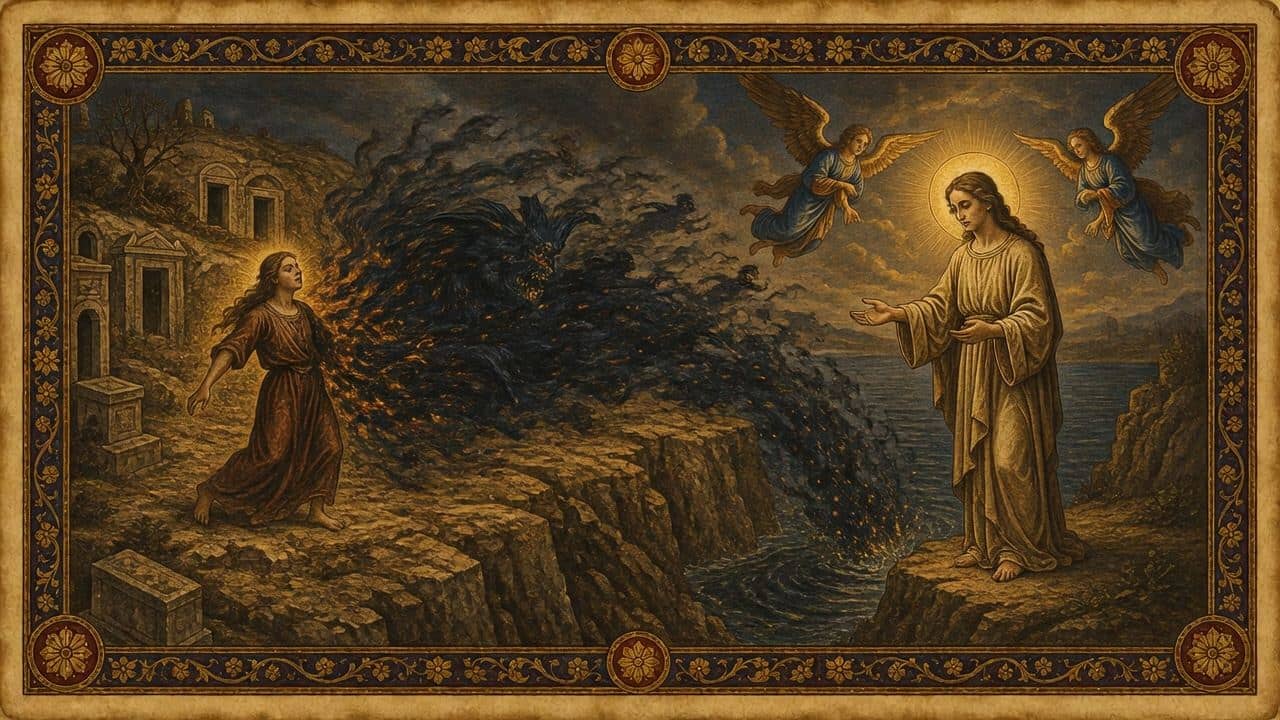
Jesus frees a woman with "a spirit of infirmity" who could not straighten up, calling her "a daughter of Abraham whom Satan had bound eighteen long years" — a release, not a rebuke-and-expulsion scene like the others.
Luke 13:10–16The girl with a spirit of divination · Philippi
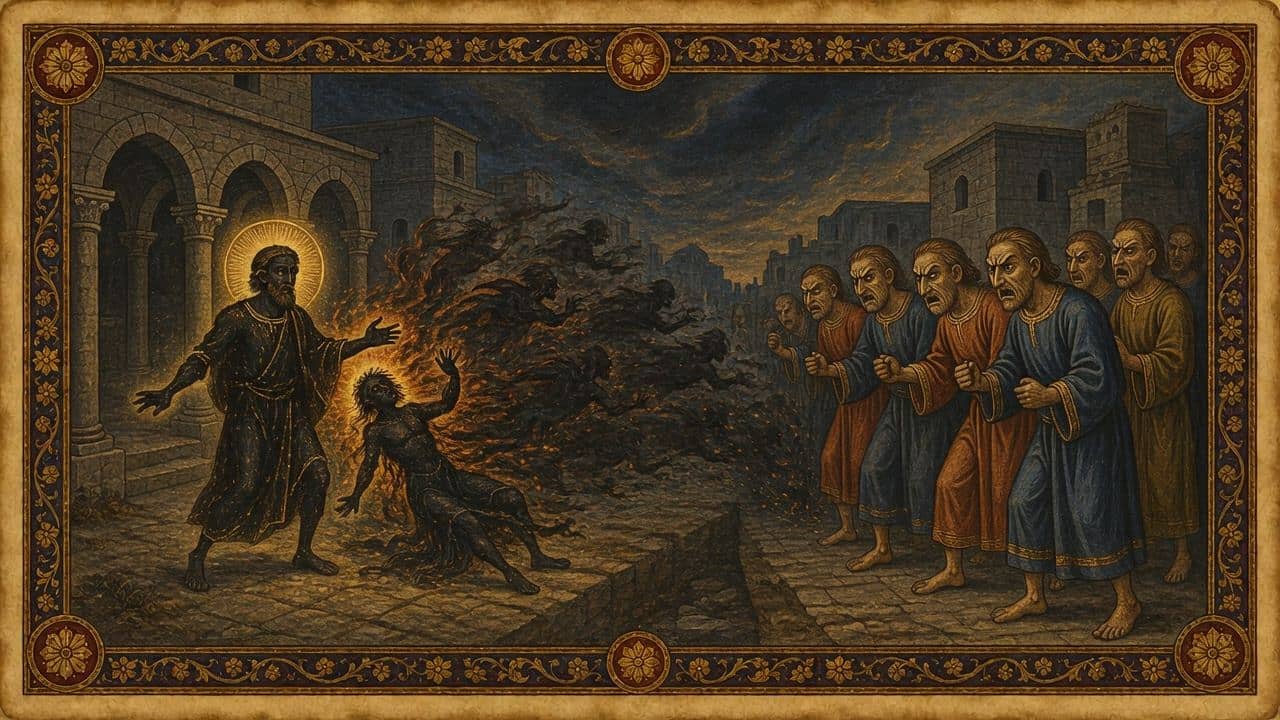
For many days a fortune-telling spirit advertises Paul's mission with true words, until Paul commands it out "in the name of Jesus Christ" and it leaves that very hour.
“These men are servants of the Most High God, who proclaim to us a way of salvation!”— the spirits themselvesActs 16:16–18
The sons of Sceva · Ephesus
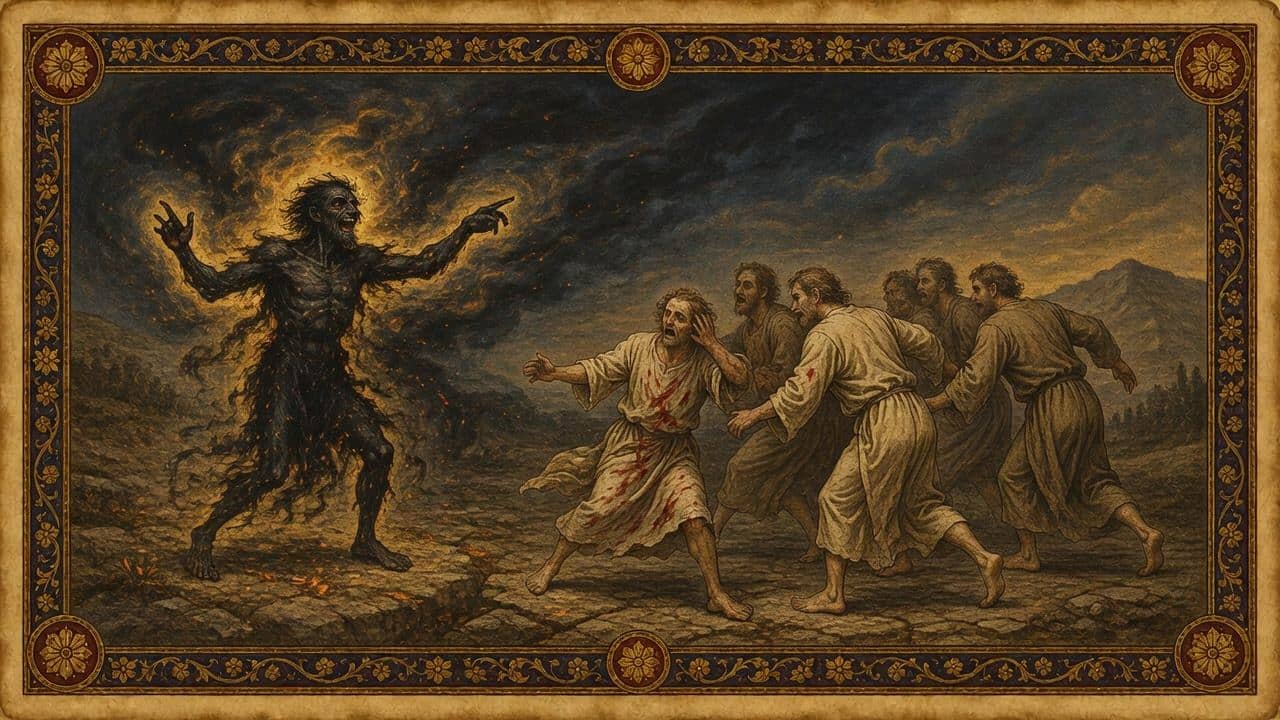
Seven itinerant exorcists try to use Jesus' name secondhand; the evil spirit answers, the possessed man overpowers all of them, and they flee naked and wounded — the name is not a formula.
“Jesus I know, and Paul I know, but who are you?”— the spirits themselvesActs 19:13–16
The Twelve commissioned · Judaea and Galilee
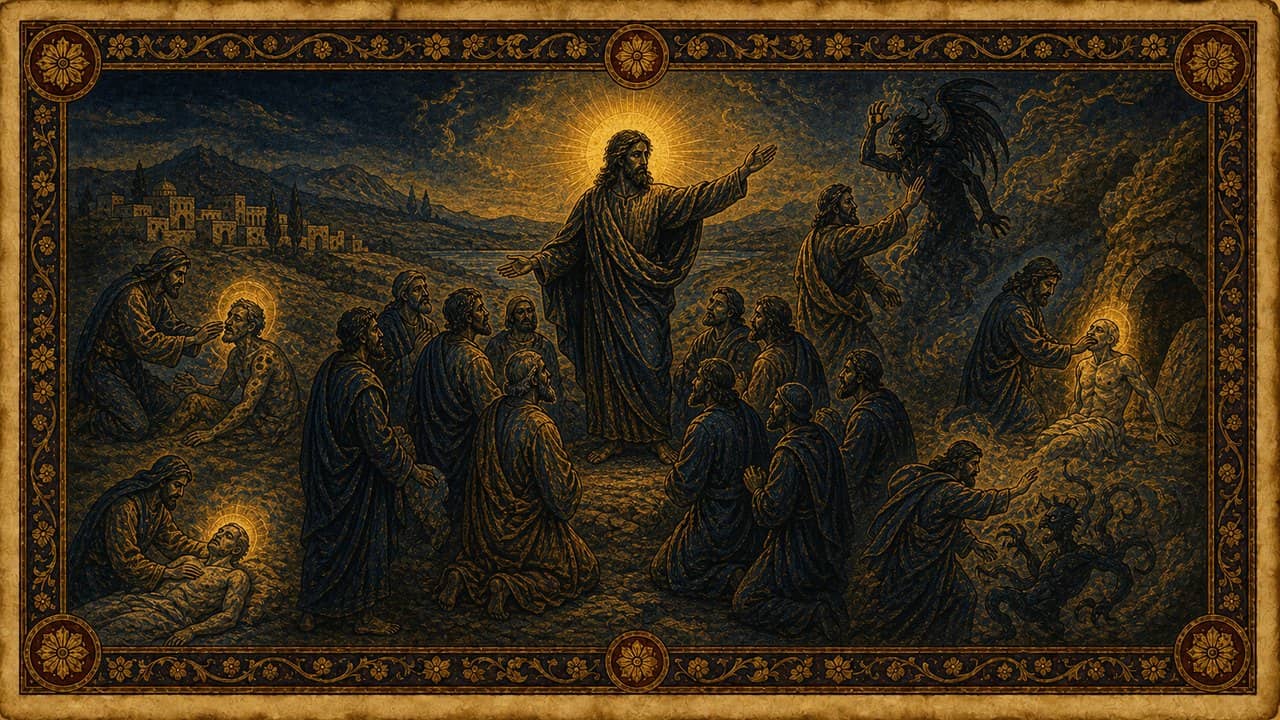
Jesus commands the Twelve: 'As you go, preach, saying, "The Kingdom of Heaven is at hand!" Heal the sick, cleanse the lepers, raise the dead, cast out demons, give freely, don't charge.'
Matthew 10:7–8The commissioning, in the Jesus room →Philip in Samaria · Samaria
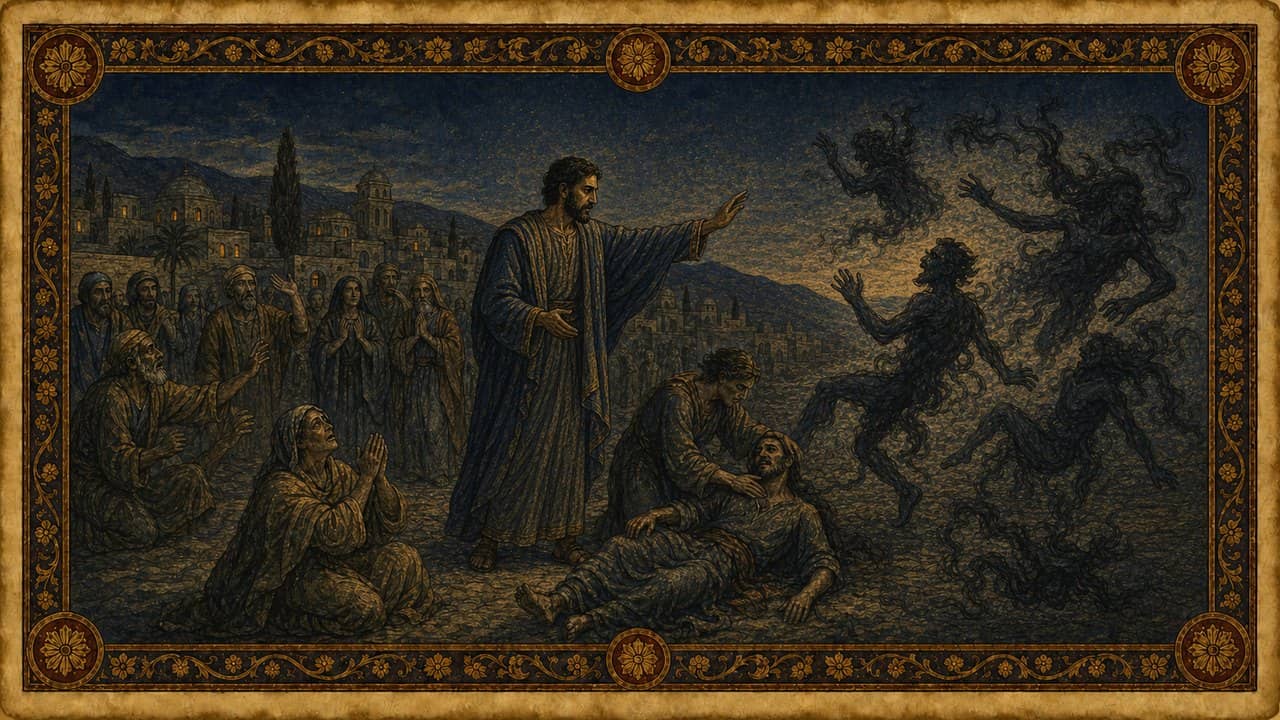
When they came down, he cast out demons which were coming out, one after another, and many were cured.
Acts 8:7The Ethiopian, in the Acts room →Paul's handkerchiefs and aprons · Ephesus
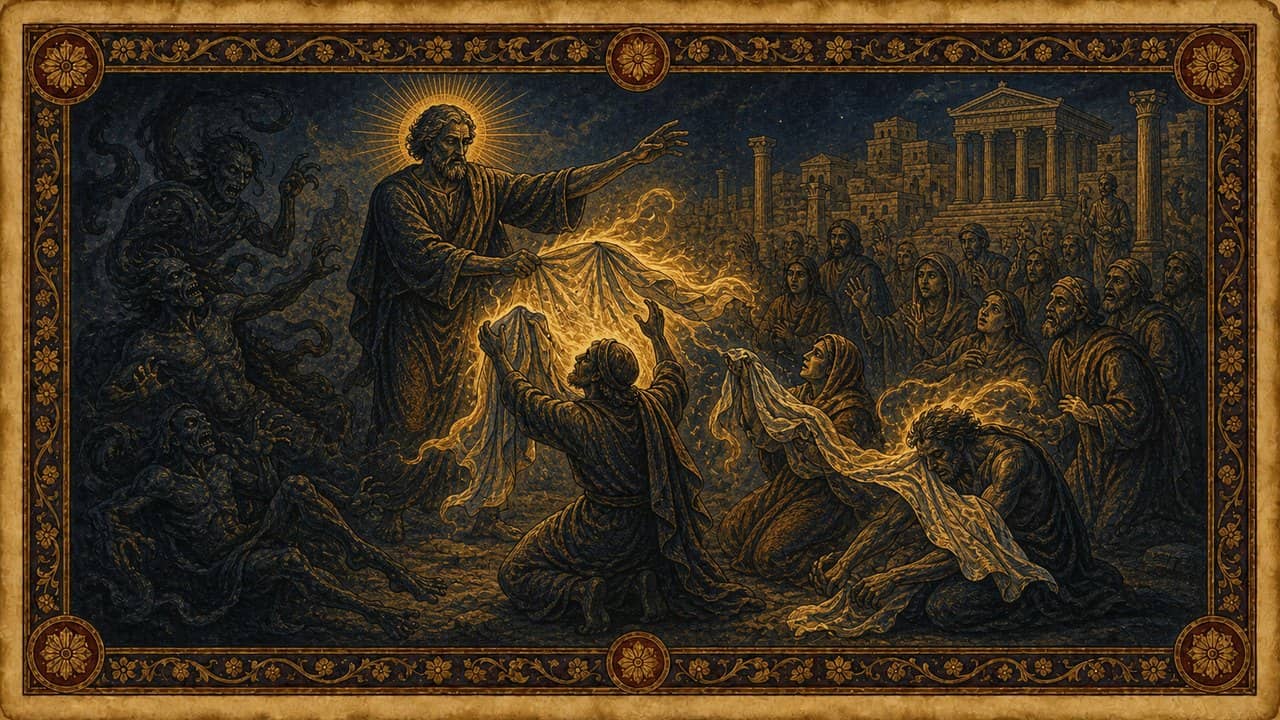
God did extraordinary miracles by Paul's hands, so that handkerchiefs or aprons were brought from his body to the sick, and diseases left them and evil spirits went out.
Acts 19:11–12The sons of Sceva, in the Acts room →