Source basis: Scripture refs resolve into the hosted reader; every mission and death claim names its earliest source and wears a grade — scripture, early source, or later tradition. Sources
Browse this sectionExplore this sectionThe twelveSources & method
Source basis: Scripture refs resolve into the hosted reader; every mission and death claim names its earliest source and wears a grade — scripture, early source, or later tradition. Sources
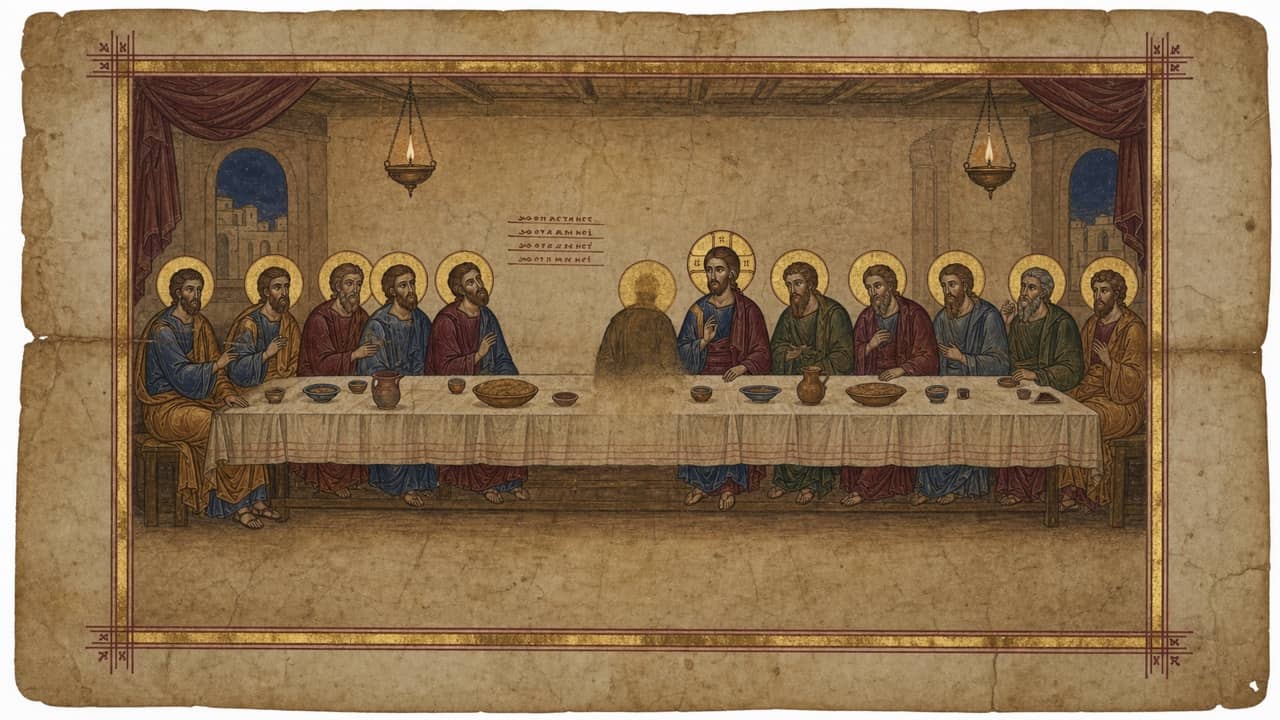
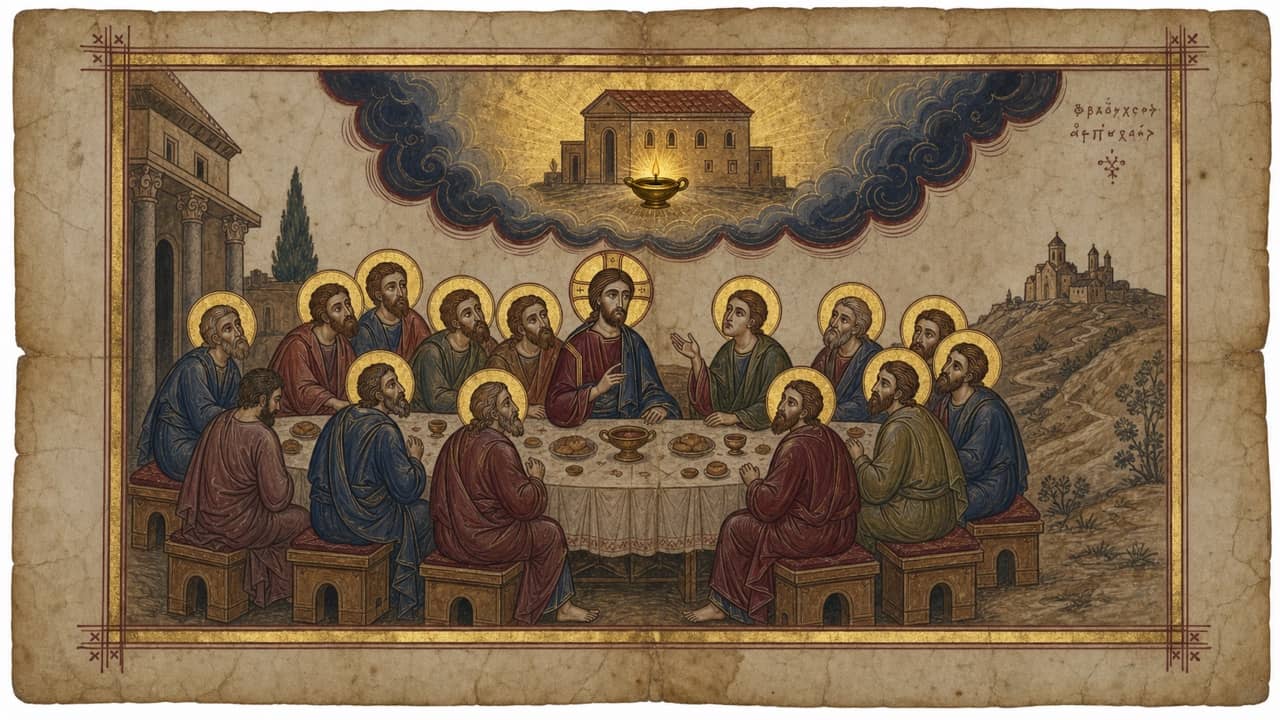
Jesus did not recruit scholars or priests. He took four fishermen, a tax collector, a resistance sympathizer, and five men so quiet the record barely holds them — and sent them to announce a risen king to an empire. This room takes the twelve one by one: what each man was, what he said and did on the page, and what the sending cost him. Where scripture ends and tradition begins, the seam is marked, every time.
“Now when they saw the boldness of Peter and John, and had perceived that they were unlearned and ignorant men, they marveled. They recognized that they had been with Jesus.”
The Sanhedrin's own verdict on the movement's leaders: no schooling, no standing — only the company they had kept. That is the standard this room applies. The credential was never the man.
Thirteen records. Scan each man's call and cost, then open the full evidence only where you want to go deeper.
Seat 1
Peter
Simon bar-Jonah · Cephas · Petros — rock; the name Jesus gave him before he had earned itThe callLeft the nets at a word, was renamed the rock, and spoke first in nearly every scene the gospels record.The costDenied Jesus three times in one night; restored three times at breakfast; early sources say Rome killed him under Nero.Open the full recordClose the full record
Fisherman of Bethsaida, settled in Capernaum; married, with a boat and a business
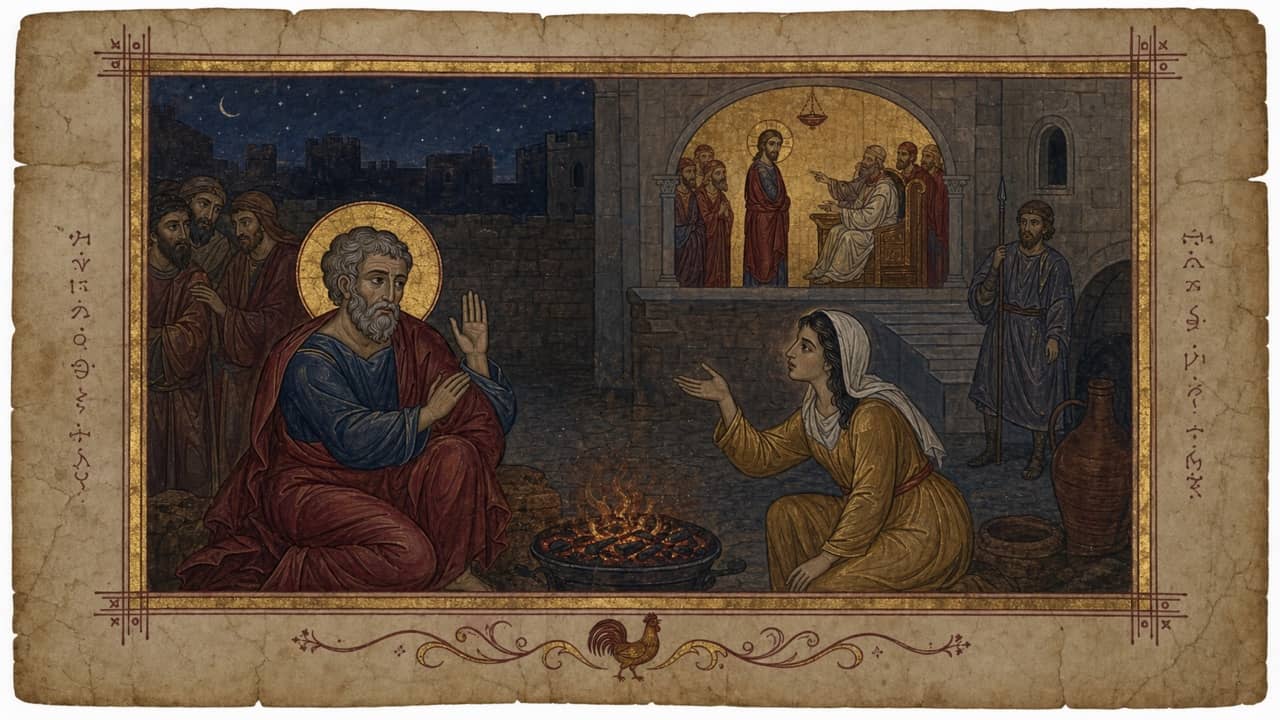
The rock, cracking: Peter denies the one he had sworn to follow.
A working fisherman from Bethsaida who ran his trade out of Capernaum — the gospels show his boat, his nets, his house, and his mother-in-law. Not a 's student. The later files him under unlearned and ordinary.
The call
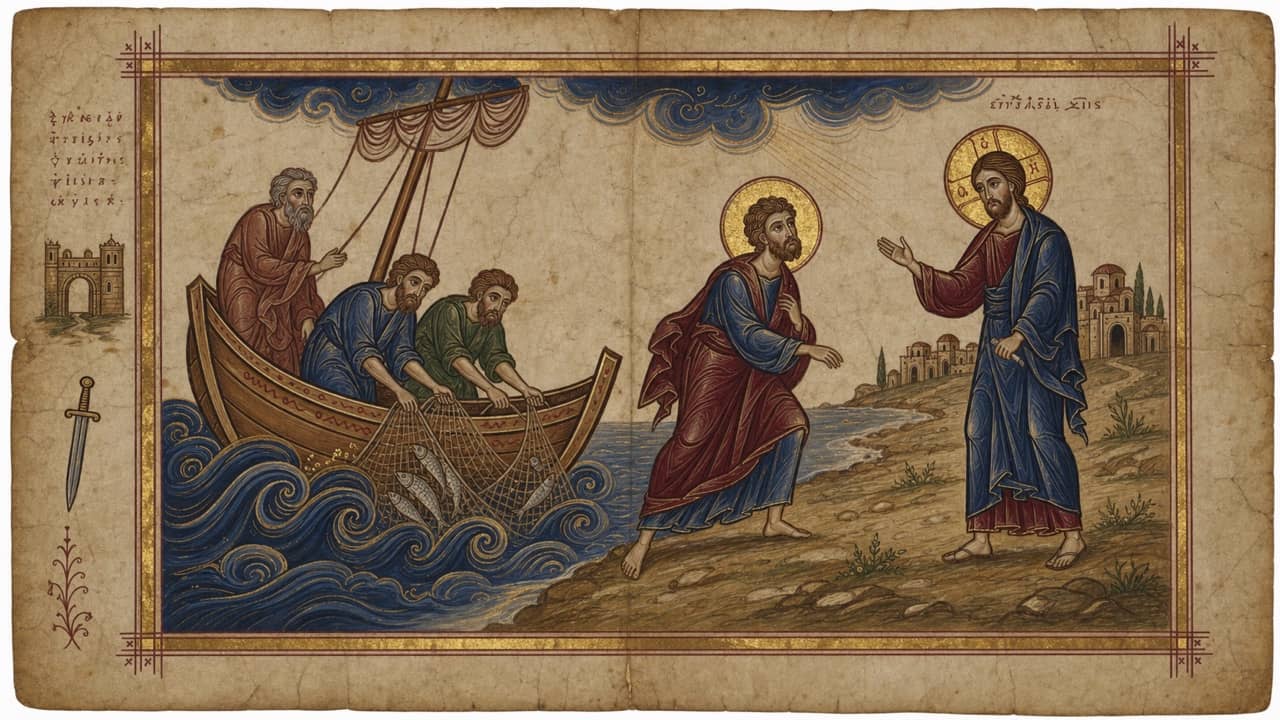
The catch he couldn't argue with
After a night of nothing, Jesus borrows the boat, then fills the nets until they tear. Peter's response is not excitement — it is 'depart from me, for I am a sinful man.' Jesus keeps him anyway: from now on you catch people.
The confession — and the rebuke, seven verses apart
At Caesarea Philippi he answers the question no one else will touch: you are the Christ. Seven verses later he is contradicting Jesus about the cross and hearing 'get behind me, Satan.' Both scenes are him.
Hours after swearing he would die first, he denied knowing Jesus three times — to servants, at a fire, while the trial ran upstairs. Luke adds the detail the others spare us: the Lord turned and looked at him. And the fault did not end at — years later in , Paul confronted him for backing away from tables when the wrong crowd arrived. The rock cracked more than once.
Restored over breakfast with three questions matching three denials, then told plainly how he would die. In Acts he is the voice of Pentecost, the defendant before the Sanhedrin, the first to carry the message to a Roman officer's house, and the prisoner an angel walks out of Herod's jail.
early source Worked from Jerusalem outward through Judea, , and Antioch; his own letter writes from 'Babylon' — the early church's code for Rome.
1 Peter 5:13; Ignatius, To the Romans 4 (~110) · source
The end
early source Executed in Rome under , by crucifixion. The famous head-downward detail arrives later, in the Acts of Peter and in Origen.
John 21:18–19 foretells it; 1 Clement 5 (~96) states it; Eusebius, Church History 3.1 carries Origen's head-down detail · source
Death in Rome is among the best-attested apostle traditions. The upside-down cross is not in scripture and not in the first century.
The writings
Two letters carry his name. 1 Peter was received everywhere from the start; 2 Peter was doubted in the ancient church itself — Origen records the hesitation — and the doubt is stated here, not hidden.
Brother of Simon Peter · Andreas — manly; a Greek name in a Galilean familyThe callThe first called — and his first recorded act was to go find his brother and bring him to Jesus.The costOrigen's line sends him north to Scythia; the cross at Patras stands only on later acts.Open the full recordClose the full record
Fisherman of Bethsaida; first a disciple of John the Baptist
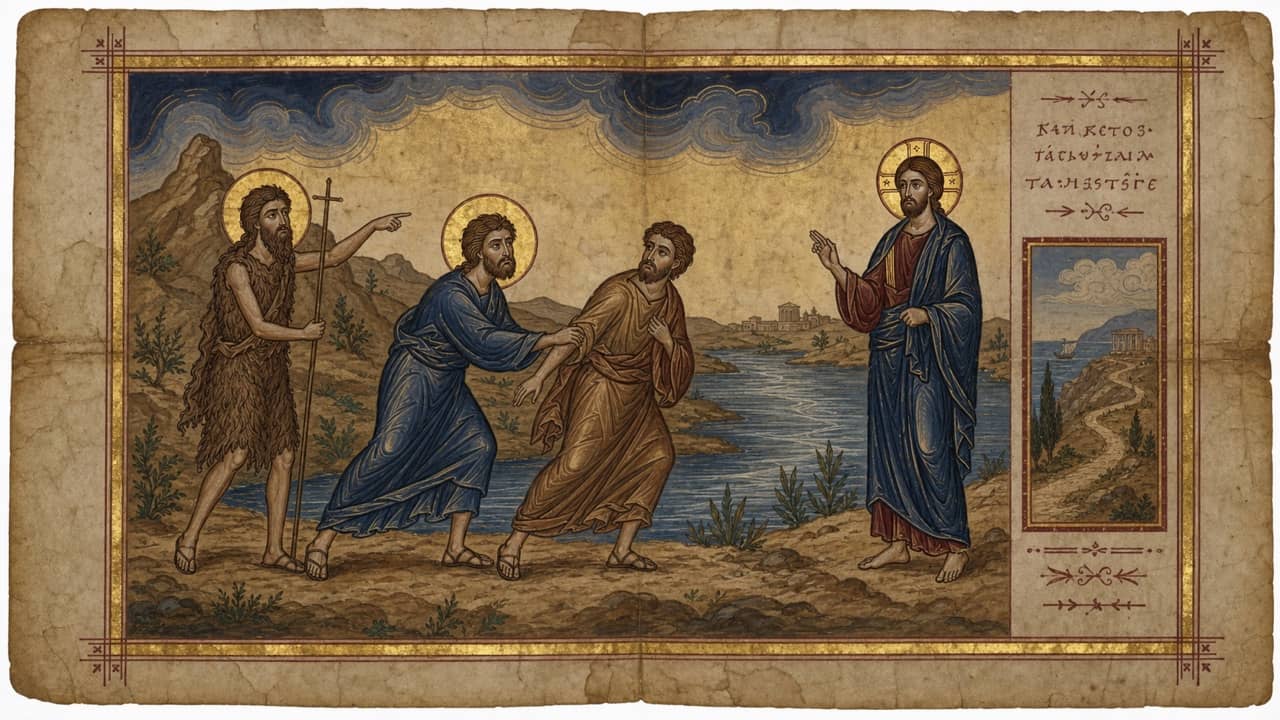
First called, Andrew's first recorded act is to bring his brother.
A fisherman already looking for something — he had attached himself to John the Baptist before Jesus ever passed by. When the Baptist said 'behold, the Lamb of God,' Andrew took him at his word and followed.
The call
The first follower
He spends a day with Jesus, then goes straight for Simon: 'we have found the .' The gospel's first evangelist, working on his own brother before there was anything to join.
Five thousand hungry people, and Andrew is the one who turns up holding the absurd offer: a child's five loaves and two fish — 'but what are these among so many?' He brings what he finds and lets Jesus decide what it counts for.
When Greek pilgrims want to see Jesus, Philip goes to Andrew, and Andrew walks them in. Three scenes in John, and in all three he is bringing someone to Jesus.
No personal fault is recorded against Andrew — the honest note is that the record itself thins out. The man who brought Peter watched Peter, James, and John become the inner circle without him. He shares the one fault charged to them all: when the arrest came, they all fled.
Named at the upper-room roll call after the ascension — and then the New Testament never mentions him again. The first man called is the first to vanish into the work.
early source Assigned Scythia — the steppe country north of the Black Sea — in the earliest surviving mission list.
Origen, quoted in Eusebius, Church History 3.1 (~240) · source
The end
later tradition Crucified at Patras in Achaia, bound rather than nailed. The X-shaped cross of the flag traditions is a medieval addition.
Acts of Andrew (~200), an apocryphal romance · source
The Patras death is old but stands on a legendary text; the saltire shape is centuries younger still.
Seat 3
James of Zebedee
Son of Zebedee · Boanerges · Yaakov — Jacob; Boanerges, son of thunder, the nickname Jesus gave the brothersThe callLeft his father standing in the boat; became one of the inner three at every unveiled moment.The costThe only apostle whose death scripture itself records: Herod's sword, about 44 AD.Open the full recordClose the full record
Fisherman; the family firm had a boat and hired men
James leaves the boat at a word; Scripture also records his cost.
The elder Zebedee brother, partner with Peter's boat in a fishing operation big enough to employ hands. The nickname Jesus gave the pair — sons of thunder — is a character report from the man who knew them best.
The call
Nets, father, hired men — left
Mark's account is four verses of abruptness: Jesus calls, and James leaves the nets, the boat, and Zebedee himself standing in it.
At Jairus' house, on the transfiguration mountain, and in Gethsemane, Jesus takes the same three witnesses: Peter, James, John. James saw everything the movement's two loudest voices saw — and left no writing.
The brothers ask for the thrones on Jesus' right and left. He asks instead whether they can drink his cup, and they answer — 'we can' — with no idea what it holds. Jesus tells them plainly: you will.
The thunder was real: when a village refused them lodging, James and John proposed calling fire down on it. Jesus rebuked them both. Ambition and heat, both on the record.
He never left the Jerusalem church's front line. Herod Agrippa opened his persecution by taking the loudest target available — and the cup prophecy landed first on James.
scripture Stayed with the Jerusalem church; the sword found him before any road did. The Spain mission behind Santiago de Compostela first appears in seventh-century lists.
Acts 12:1–2 for Jerusalem; the Breviarium Apostolorum (~600s) for Spain · source
The pilgrimage is real history; the mission it commemorates is late tradition, and the two are kept separate here.
The end
scripture Beheaded in Jerusalem by order of Herod Agrippa I, around 44 AD — the only apostolic death the New Testament itself records.
Son of Zebedee · Boanerges · Yohanan — the LORD is graciousThe callThe other son of thunder — inner-circle witness from the first healing to the empty tomb.The costTradition alone among the twelve lets him die old — at Ephesus, still repeating 'love one another.'Open the full recordClose the full record
Fisherman; the younger Zebedee brother
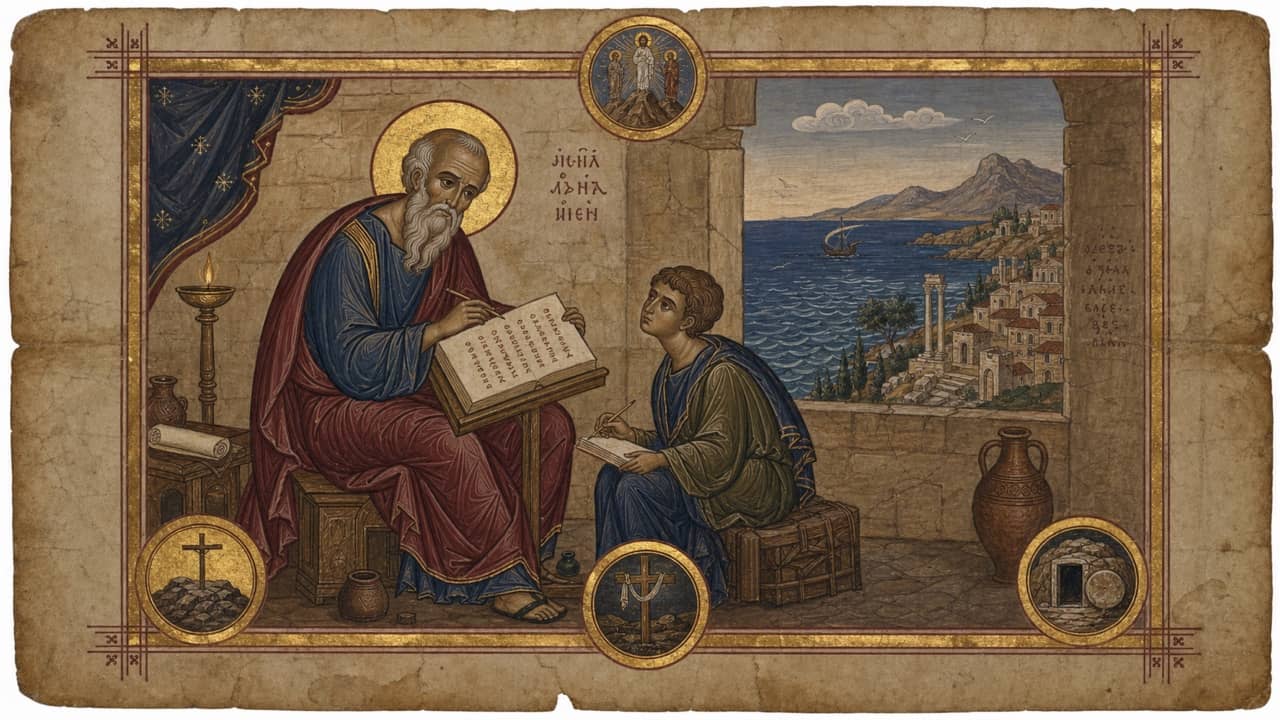
The witness remembered at the cross, the tomb, and in an old age of love.
The younger of Zebedee's sons, remembered by tradition as the youngest of the band. He earned the same thunder nickname as his brother and the gospels supply the evidence for it.
The call
The same four verses
Called in the same breath as James — same boat, same abandoned nets, same father left behind.
John reports his own worst moment: we saw a man driving out demons in your name and told him to stop, because he was not following us. Jesus overrules him — whoever is not against us is for us. Gatekeeping, corrected on the record.
The fourth gospel places one disciple at the crucifixion itself, and Jesus hands his mother into that disciple's care. The church has read this as John since the second century — the gospel itself keeps him unnamed, and this site says so rather than smoothing it over.
On resurrection morning he wins the footrace, stops at the entrance, and lets Peter barrel past him inside. Then he goes in, sees the folded cloths, and believes.
Fire on a village, a gag order on an outsider, a play for the best throne — the young John's recorded instincts are heat and exclusion. The letters at the end of the corpus are the same voice with the thunder converted: little children, love one another, because love is from God.
Peter's partner through the early chapters of Acts — at the temple gate healing, before the Sanhedrin, sent to Samaria. Paul later names him one of the three pillars of the Jerusalem church. Revelation places its John on 'because of the word of God.'
early source Settled at and taught into extreme old age; of was remembered as his direct student.
Irenaeus, Against Heresies 3.1.1 and his letter to Florinus (~180) · source
The end
early source Died of old age at Ephesus in the reign of — the one member of the twelve tradition does not kill. His own gospel records the rumor that he would never die, and corrects it.
Irenaeus, Against Heresies 2.22.5 (~180); John 21:20–23 for the corrected rumor · source
The writings
A gospel, three letters, and Revelation are carried under his name. The gospel and first letter were received early and broadly; Revelation's authorship was questioned inside the ancient church — Dionysius of argued from the Greek itself that it was another John — and the question is as old as the book.
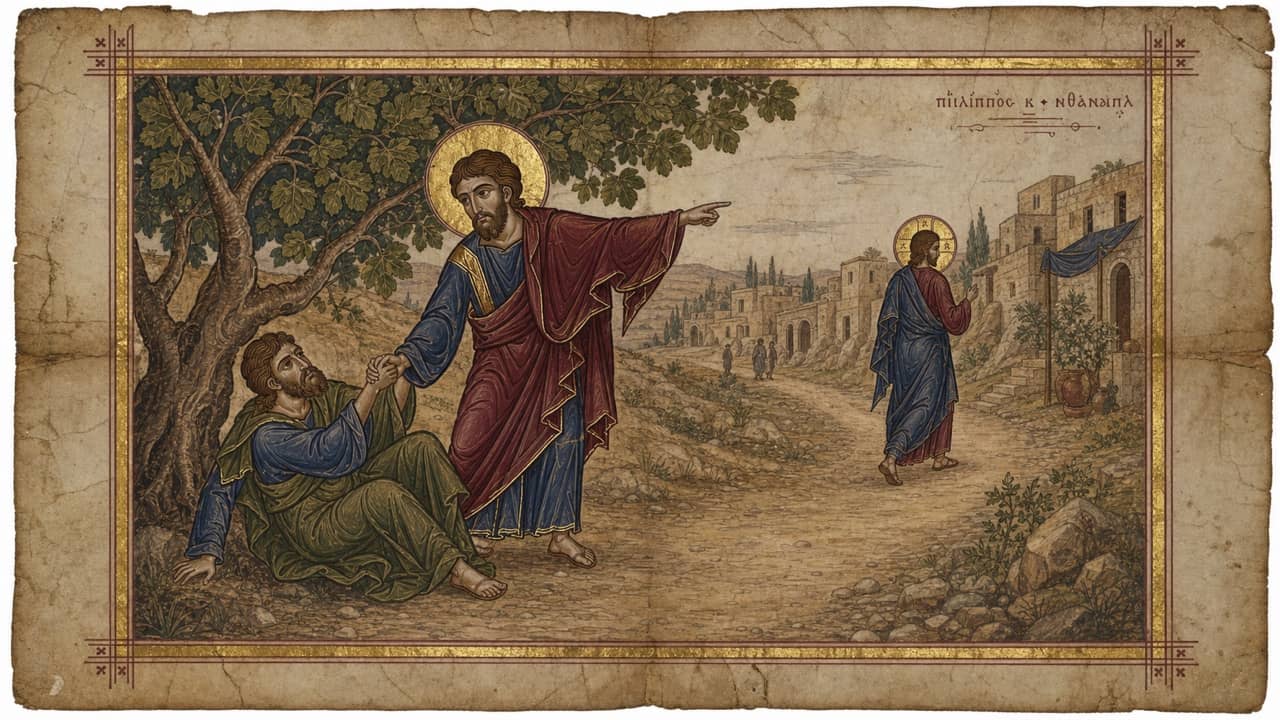
Of Bethsaida · Philippos — lover of horses; another Greek name in GalileeThe callCalled directly — 'follow me' — and immediately went recruiting: found Nathanael and said 'come and see.'The costEarly witnesses put his grave at Hierapolis in Phrygia; the martyrdom stories are centuries younger.Open the full recordClose the full record
From Bethsaida, the same town as Andrew and Peter
Philip's invitation carries the call onward: come and see.
A Bethsaida man with a Greek name, which is likely why Greek-speaking pilgrims later picked him as their way in. The fourth gospel is the only one that lets him speak, and it gives him four scenes.
The call
'Follow me' — then 'come and see'
Jesus finds Philip; Philip finds Nathanael. His answer to Nathanael's sneer about Nazareth is not an argument but an invitation: come and see. It remains the shortest apologetic on record.
Jesus tests him: where can we buy bread for all these? Philip runs the numbers — two hundred would not buy a bite each — and the text says Jesus already knew what he would do. The calculator got to watch the arithmetic break.
At the last supper, after three years of watching, Philip asks: Lord, show us the Father, and it is enough for us. The answer carries an audible ache — 'have I been with you so long, and you still do not know me?' The slowness is on the record; so is the patience it met.
Present at the upper-room roll call, then silent in the New Testament. The Philip whose mission fills Acts 8 — Samaria, the Ethiopian official — is a different man: Philip the -evangelist. Ancient writers already confused the two, and the confusion is flagged wherever this site touches him.
early source Ended at in Phrygia — one of the earliest hard geographic claims for any apostle, from a writing within living memory of the region.
Polycrates of Ephesus (~190) and Papias' circle, both preserved in Eusebius, Church History 3.31 and 3.39 · source
Even here the two-Philips problem shadows the sources, and honest readers keep it in view.
The end
later tradition Martyred at Hierapolis — crucified upside down in the developed legend.
Acts of Philip (~350s), a late apocryphal text · source
The grave at Hierapolis is early testimony; the manner of death is not.
Seat 6
Bartholomew
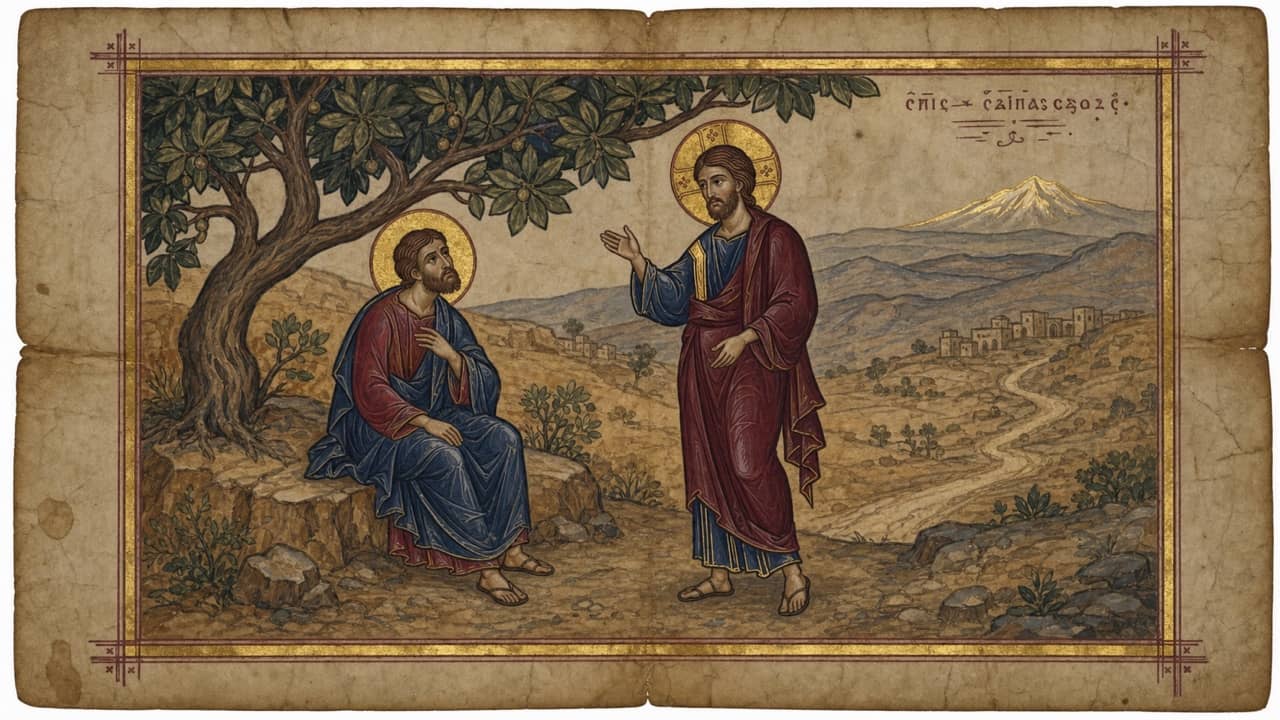
Bar-Talmai · traditionally Nathanael of Cana · Son of Talmai — a patronymic; if he is Nathanael, his given name means 'God has given'The callSneered at Nazareth, then folded in one exchange: 'Rabbi, you are the Son of God, the King of Israel.'The costAn early line leaves his teaching in India; Armenia's founding tradition claims his death — flaying is the art's addition.Open the full recordClose the full record
If Nathanael: from Cana in Galilee, found under a fig tree
The call is clear; the later road is shown without inventing its disputed end.
The synoptics give Bartholomew nothing but a seat beside Philip. The fourth gospel never mentions Bartholomew but gives Philip a recruit named Nathanael — the church has equated the two for centuries, plausibly, without proof. This record says 'if' and means it.
The call
The skeptic under the fig tree
'Can anything good come out of Nazareth?' is the record's first review of Jesus, delivered by his own future apostle. One sentence later — 'I saw you under the fig tree' — the skeptic is confessing him King of Israel. Jesus' verdict on him stands: an Israelite in whom there is no deceit.
Nathanael of Cana is named among the seven who go fishing after the resurrection and meet Jesus on the shore at breakfast. First scene: under a tree, doubting. Last scene: hauling an unbroken net he was told where to throw.
His recorded fault is the sneer — dismissing the Messiah by hometown before meeting him. It earned no rebuke, because it came with no deceit: he said aloud what others think quietly, and he changed his verdict the moment the evidence arrived.
early source Reached 'India' — when the teacher Pantaenus traveled there a century on, believers showed him a Hebrew Matthew they said Bartholomew had left them.
Eusebius, Church History 5.10, on Pantaenus (~180s) · source
'India' in Roman mouths could stretch from Arabia to the subcontinent; the report is early, its geography loose.
later tradition Evangelized Armenia with Thaddaeus — the founding claim of the Armenian Apostolic Church, which calls the pair its first illuminators.
Armenian national histories (Movses Khorenatsi, 5th century) carrying older tradition · source
Late by the measure this room uses — and load-bearing for an entire nation's church, which made Christianity its state faith in 301.
The end
later tradition Martyred in Armenia — at Albak in Vaspurakan by the Armenian tradition, at 'Albanopolis' in Caucasian Albania by the Western martyrology. The flaying that put the knife in his statues' hands — and his skin over Michelangelo's self-portrait — is the developed legend.
Late martyrologies; no early source names the manner · source
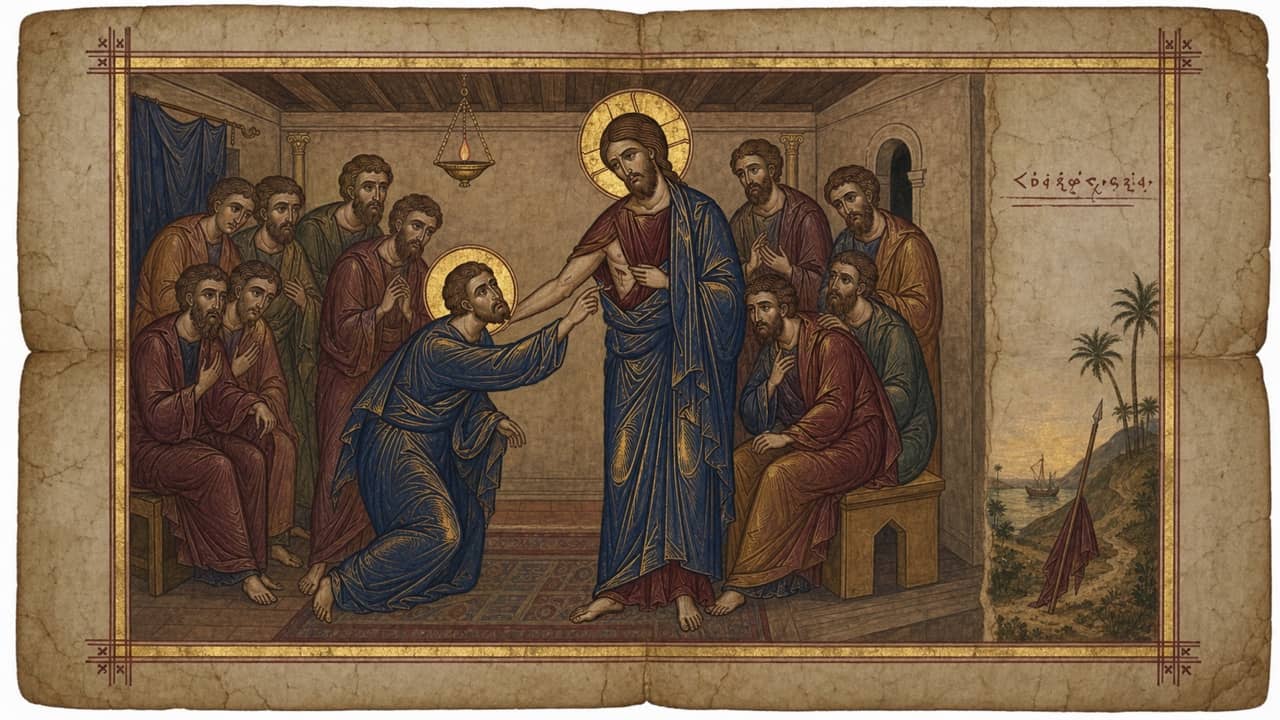
Toma · Didymus — both mean twin · The twin; whose twin, the text never saysThe callThe gospel of John gives him three scenes before the famous one — and in the first he is volunteering to die.The costThe strongest eastern tradition of any apostle: India's Thomas Christians keep his road, his hill, and his spear.Open the full recordClose the full record
Galilean; trade unrecorded
Thomas's demand becomes his confession; India keeps the memory of his road.
History filed him under one adjective, and it is the wrong one. Before the doubt, John's gospel records his courage: when Jesus turns toward Judea and the stones waiting there, it is Thomas who says to the others, 'let us also go, that we may die with him.'
The call
No call scene survives
His calling is not narrated — he simply stands in all four lists. The record starts him mid-story, already committed.
Lazarus is dead, Judea is lethal, and Jesus is going anyway. Thomas doesn't argue the plan; he signs onto the worst version of it. This is the same man later demanding evidence — courage and skepticism in one head.
At the last supper he interrupts the comfort with the honest question nobody else asks. The answer he gets — I am the way, the truth, and the life — exists in the record because Thomas refused to nod along.
He missed the first appearance and rejected eleven eyewitnesses: unless I put my finger in the mark of the nails, I will never believe. A week later Jesus offers him exactly that — and Thomas answers with the highest confession any gospel records: my Lord and my God. The blessing that follows belongs to everyone reading: blessed are those who have not seen, and believed.
The doubt was real — a week of standing alone against every friend he had, demanding autopsy-grade proof. The record neither shames nor flatters it: Jesus met the demand, and the demand became the confession the church still repeats.
early source Assigned Parthia in the earliest mission list; the tradition carries him to the Malabar coast of India, where the Mar Thoma churches have claimed him as founder for as long as records exist.
Origen via Eusebius, Church History 3.1 (Parthia); Acts of Thomas (~220) and the continuous Kerala tradition (India) · source
The Acts of Thomas is a novel, not a report — but it is an early novel, and first-century sea lanes to Kerala are documented trade routes. India's claim is the strongest eastern tradition any apostle has.
The end
early source Speared on a hill at Mylapore, near modern Chennai, where the local church has kept the site continuously.
Acts of Thomas (~220); Ephrem the Syrian (4th century) already knows the India martyrdom and the relics at Edessa · source
Early attestation in a legendary genre — graded early with that caveat stated.
Seat 8
Matthew
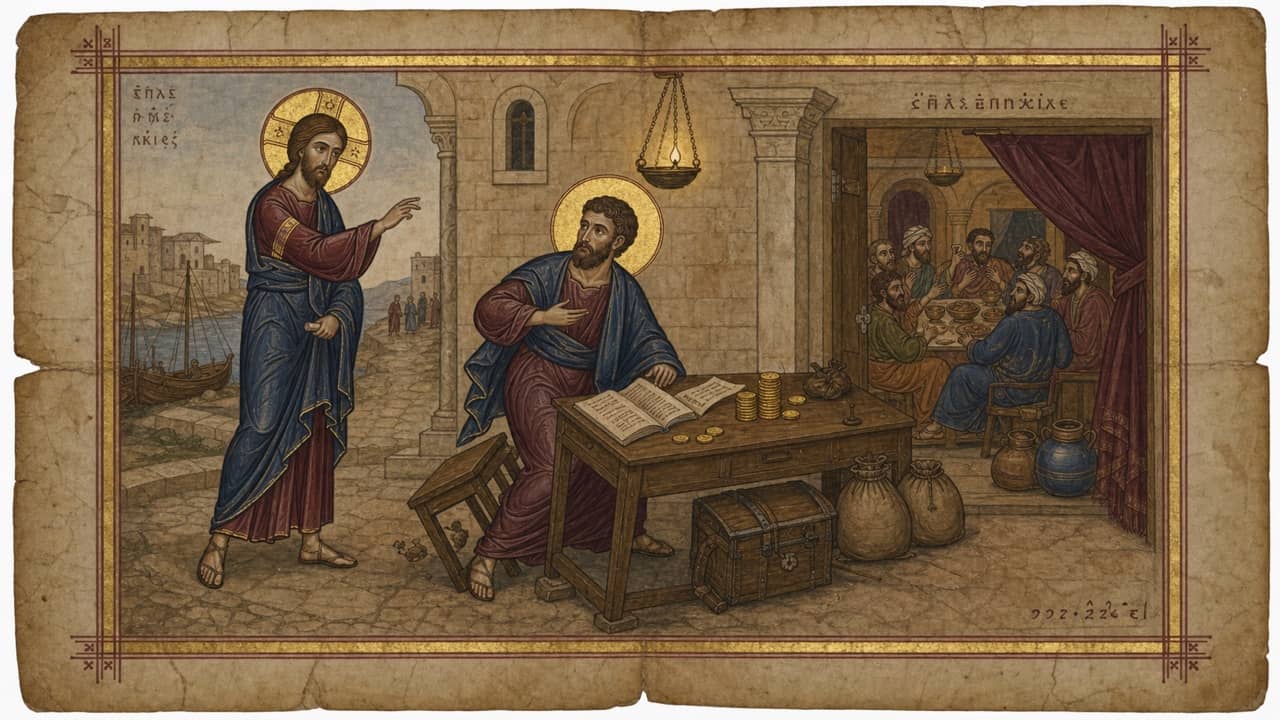
Traditionally Levi, son of Alphaeus (Mark 2:14) · Mattityahu — gift of the LORDThe callStood up from the toll booth mid-shift, left the ledgers, and threw Jesus a banquet full of his disreputable friends.The costEven his martyrdom is disputed — one early witness says he died naturally. The room says so plainly.Open the full recordClose the full record
Tax collector at the Capernaum toll booth — a collaborator with the occupation
The ledger stays open when Matthew stands to follow.
A toll farmer on the Capernaum customs post — the trade Rome franchised and Judea despised. Tax collectors were classed with sinners in the era's own speech, barred as court witnesses in later rabbinic rules, and Matthew ran a booth in his hometown's face.
The call
The shortest résumé conversion on record
Two words at the booth — follow me — and he rose and followed. The synoptics tell it of Matthew and of Levi; the church has read them as one man since the beginning, and this record follows that reading, saying so. His first act was a dinner: his old colleagues and Jesus at one table, and the ' complaint answered with the line that defines the whole list: I came not to call the righteous, but sinners.
Every list names him; only the list in his own gospel adds the epithet — Matthew the tax collector. If he wrote it, he chose to keep his shame in his own book's roll call. The record contains no other scene of him.
His fault predates the call and needs no unearthing: he took the empire's franchise against his own people. The gospels' point is not that the fault was small but that the call ignored it — and the man kept the receipt in writing.
later tradition Later lists scatter him — 'Ethiopia' in some, Persia in others. The traditions conflict and none is early.
Rufinus and Socrates Scholasticus (4th–5th century) for Ethiopia · source
Where the sources disagree, this site shows the disagreement instead of picking a winner. And 'Ethiopia' is itself a loose toponym in these legends — the African kingdom, or the Caucasus coast the Matthias traditions mean by the same word.
The end
early source Disputed at the root: of Alexandria preserves Heracleon's claim that Matthew died a natural death, while later tradition supplies a . The oldest voice on record is the one that says no one killed him.
Heracleon via Clement of Alexandria, Stromata 4.9 (~180) · source
Graded by the earliest source — which, uncomfortably for the legends, reports no martyrdom.
The writings
The first gospel has carried his name since the earliest testimony we have — Papias: 'Matthew collected the in the Hebrew language.' What exactly Papias meant, and how it relates to the Greek Matthew we read, is a live scholarly question stated here as one.
Seat 9
James of Alphaeus
Possibly 'James the less' · Yaakov — Jacob, one of the era's most common namesThe callFour list-lines are his entire certain record — the ninth seat, held by a man history cannot see.The costNo early source records his road or his death. This room refuses to invent one.Open the full recordClose the full record
Nothing recorded — no town, no trade
Four list-mentions are the surviving record; the painting leaves the rest unknown.
The record holds a name, a father's name, and a seat. Attempts to enlarge him — merging him with 'James the less' of Mark 15:40, or with James the Lord's brother who led the Jerusalem church — stack identifications the text does not make. Paul's letters treat the Lord's brother as distinct from the twelve.
The call
No scene survives
He was called — the lists prove it happened — but no gospel spends a verse on it. The ninth seat's entire narrative is its existence.
Matthew 10:3, Mark 3:18, Luke 6:15, Acts 1:13. Four occurrences, all of them roll calls. He heard everything, saw everything, fled with everyone, returned with everyone — and said nothing the record kept.
Obscurity is his record, and there is no fault in it — but there is the shared one: all of them fled the garden, and all of them were at the table when the argument broke out over which of them was greatest. He was in that argument, and lost it, and the losing was the point.
The upper-room roll call is his last certain appearance. Whatever he did with the remaining decades, he did it without a biographer — which is what most obedience looks like.
An honest blank. Ten thousand churches carry the name of a man about whom the record keeps four lines.
Seat 10
Thaddaeus
Judas of James · 'Judas, not Iscariot' · Etymology uncertain — perhaps Aramaic for heart, perhaps a Greek nickname; his other name is Judah, praiseThe callOne recorded sentence — and it drew the promise that God would make his home with anyone who loves him.The costArmenia holds his mission with Bartholomew; a monastery at one of the oldest claimed apostolic shrines keeps his name.Open the full recordClose the full record
Nothing recorded of trade or town
One recorded question opens onto the promise of a dwelling made with him.
Three names for one quiet man: Thaddaeus in Matthew and Mark, Judas of James in Luke and Acts, and the fourth gospel's careful 'Judas, not Iscariot' — a man spending history disambiguated from a traitor who shared his name.
The call
No scene survives
Like the other quiet ones, his call is attested only by his seat in the lists.
At the last supper: Lord, why will you reveal yourself to us, and not to the world? The answer is one of the largest promises in the gospel — if anyone loves me, he will keep my word, and my Father will love him, and we will come to him and make our home with him. One sentence in, one home promised back.
His question carries the group's shared blind spot — still expecting a public, political unveiling. He shares the garden flight with the rest. Nothing else is charged against him; there is nothing else at all.
At the upper-room roll call as 'Judas of James,' then gone from the New Testament. The letter of Jude introduces its author as brother of James, servant of Jesus — whether that is this man, the ancient church itself debated.
early source Went east — preserves the story of a Thaddaeus who healed king , though he calls that man one of the seventy, not the twelve. The two Thaddaei have been tangled ever since.
Eusebius, Church History 1.13 (~320), from the Edessa archives · source
Early testimony, uncertain referent — the grade belongs to the story, not necessarily to this seat.
later tradition Evangelized Armenia with Bartholomew; the monastery bearing his name in the Armenian highlands claims to stand on his grave, rebuilt over a shrine tradition dates to 68 AD.
Armenian national histories (5th century); St. Thaddeus Monastery, a UNESCO World Heritage site · source
Late by this room's measure, and the founding memory of the Armenian Apostolic Church.
The end
later tradition Martyred in Armenia with an axe or arrows in the developed tradition; the instruments vary by the telling.
Armenian martyrdom traditions, recorded from the 5th century · source
The Cananaean — Aramaic qan'ana, zealous one · Shimon — he has heard; the epithet marks temperature, not a hometownThe callHis label is his whole biography — and it seats the resistance at the same table as the collaborator.The costThe later lists send him everywhere from Egypt to Persia and cannot agree; nothing early survives.Open the full recordClose the full record
Politics recorded, biography not: a man of the zealous, Rome-resisting temperament
Resistance and collaboration sit together under one call.
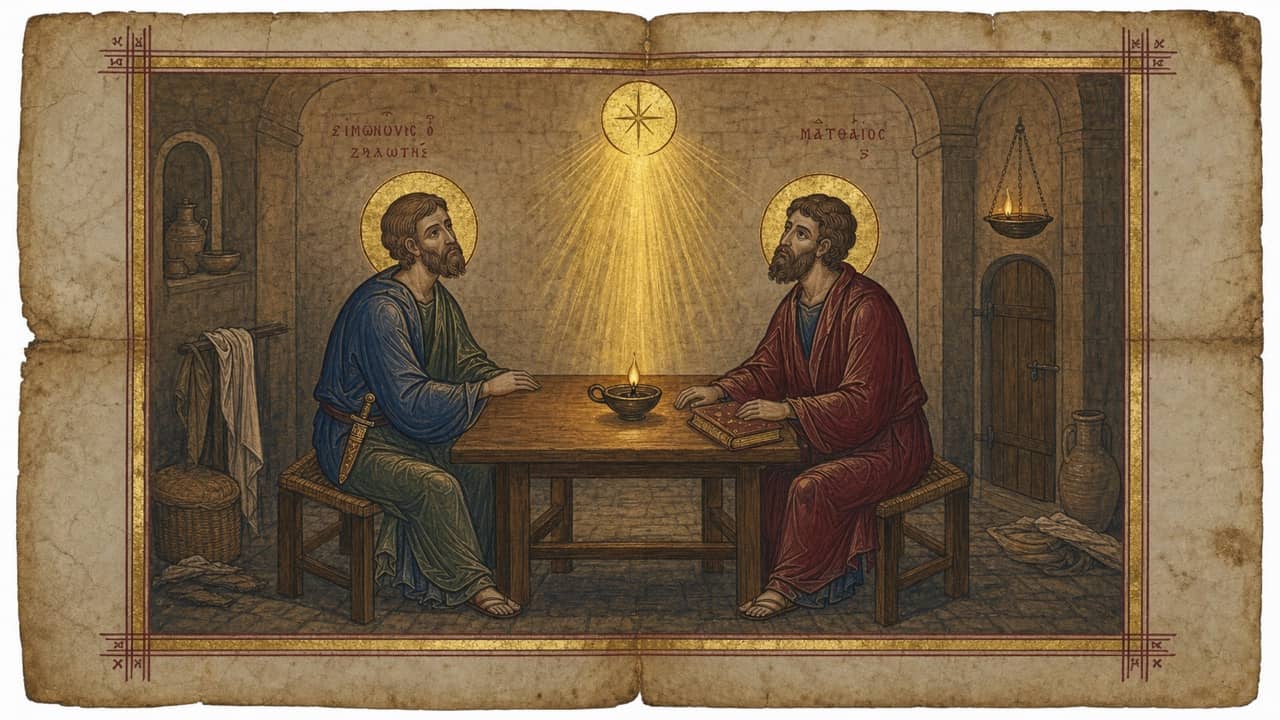
'Cananaean' transliterates the Aramaic for zealous — Luke translates it outright as Zealot. Whether that marks membership in the armed resistance current or simply a burning temperament, the text does not say; the organized Zealot party of the war years came later, and this room does not backdate it.
The lists seat Simon the Zealot at the same table as Matthew the tax collector — the man who bled revenue to Rome and a man whose party name meant burning against it. No gospel narrates a single word between them. The shared table is the sermon.
If the label means what it appears to mean, his fault walked in the door with him: a politics of the sword, aimed at the empire his new master refused to fight. Whatever burned in him was not quenched but redirected. He shares the garden flight with the rest.
Man of Kerioth, on the probable reading · Yehuda — praise; the name of the tribe of kings, worn by the traitorThe callTrusted with the money bag; John's gospel says he was already helping himself to it.The costThirty pieces of silver, a kiss, remorse without return — and a field named Blood in two different tellings.Open the full recordClose the full record
If Kerioth is right, the band's only Judean among Galileans; its treasurer
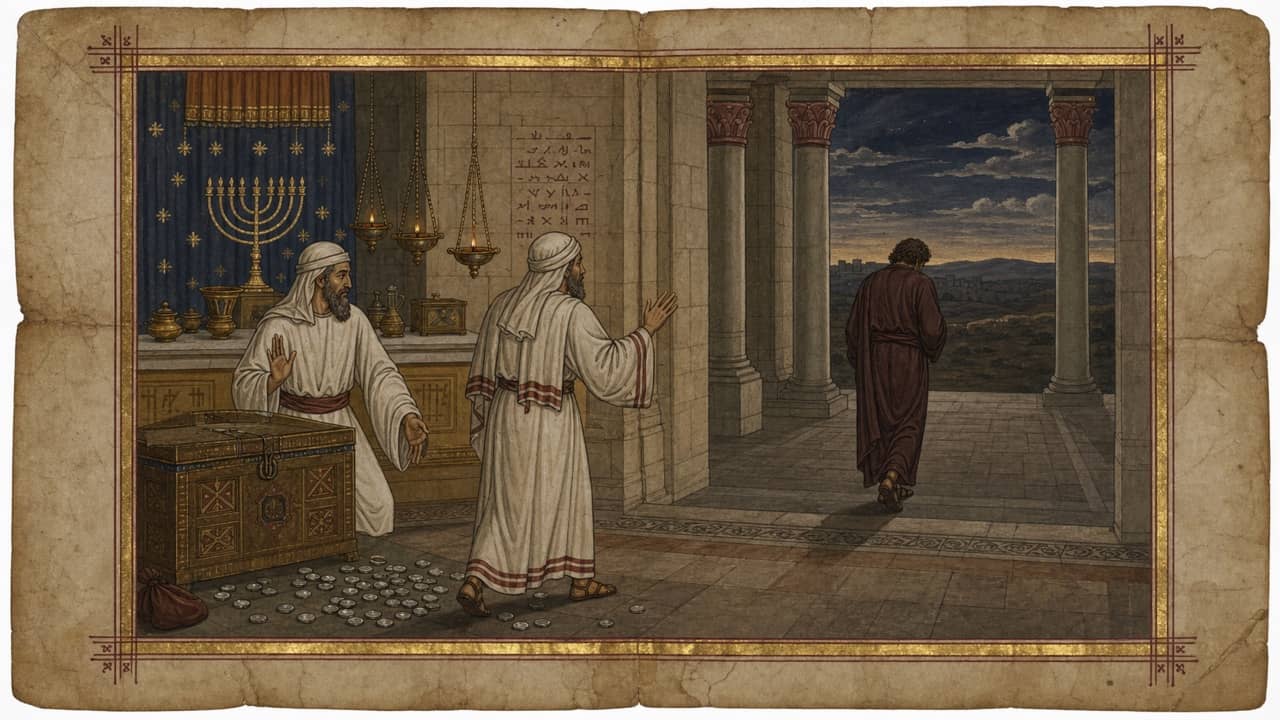
Remorse without return, shown without caricature or invented detail.
Called like the others, sent out like the others — Judas preached and healed in the mission of the twelve with no recorded asterisk. He kept the common purse. The fourth gospel, writing with hindsight, adds the ledger's secret: he was a thief who pilfered what was put in.
The call
Chosen with open eyes
The record insists Jesus knew: did I not choose you, the twelve — and one of you is a devil? Judas is not an infiltration; he is a choice the story refuses to explain away.
When Mary pours out a year's wages in nard, Judas objects on behalf of the poor — and John states flatly that the poor were not his concern; the purse was. The last recorded words before the bargain are an accounting argument.
He goes to the chief priests himself and asks what they will give. The price they weigh out is an old, bitter number — the prophet Zechariah's wage, thrown to the potter.
At the table Jesus hands him the honored morsel — a host's gesture of friendship — and tells him, what you do, do quickly. The gospel closes the scene with four words that have never needed a commentary: and it was night.
He marks his rabbi for the arrest squad with the disciple's greeting. Jesus' answer keeps the relationship open to the last: Friend, do what you came for. Luke's version asks the question outright — Judas, do you betray the Son of Man with a kiss?
Remorse came at sunrise: he returned the silver, said 'I have sinned; I betrayed innocent blood,' and was told by the priests that his conscience was his own problem. The record's tragedy is precise — regret that went to the wrong address. Peter's failure that same night went back to Jesus; Judas's went to a rope.
Two accounts of his end stand in the side by side, unharmonized: Matthew's hanging and the priests buying the potter's field with blood money; Acts' headlong fall in the field itself. Both agree on the field and its name — Akeldama, Field of Blood. This site shows both tellings and does not paper the seam.
The two canonical accounts differ in mechanism and agree on the field. Recorded as written.
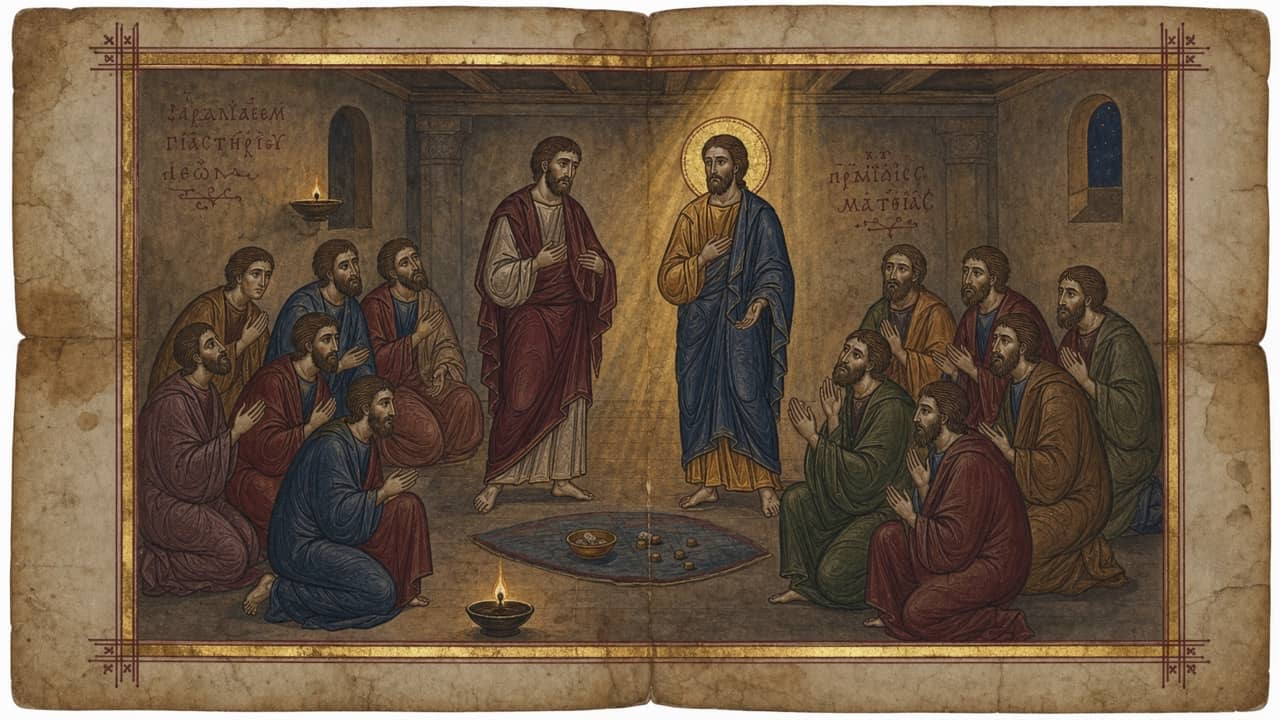
Seat 12 · restored
Matthias
The thirteenth man in the twelfth seat · Mattityahu — gift of the LORD, the same name as MatthewThe callQualified by presence: he had simply been there the whole time, from the Jordan to the ascension.The costChosen by prayer and lots to fill the empty seat — then never mentioned again anywhere in scripture.Open the full recordClose the full record
A follower since John's baptism — three years in the crowd, never in the lists
Chosen by prayer and lots, Matthias then passes out of the surviving record.
The replacement criteria are the best biography he gets: one of the men who had accompanied the group the entire time from John's baptism to the ascension. Three years of showing up with no seat, no title, and no line of dialogue.
The call
The last lots in scripture
Two names meet the bar — Joseph called Barsabbas, and Matthias. The hundred and twenty pray, cast lots as Israel had for a thousand years, and the lot falls to Matthias. It is the Bible's final decision by lot; Pentecost arrives in the next chapter, and the church never rolls dice again.
His entire subsequent record is a headcount: he was numbered with the eleven apostles, and Peter stands up 'with the eleven' at Pentecost. The twelfth seat is full; the man in it is invisible. The office mattered; the résumé did not.
Nothing is recorded against him — or about him. If obscurity stung, the sting is not in the text. The man who lost the lot, Barsabbas, also stays in the story's background without complaint; the episode leaves no bitterness on either side of the coin.
Present, by definition, for everything in Acts that involves 'the apostles' — and never once named. The seat was restored so twelve witnesses could face Israel's twelve tribes at Pentecost; Matthias's work was to be the twelfth.
later tradition Later tradition sends him to 'Ethiopia' — by which the source means the Caucasus coast — or leaves him in Judea; the accounts conflict and confuse him with Matthew.
Acts of Andrew and Matthias (~400s), a late legend · source
The end
later tradition Unknown. The traditions disagree on stoning, axe, or old age — a man history could not see clearly enough to kill in one consistent way.
Outside the twelve seats: an apostle on a different warrant.
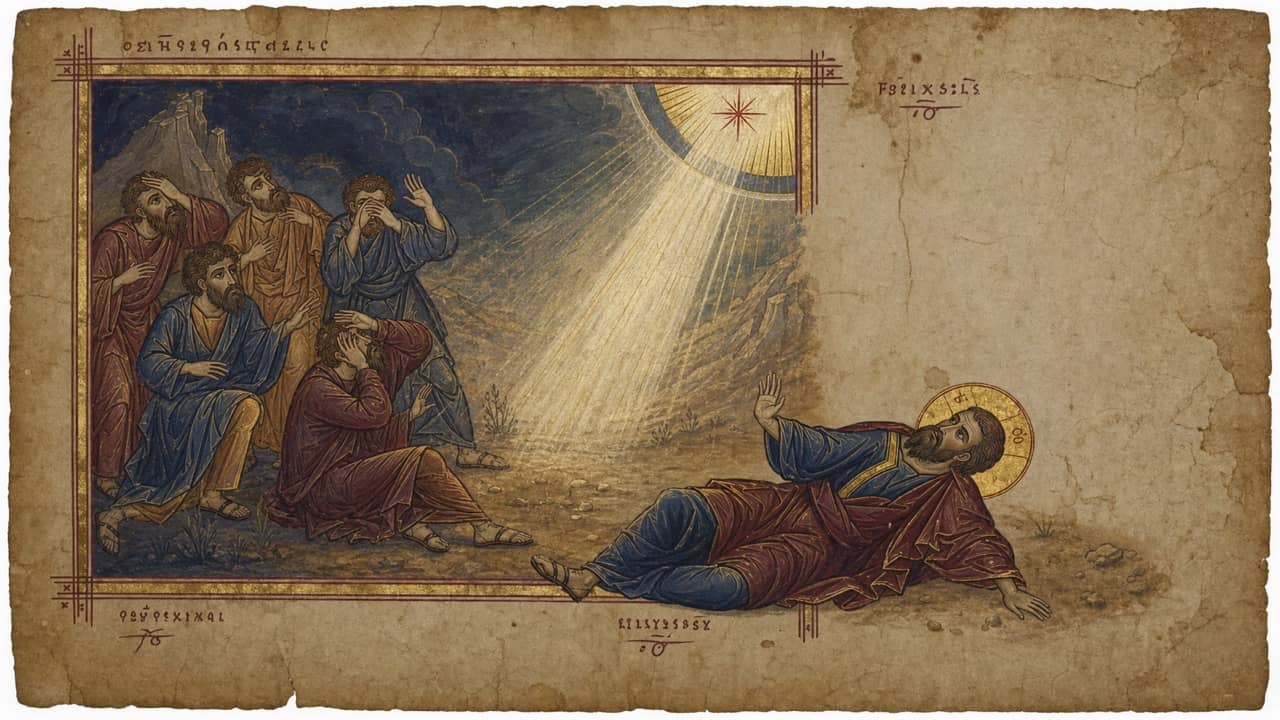
And Paul? Not one of the twelve, and the first to say so — 'last of all, as to one born at the wrong time, he appeared also to me.' He never sat in these seats: the twelve were constituted witnesses of the whole road from the Jordan to the empty tomb, and Paul's apostleship ran on a different warrant, straight from the Damascus road. His trail — half the New Testament and most of the map — runs through the church world.
None of this is embroidery — where the record is four lines, this room says four lines. The same church that kept Peter’s denial and Thomas’s demand in its own scriptures kept the quiet seats quiet. Where each road went is drawn in the sending; what the next generation wrote is in the Writings.
More research tools
✳ Pull this thread
Another way into the question. Each tool opens with its own selection.
Make the page yours
Reading & accessibility
These choices stay on this device. Browser zoom and your system settings continue to work.
Accessibility options
Saved in this browser and shared between texts. Labels and line patterns remain in every theme.