Pentecost · The gathering
In our own languages.
One gathered community. A sound like wind. Many hearers, hearing home.
Enter the story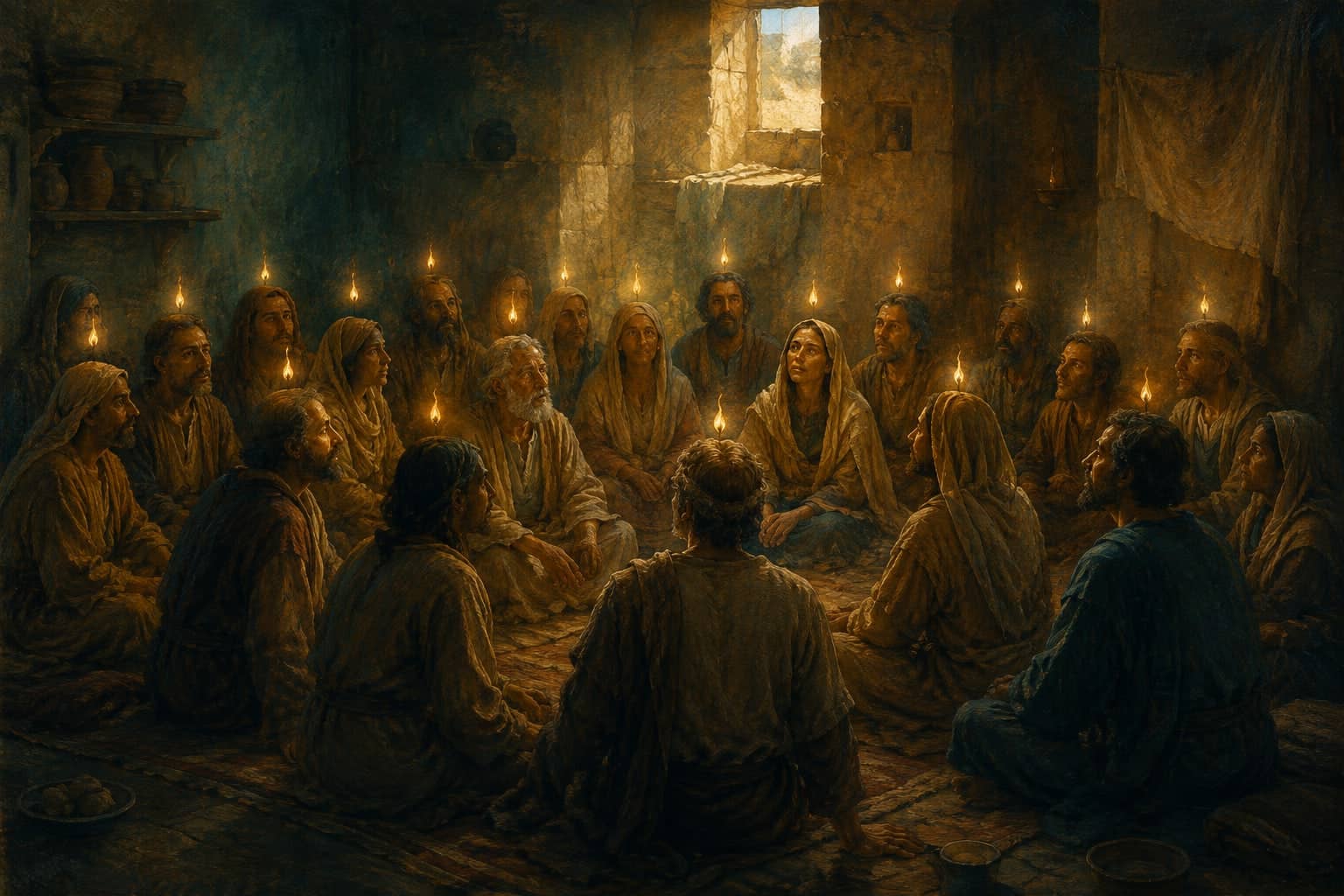
Reading appearance
Accessibility options
Saved in this browser and shared between texts. Labels and line patterns remain in every theme.
Acts 2:1–4
All together in one place.
Acts describes a sound like a mighty wind filling the house, tongues like fire resting on each of them, and the Holy Spirit giving them speech in other languages. The gift comes to the gathered community; the account does not reduce that community to a list of twelve men.
Acts 2:5–11
The hearers recognize their own words.
Devout Jews from many places are in Jerusalem. A crowd gathers, bewildered: each hears the speakers in their own language. Acts names a wide world of hearers, including visitors from Rome, both Jews and proselytes.
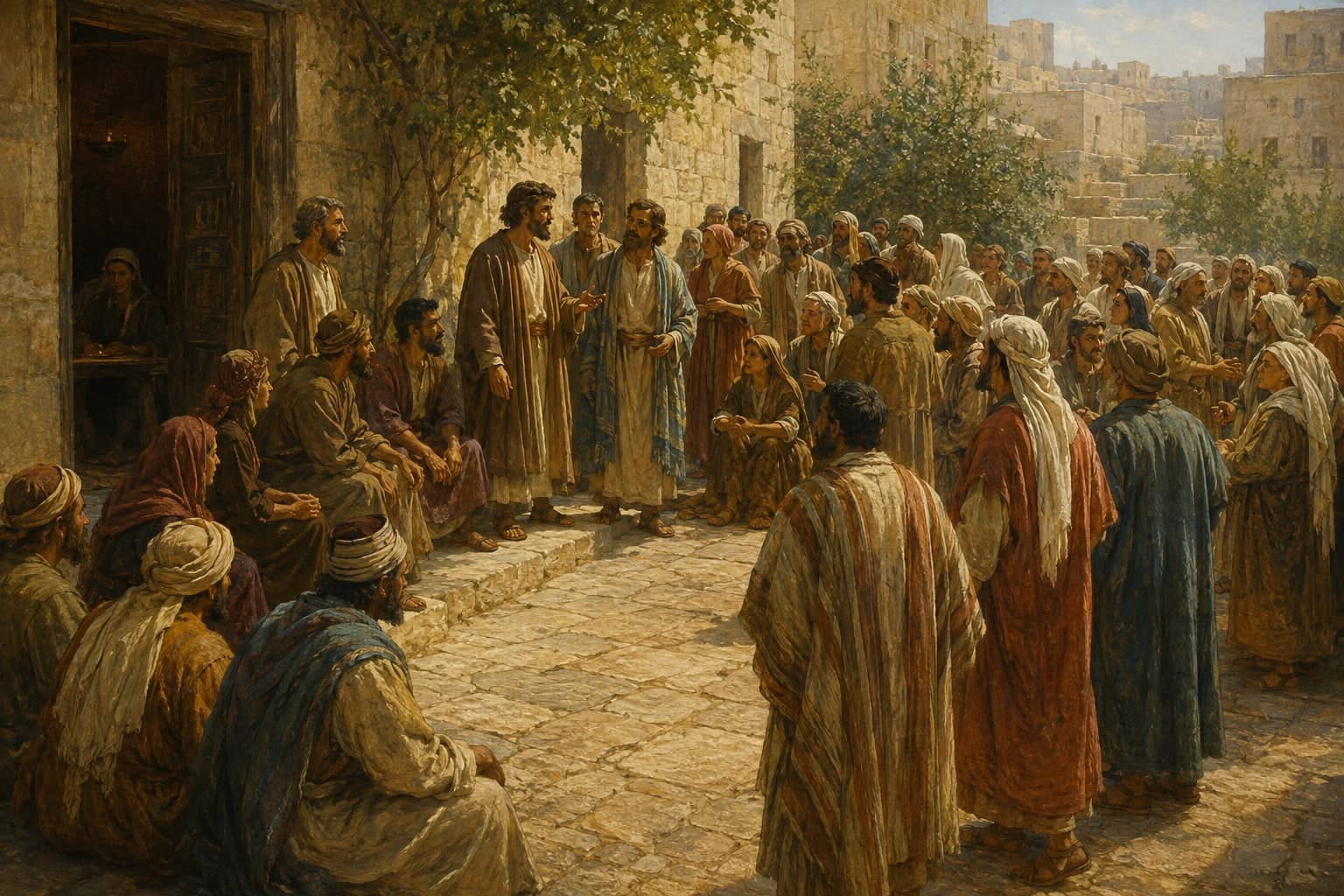
Heard in their own languages.
These groupings are our geographic reading aid, not routes or dates.
Judea is listed among the hearers and stands apart from the grouped regions.
“How do we hear, everyone in our own native language?” Acts 2:5–13
All the hearers shown together.
East
Parthians, Medes, Elamites, and residents of Mesopotamia.
Asia Minor
Cappadocia, Pontus, Asia, Phrygia, and Pamphylia.
Egypt and Libya
Egypt and Libya near Cyrene.
Across the gathering
Rome, Crete, and Arabia.
Jewish hearers and proselytes are included among those present.
Beyond this moment
What does this mean?
Amazement is not the only response. Some ask what it means; others mock. Then Peter stands with the eleven and speaks to the crowd. Follow his explanation before turning to the later roads of the apostles.
Continue with Peter’s speechThe words remain close.
The paintings and narrative framing are interpretation. Appearance, setting, and gestures are imagined; the passage below is the source.
Read the passage · Acts 2:1–13
World English Bible (WEB)
1Now when the day of Pentecost had come, they were all with one accord in one place.
2Suddenly there came from the sky a sound like the rushing of a mighty wind, and it filled all the house where they were sitting.
3Tongues like fire appeared and were distributed to them, and one sat on each of them.
4They were all filled with the Holy Spirit and began to speak with other languages, as the Spirit gave them the ability to speak.
5Now there were dwelling in Jerusalem Jews, devout men, from every nation under the sky.
6When this sound was heard, the multitude came together and were bewildered, because everyone heard them speaking in his own language.
7They were all amazed and marveled, saying to one another, “Behold, aren’t all these who speak Galileans?
8How do we hear, everyone in our own native language?
9Parthians, Medes, Elamites, and people from Mesopotamia, Judea, Cappadocia, Pontus, Asia,
10Phrygia, Pamphylia, Egypt, the parts of Libya around Cyrene, visitors from Rome, both Jews and proselytes,
11Cretans and Arabians—we hear them speaking in our languages the mighty works of God!”
12They were all amazed and were perplexed, saying to one another, “What does this mean?”
13Others, mocking, said, “They are filled with new wine.”
Read the full chapter